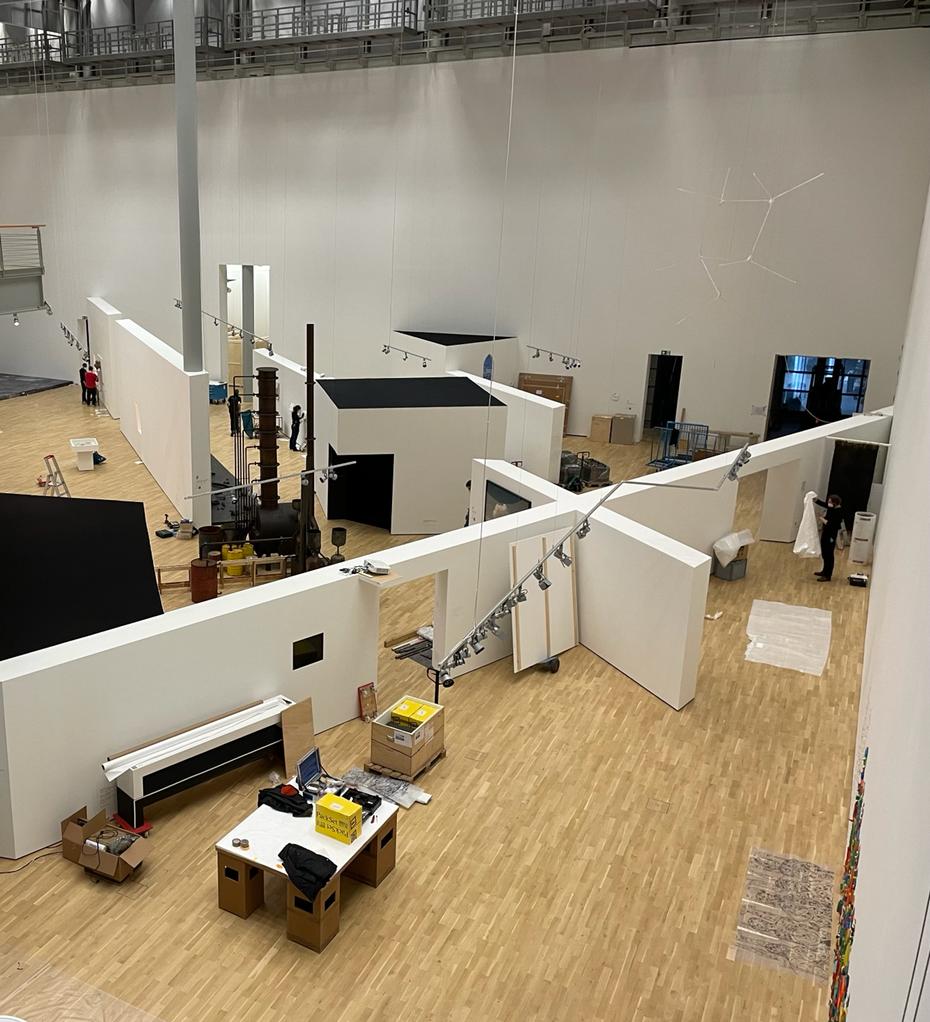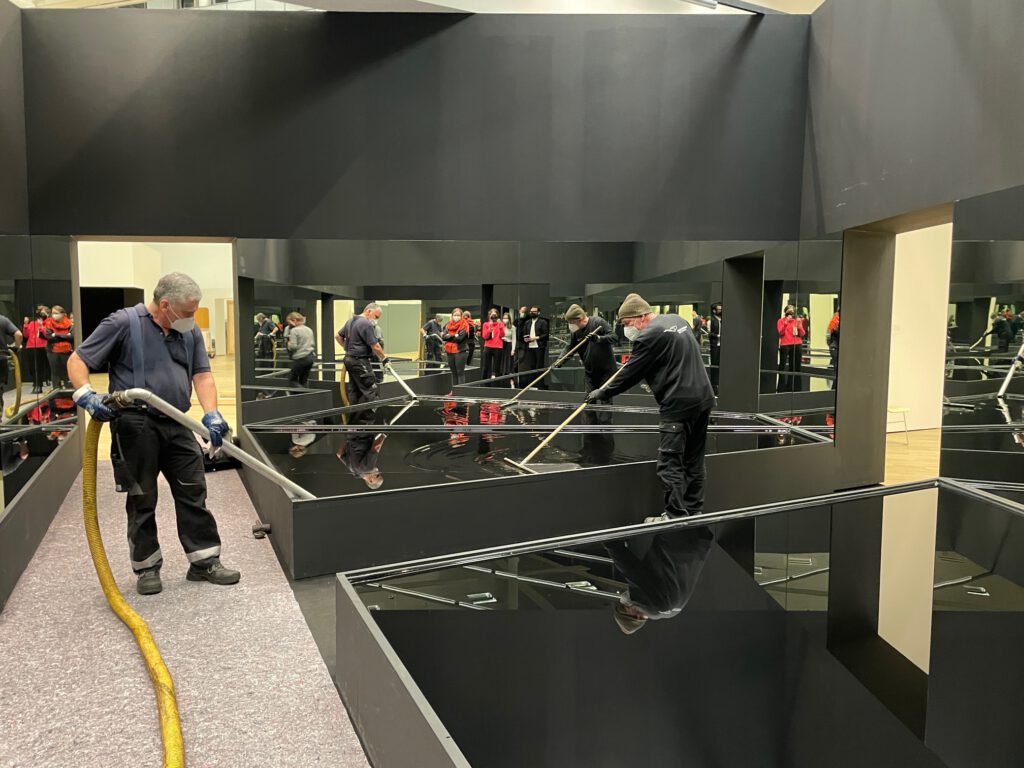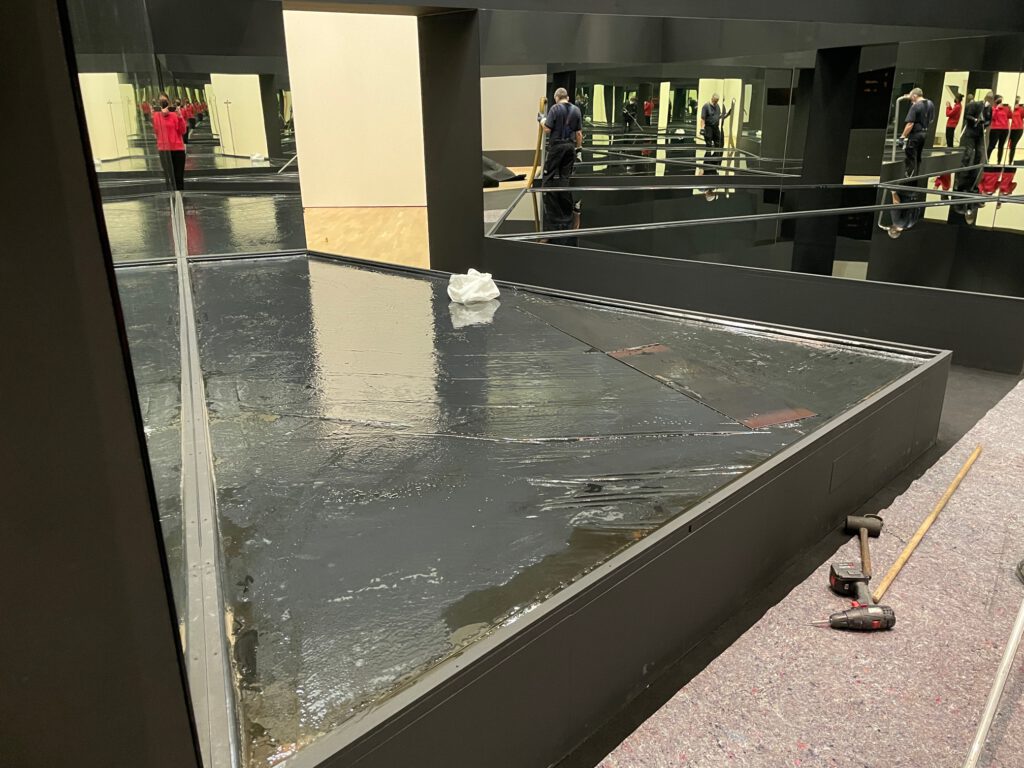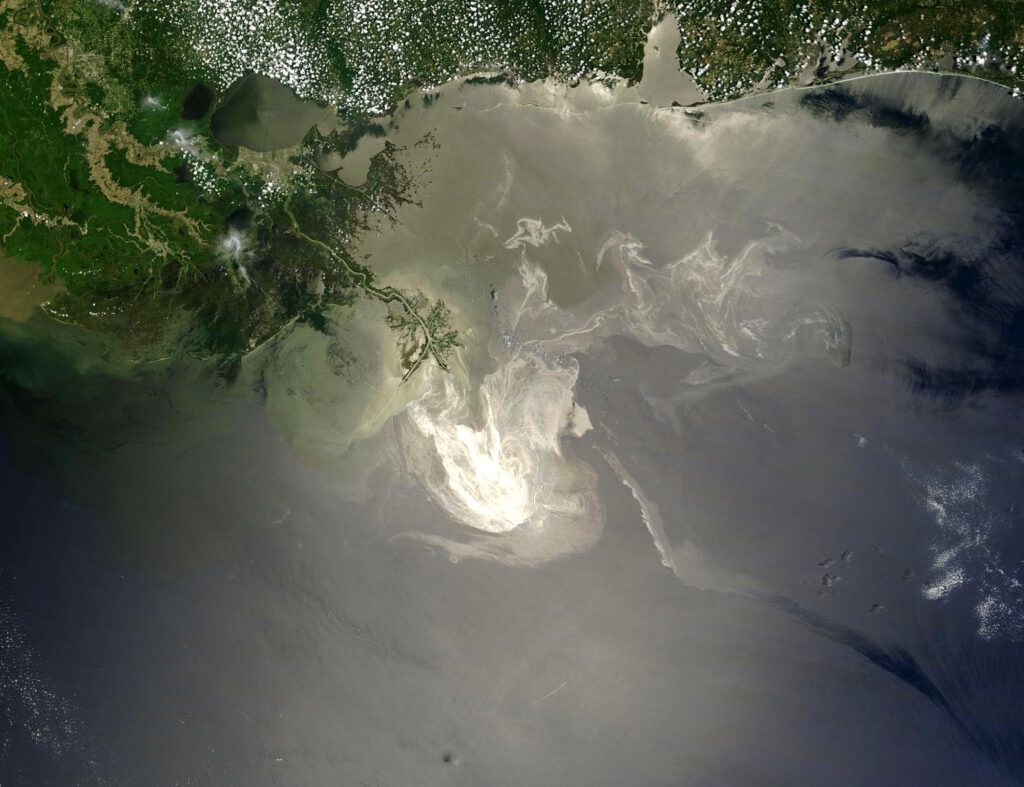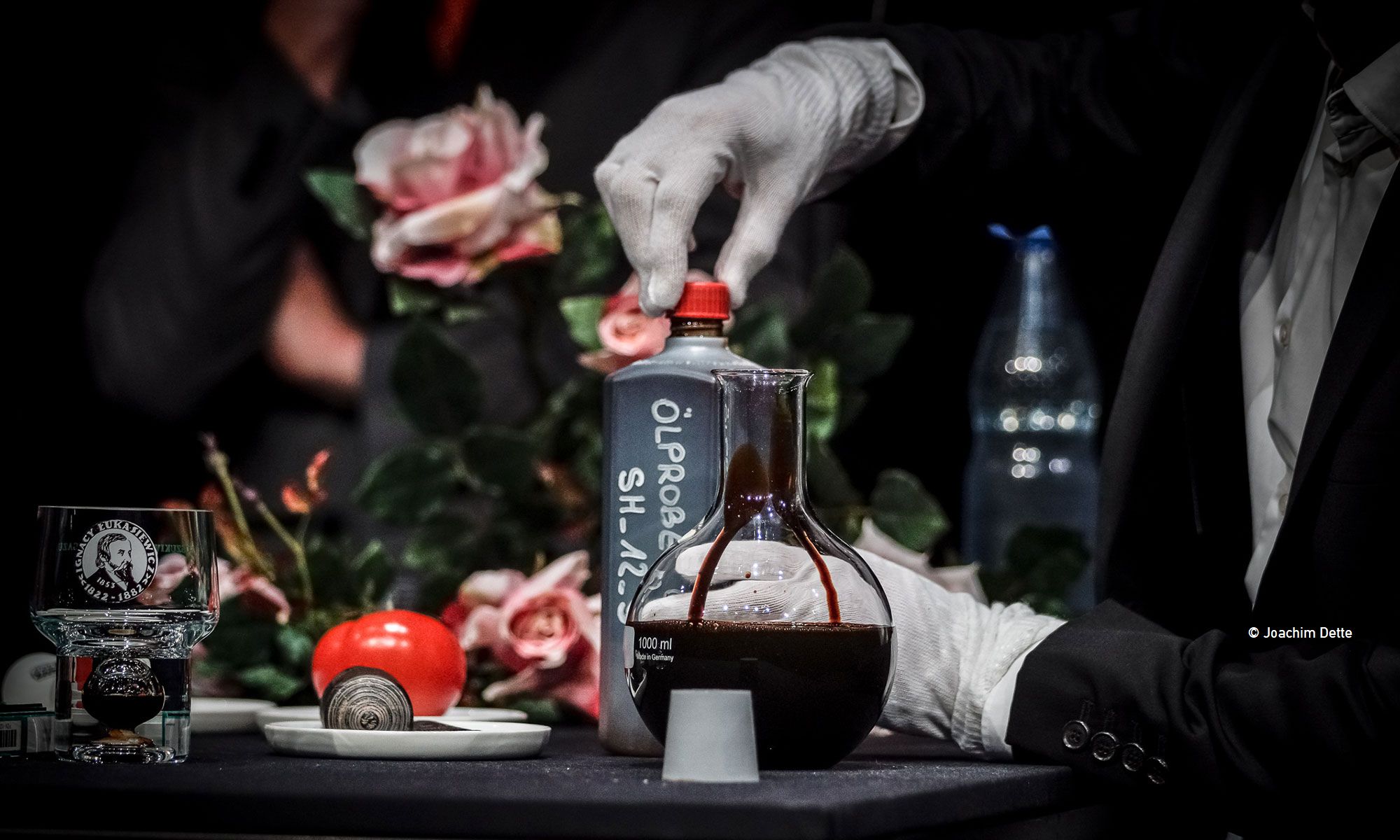
»Oil« has left the building – im übertragenen und im sehr materiellen Sinn. Die Wolfsburger Ausstellung »Oil. Schönheit und Schrecken des Erdölzeitalters« hat ihre Tore geschlossen
Seit 3. September 2021 und bis zum 9. Januar 2022 war »Oil« unter großem Medien- und Publikumsinteresse am Kunstmuseum Wolfsburg geöffnet – erfreulicherweise ohne einen einzigen Tag Corona-Ausfall.
Jetzt schreitet der Abbau mit Riesenschritten voran. Leihstücke aus aller Welt und in tatsächlich allen Erscheinungsformen treten die Heimreise an: vom 14 Meter breiten Wandrelief von Tony Cragg bis zur 3 mm kleinen Ölfliege aus Kalifornien.
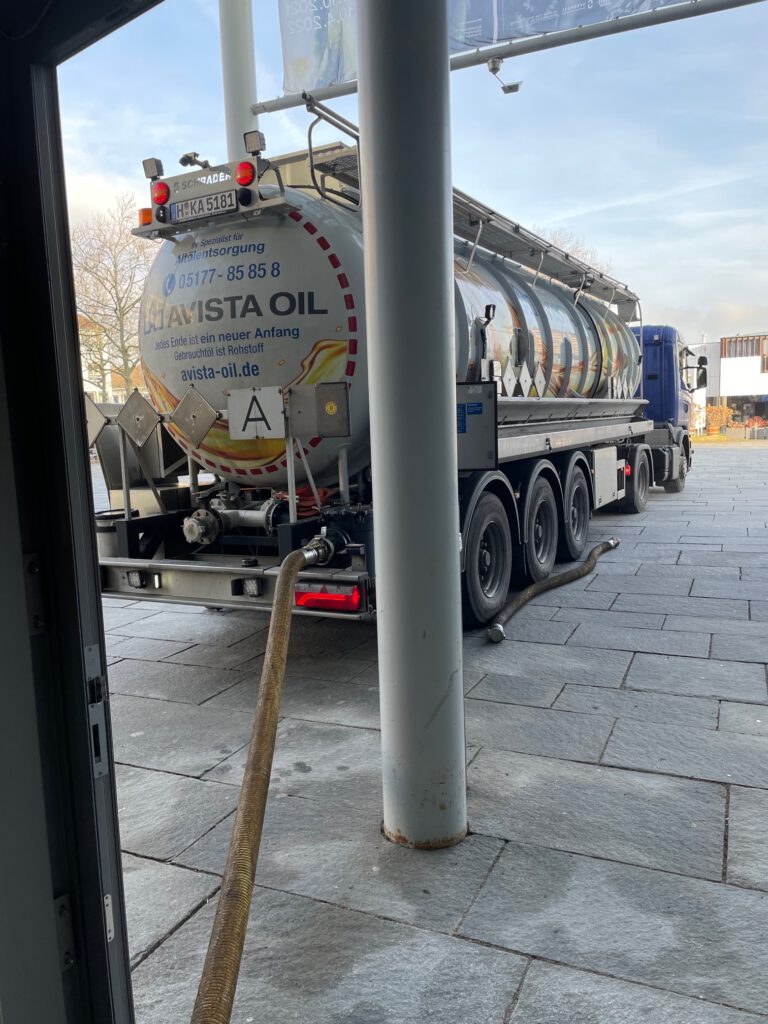
400 Liter Öl aus dem Ölspiegel wurden abgepumpt und wiederverwertet, getreu dem Motto unseres Ausrüsters Avista-Oil: »Jedes Ende ist ein neuer Anfang« (siehe unten, Aufschrift LKW).
Wir bedanken uns noch einmal ganz herzlich auf diesem Weg beim gesamten Museumsteam in Wolfsburg für die tolle Zusammenarbeit und wünschen alles Gute für den unmittelbar anschließenden Aufbau von »Macht! Licht!« (Eröffnung am 12.3.2022)!


Fotos: Elena Engelbrechter
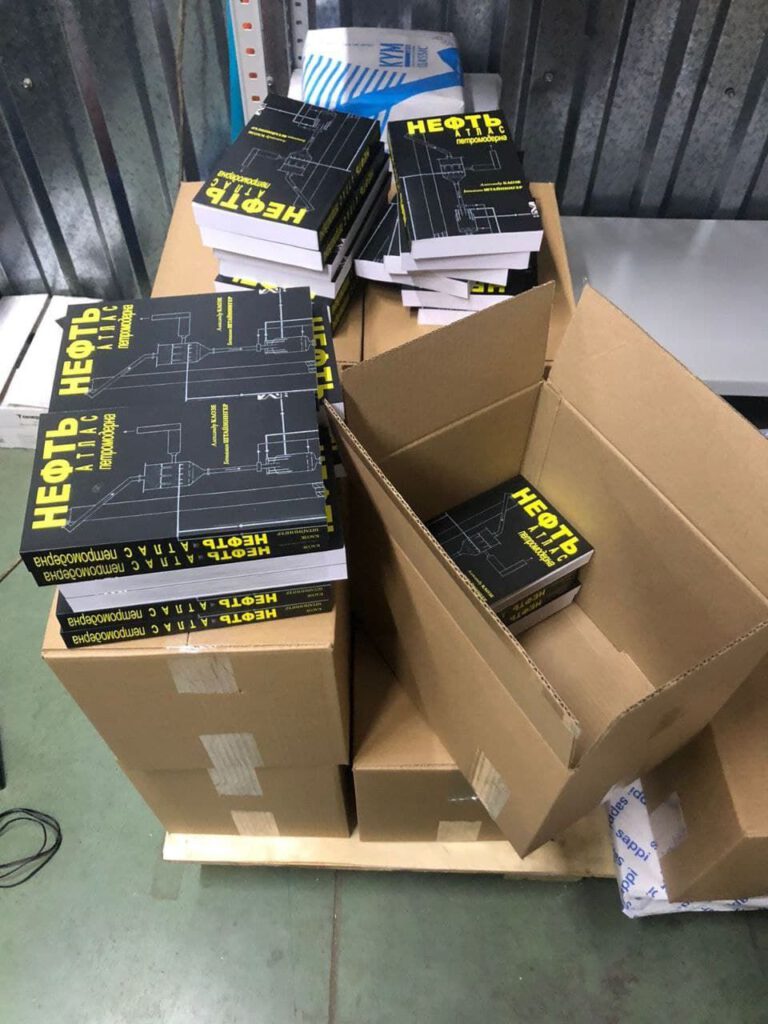
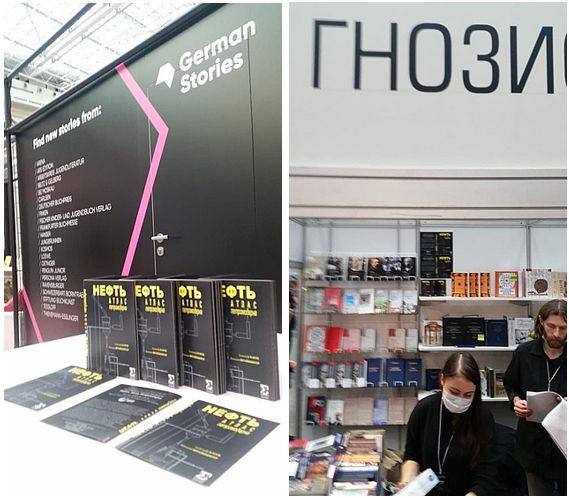
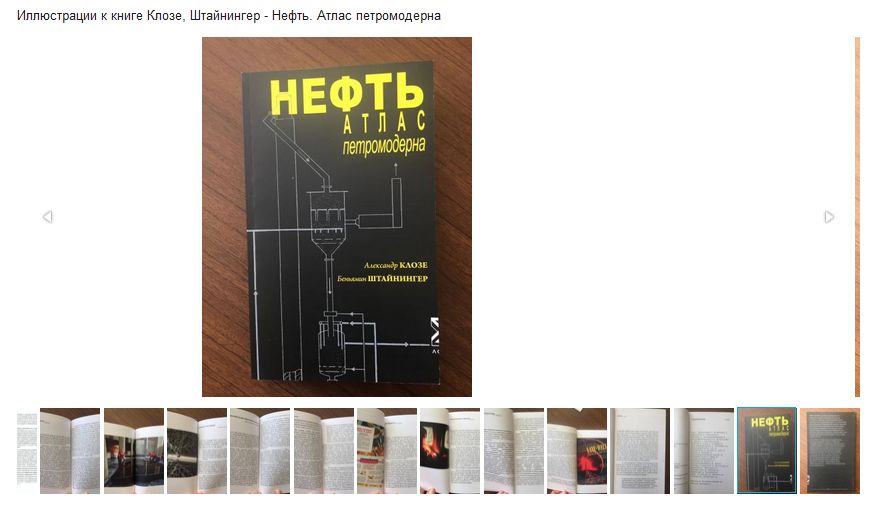
Out now! Штайнингер/Клозе: »Нефть. Атлас петромодерна«! Unser Erdölatlas in russischer Übersetzung! Zum Preis von 1210rub. Eine Kooperation mit dem Goethe-Institut Novosibirsk, dem Verlag logos/lettera und der Buchhandlung Gnosis Moskau
Order here! Hier bestellen! Купить здесь! (книжный магазин Гнозис)

Беньямин Штайнингер, Александр Клозе: Нефть. Атлас петромодерна
М.: Издательство “Логос”, ООО “НПТ”. Москва 2021. – 324 с.
ISBN 5-8163-0088-9 (Серия: letterra.org/off-university)
Стоит 989 р.
Перевод и издание книги осуществлены при поддержке Гёте-Института
Нефть (Erdöl) вездесуща, преобразуется в множество личин и состояний (вот она как «топливо», а вот как «полиэтиленовый пакет», «помада» или «воздушный шарик»), оставаясь при этом невидимой. Одновременно чудесная и роковая субстанция, она по преимуществу символизирует как надежды и соблазны, так и угрозы и страхи нашего времени. И чтобы вновь освободиться от них, нам нужно уметь понимать, с чем мы имеем дело в наших двигателях, лабораториях и телах, в наших науках и мечтах. В этом богато и тонко проиллюстрированном Атласе рассказаны 43 истории о Нефти как «материальном бессознательном современности»: о глубоком бурении и космических путешествиях, о роскошных телах и прирученных молекулах, о невероятном богатстве, молниеносной войне и разрушении ценностей. Потому что Нефть – это больше, чем просто сумма ее молекул: это солнечный свет, накопленный за миллионы лет, это концентрированная история Земли, это чудодейственная смазка, позволяющая крутиться «колёсам» петромодерна, нашей нефтесовременности – вопреки (и благодаря!) всей ее противоречивости.

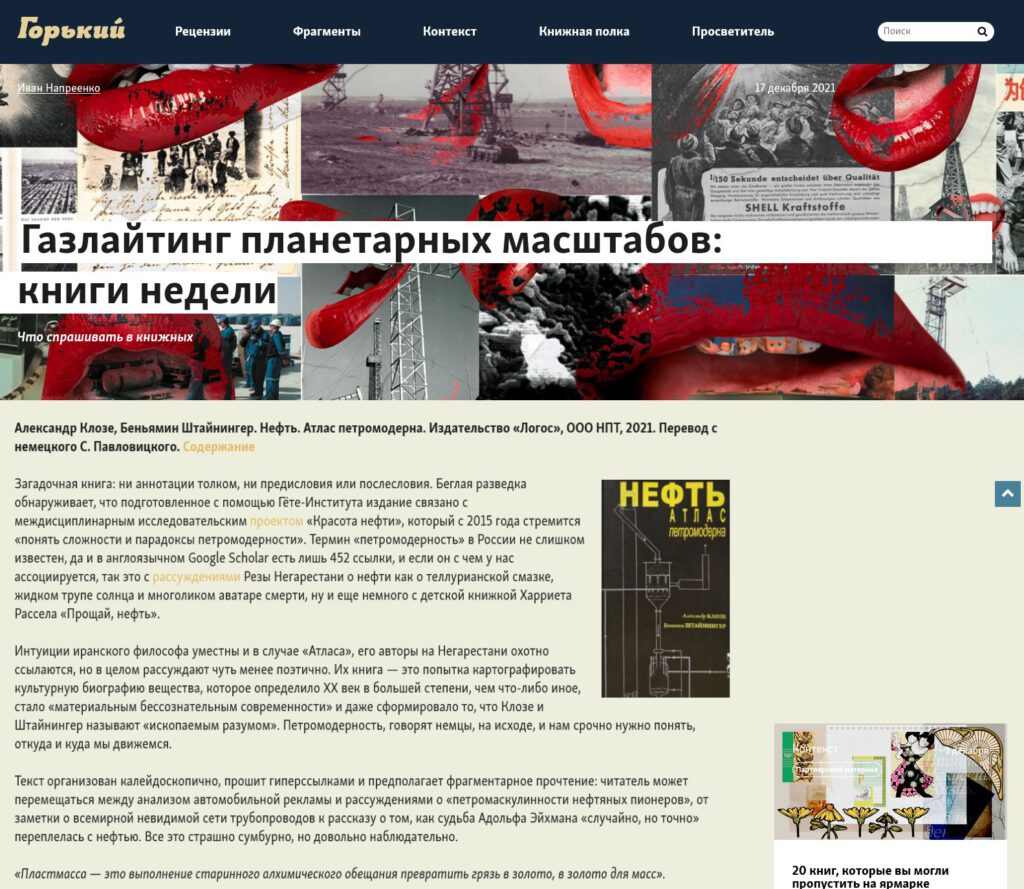
“Загадочная книга…..” (“ein mysteriöses Buch…”) Rezension auf gorky.media (link hier)

Schöner Blick ins Buch auf labirint.ru

Und eine schöne Rezension ebenfalls hier:
“Нефть, хоть и выглядит, субстанцией плотной, чёрной и со специфическим запахом при добыче, когда «качалка нефть качает», умеет делаться невидимой , но абсолютно незаменимой в нашей жизни. Пусть мы этого и не замечаем, но тепло, свет, авто, средства красоты и прочие штучки от космоса, до азокерита для компрессов, всё это разные ипостаси чёрного золота. Войны, переделы сфер влияния, шантаж и подкупы, преступления – не нефть виновата в этом. Книга Александра Клозе и Беньямина Штайнингера открывает нам разные стороны тайной жизни нефти. Своего рода «всё, что вы хотели знать о нефти, но стеснялись спросить».
Стильно оформлена, проклеена, вроде бы, плотно. Хорошая печать, много иллюстраций и текст вполне доступен. Местами читается как детектив, в целом – познавательно. Полезной может оказаться многим, поскольку нефть, поистине, вездесуща и многолика.”
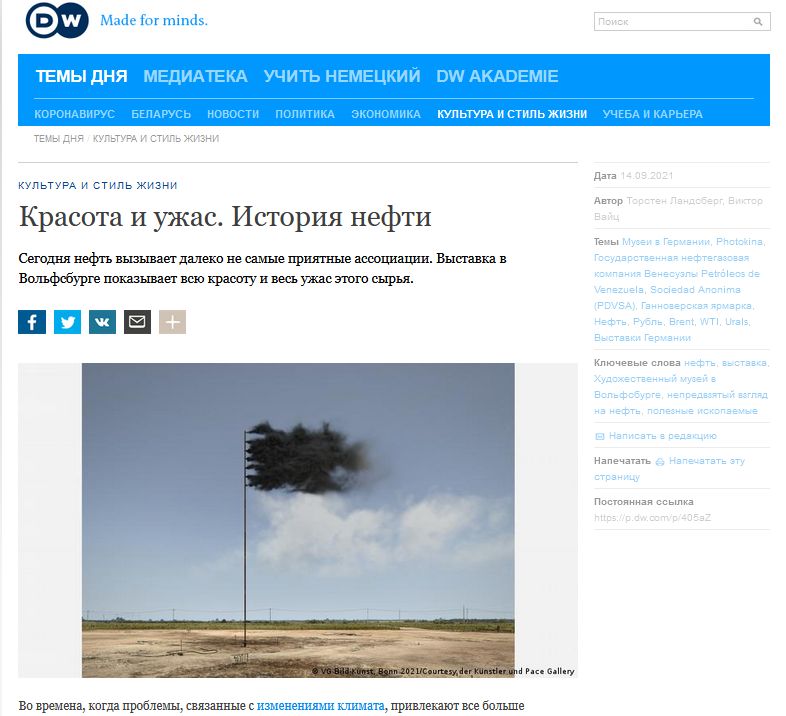
The exhibition »Oil. Beauty and Horror in the Petrol Age« presented in the Russian edition of »Deutsche Welle«
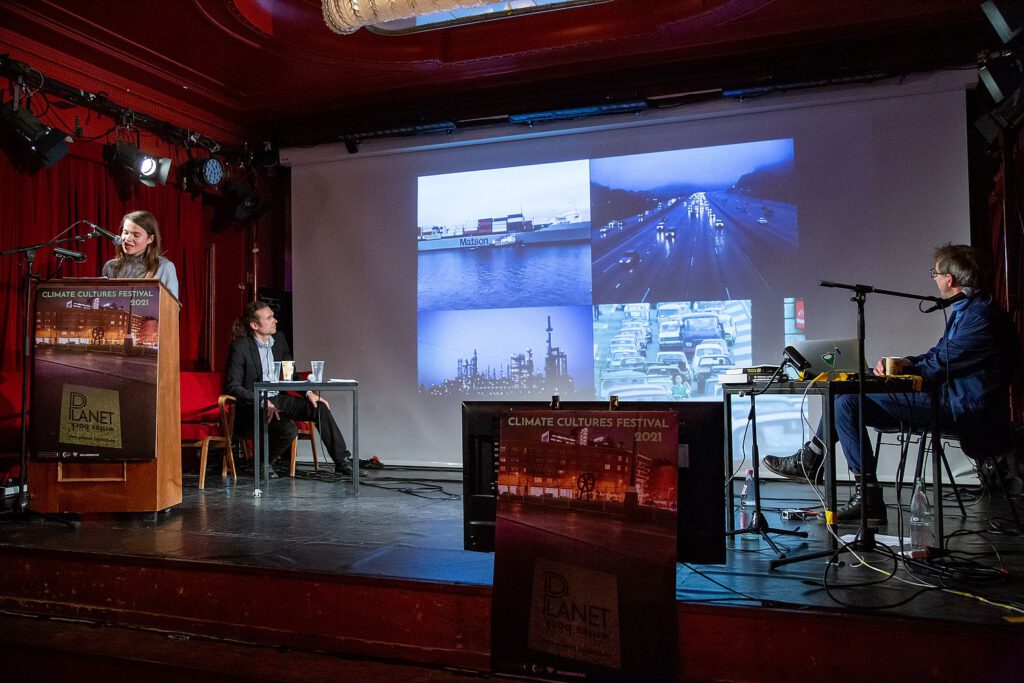
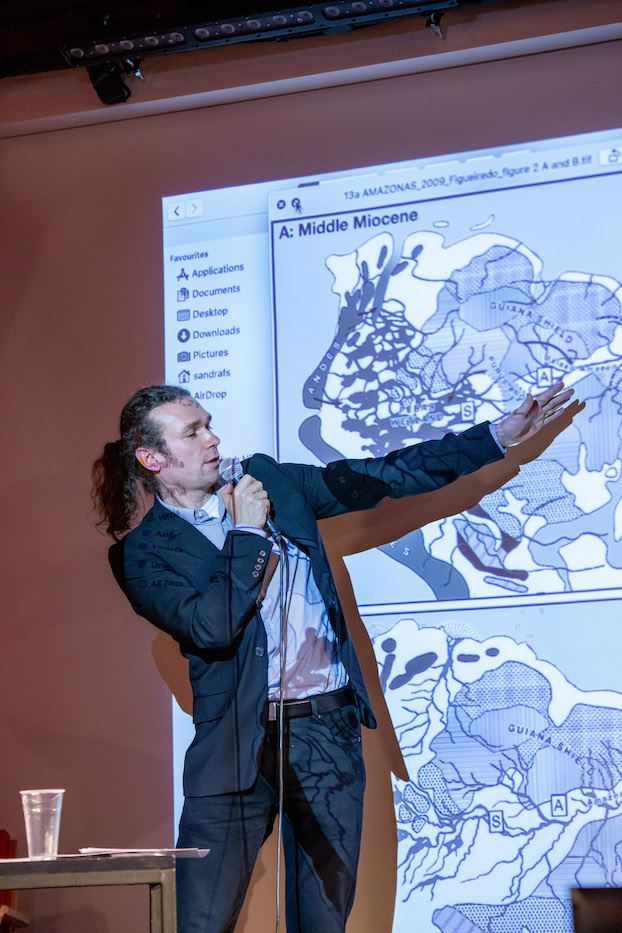
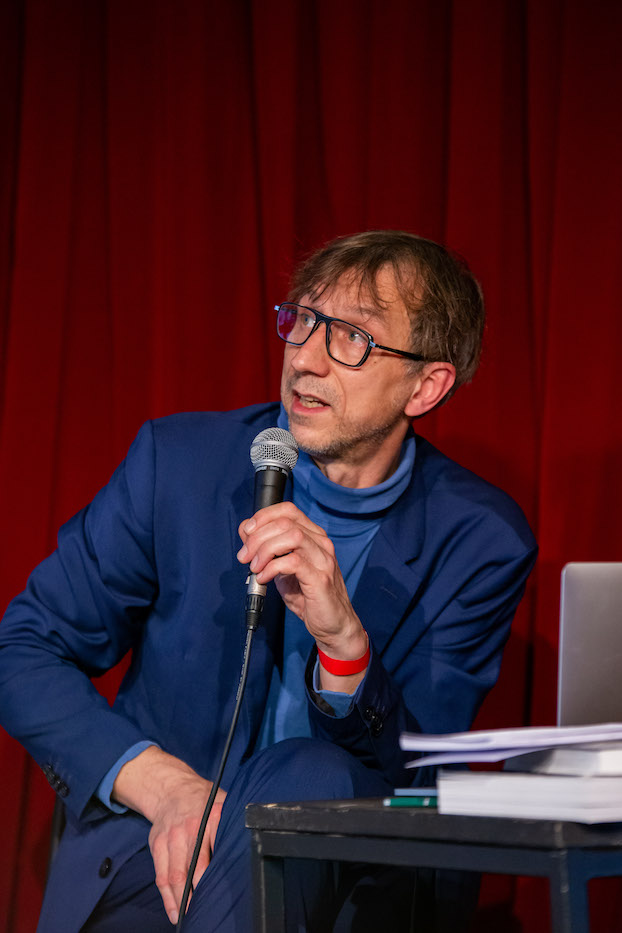
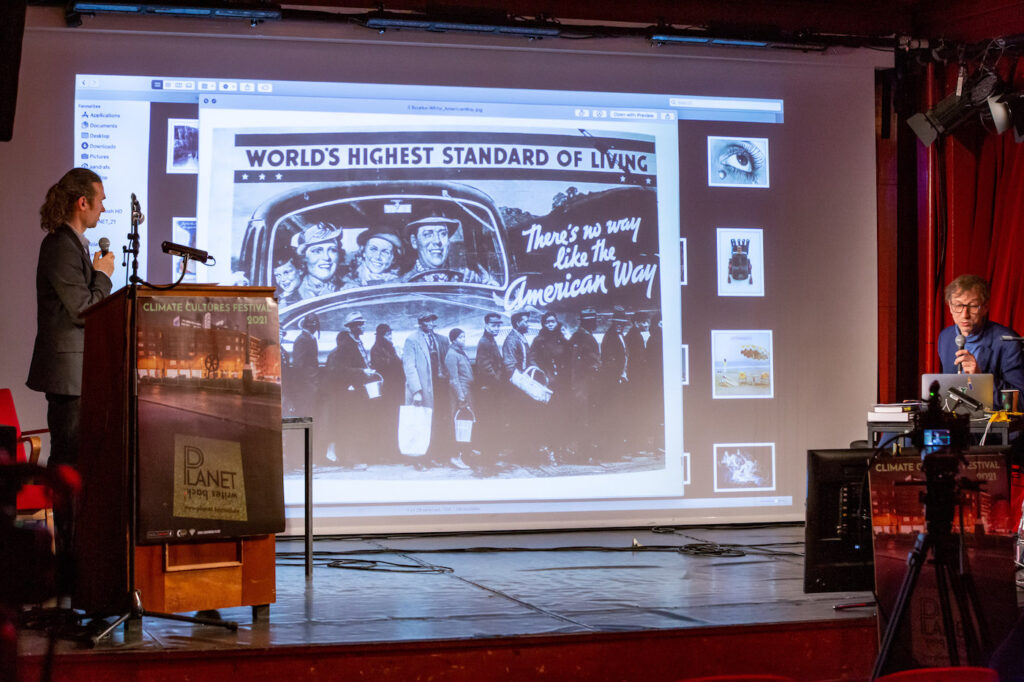
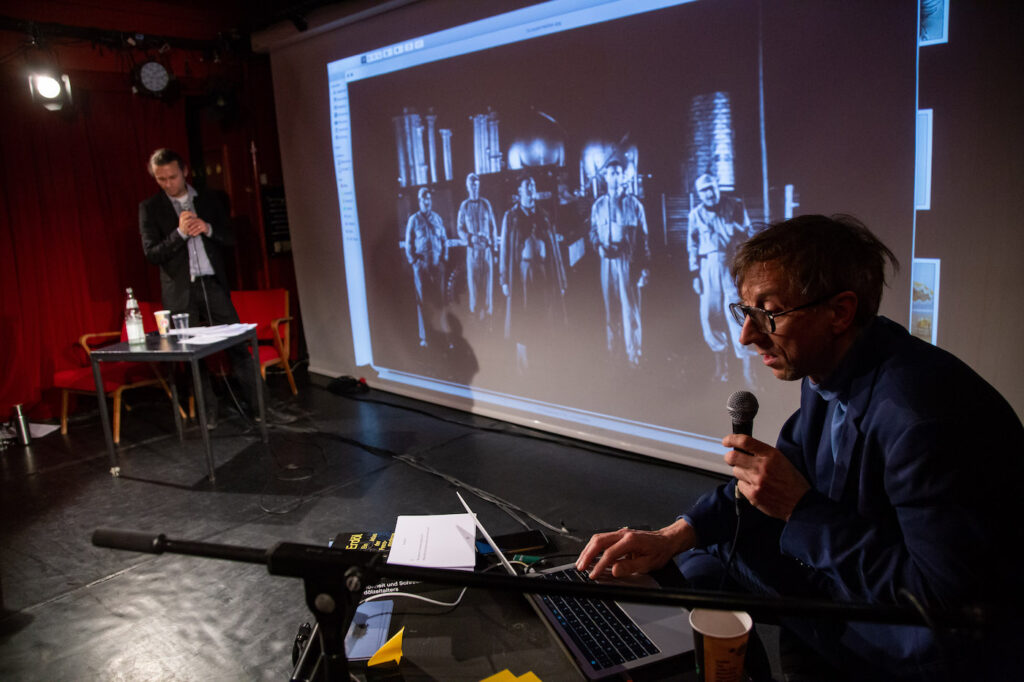
»Beauty of Oil« am 28.11.2021 beim Festival »Planet schreibt zurück!« im Roten Salon der Volksbühne am Rosa-Luxemburg-Platz, Berlin

In drei Kapiteln (I Sonde, II Raffinerie, III Erdölmensch) sprachen und diskutierten Benjamin Steininger und Alexander Klose über zentrale Aspekte ihrer kuratorischen Erforschung der Petromoderne. Das Motto des Festivals, “Planet schreibt zurück!”, diente dabei als Ausgangs- und Endpunkt unserer eigenen Überlegungen:
Wie schreibt man so, dass ein Planet auch antworten kann? (Über Exploration und Wissensformen des Untergrunds)
Was schreibt er uns? (Fossiles Wissen, deep time und Systemökologie als Kollateraleffekt der Explorations- und Extraktionstätigkeit)
Welches Bild des Menschen sendet uns der Planet zurück? (Wir Petromodernen, im schwarzen Spiegel des Öls)
Zu Videomontagen von Bernd Hopfengärtner las die Schauspielerin Franziska Krol Textpassagen aus unserem Erdölatlas.
Im Rahmen von “planet studiert” – Beiträgen des HU Germanistik-Seminars “Climate Fiction” (WS 2021/22) zum Festival “Planet schreibt zurück” – entstand retrospektiv folgende Skizze:
Alena Naima Knüppel, Probebohrung in der Hölle

»Inspiriert vom Panel 8 „Die Petromoderne(n) – eine Retrospektive“ mit den Kulturwissenschaftlern Alexander Klose und Benjamin Steininger habe ich mich an einer Karikatur versucht. Eingestiegen sind die beiden mit Dantes Vorstellung der neun Kreise der Hölle. Sie interpretierten Dantes literarische Höllenvision als Schichtmodell der Erde, lange bevor die Wissenschaft dasselbe zu träumen wagte.
Der Titel des Festivals „Planet schreibt zurück!“ wirft jetzt die Frage auf, wie man überhaupt so schreiben kann, dass der Planet antwortet?
Nach Klose und Steininger könnte man „seismisches Wissen“ in diesem Sinne interpretieren: Vibrationsdruck sendet Signale in die Erde und der Planet antwortet, indem er die Signale zurücksendet und je nach Beschaffenheit unterschiedlich reflektiert. Durch die Wellensignale entsteht eine Vorstellung von der ‚Unterwelt’, allerdings nur als Hypothese. Die Antwort muss von Geophonen aufgefangen werden, der ‚Briefverkehr’ mit der Erde ist also hochtechnologisch. Dieses Wissen wird unter anderem Ölkonzernen zur Verfügung gestellt, die es ihrerseits dazu verwenden Hypothesen aufzustellen, wo Öl zu finden ist.
Meine Karikatur stellt nun folgendes dar: Angesichts der Klimakrise scheint mir ein derart imaginierter Briefverkehr, als bohre man gradewegs ein Loch in die Hölle.« (Alena Naima Knüppel )
Extraction—Production—Destruction. On the Contradictory Productivity of Oily Images
Essay by Alexander Klose, published in Resolution Magazine #1 (2021), ‘Hot Pictures’
Thinking about the roles images play in the production of knowledge around anthropogenic damage to ecosystems, one stumbles into a meshwork of contradictory relations. Principally, it is possible to distinguish between two different categories of images: those about situations of extraction/destruction (with images of disasters being the most popular) and those brought forward or made by the situations themselves. The latter is a relatively new (or newly recognized) type of images that Susan Schuppli refers to as ‘dirty pictures’, a way in which “anthropogenic environments are documenting their own damaged condition.” Both types of images share a problematic condition: as they formulate a critique of extraction, destruction, and pollution, they are also a part of or the result of the circumstances they depict. In the following text I will concentrate on image-making related to the extraction and uses of oil (and the products it is used to produce) as being probably the most important and momentous of all anthropogenic substances shaping the contemporary condition of the earth. I will track some of these contradictory constellations and try to elaborate an understanding of the dialectical yet calamitous dynamics associated with producing these images.
Download full article as pdf here
»Beauty of Oil« am 24.11.2021 in der ARTE-Sneak-Preview am Kunstmuseum Wolfsburg: »Petro-Melancholie. Das Erdölzeitalter im Spiegel der Kunst.« Ein Film von Mathias Frick. Und am 11.5.2022 auf ARTE!
Wir wurden in einen Rausch an einem Stoff hineingeboren, der uns einst grenzenlose Freiheit, die Moderne und Lebenskomfort versprach. Das Erdöl, mit seiner schier endlosen Produktpalette, hat wie kaum ein anderer Stoff unsere moderne Gesellschaft geprägt und verändert. Und unsere Welt gleichzeitig in großes Leid gestürzt. Heute ist unser Öl-Rausch zu Ende, die Dämmerung des Erdölzeitalters hat begonnen und der Film blickt mit Künstlern und Künstlerinnen zurück auf die Petromoderne – unser Zeitalter des Öls.
Und er stellt sich die Frage: Was hat das Erdöl nur mit uns gemacht und warum fällt es uns so schwer, uns von dem schillernd schwarzen Rohstoff zu lösen?
Produktion: VIVE la DOK Filmproduktion und Navigator Film (Österreich) in Koproduktion mit ZDF/ARTE, 2021, Regie: Mathias Frick, 52 min
»Fossile Stoffe reichen bis in unsere Körper«, Interview mit Alexander Klose und Benjamin Steininger in der Wiener Wochenzeitung »Falter« (17.11.2021)
Oily Houston
a visit to the Wiess Energy Hall at the Houston Museum of Natural Science (HMNS)

All images and videos in this post by alexclose.
Visiting the ‘Petro Metro’ on invitation by Popup Goethe’s director Grant Aymond, I get the chance to meet Daniel Minisini in person. He is a geologist working for Shell, and in his spare time he hosts an interview series at the local free radio station KPFT Houston directed mainly at the geologists and oil engineers working in Houston. [But via his Youtube Channel also to critical petromodernity researcher all over the world.] In the beginning of 2021 he had interviewed Benjamin and me via zoom.
link to background information on minigeology on Rice University Website
When Daniel heard of my planned trip to Houston, he suggested a couple of places that I should definitely visit, among them the Wiess Energy Hall at the HMNS. The department, which has been completely remade for the bargain price of 42 Mio US$ and reopened in 2018, is dedicated to the physical aspects of a phenomenon that carries metaphysical proportions: energy, and its live-creating, live-sustaining powers.
In Houston, the world capital of oil, this comes down to a narrative almost thoroughly dedicated to the geological, technological, and—to some extent—social aspects of the exploration, production, refinement and consumption of petroleum.
The line-up of sponsors is a who-is-who of the oil business:
One can go down into the depths of the earth inside an enlarged, space capsule-like drillhead until striking oil. It feels like inside a shaky elevator with an overdimensional floor display:
Almost the same scenario is offered a second time, this time we travel horizontally over the land near Houston, than underneath it, in a spaceship-like fracking device:

Mentions of the problematic aspects of tough, unvonventional oil, about the damages done and the civil protests? None. The exhibition is a celebration of the achievements and perspectives of the “unconventional revolution” (as Daniel told me, the technologies of fracking and the like are referred to within the industry).
Oh, wait a second, here’s a critical passage dedicated to the possibility that it might be necessary in the future to step away from fossils towards other fuels:

Remarkable, though, that the striking argument is purely financial.
A whole panorama in the best tradition of the “Futurama” commissioned by General Motors for the 1939 World’s Fair “The World of Tomorrow” in New York City is dedicated to future energy city (supported by Chevron). But it was closed for maintenance, I could only take a glimpse from the side.
It’s not hard to find professional coverage of this feat on the internet, though, for instance here, on the Museum’s Website.
After a lunch presentation of our work with Beauty of Oil I gave the next day at the architecture faculty hall of Rice University, a distinguished professor and member of the RDA (Rice Design Alliance) asked me, what i would answer to the critique that we have just changed the pictures within but not the museum itself with our OIL-exhibition at Kunstmuseum Wolfsburg. Given, that I had not seen a hint of a critical reflection of the oil legacy in all the impressing, shiny, and flashy museum landscape of Houston (with absolutely fantastic ensembles as the Cy Twombly Gallery in the Menil Collection and other top rate shows and collections dedicated mainly to classic modernity—meaning, the heydays of petromodernity), and also given, that I did get no answer whatsoever to my questions for an official critical discourse on petromodernity in the artworld or elsewhere from my academic audience at Rice, this fundamental critique seemed to be rather odd.
Benjamin Steininger: »Ammonia synthesis on the banks of the Mississippi: A molecular-planetary technology« in: »Anthropocene Review (2021), Special Issue: Mississippi«

The paper discusses the CF-industries ammonia plant in Donaldsonville, Louisiana. The plant is framed as an exemplary site from which the Anthropocene can be observed and understood. In doing so, a proposal for a “chemical cultural theory” is set out, to allow us to understand such molecular planetary technologies and interpret their (geo)historical significance. As one of the largest fertilizer plants in the world in terms of its output, and one of the largest chemical plants along the “Petrochemical Corridor,” a cluster of chemical industries situated between Baton Rouge and New Orleans, Donaldsonville typifies the relations between the nitrogen and hydrocarbon industries. Catalysis is here used both as a chemical concept and as a metaphor central to the proposed chemical cultural theory. As key to the Haber-Bosch process and refinery technologies in general, investigating the role of catalysis allows us to connect the history of the Petrochemical Corridor to that of German industrialism. This relation reveals how, from the late 19th century through to the World Wars, an ambivalent industrial co-operation between the US and Germany not only transformed local and planetary environments, it also contributed to the Anthropocene condition.