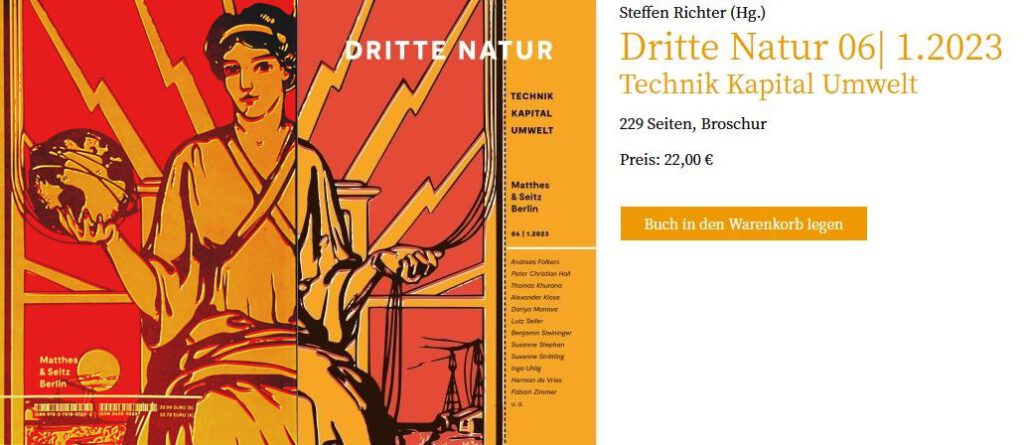
Seit dem russischen Krieg in der Ukraine ist sie Thema politischer, ökonomischer und kultureller Debatten: Energie. Sabotierte Pipelines, gebrochene Staudämme und beschossene Atomkraftwerke machen die Verletzlichkeit unserer Energieinfrastrukturen greifbar – und die unserer gesamten energieintensiven Lebensform. Das fossile Zeitalter hat Karbon- und Petromoderne ermöglicht und weitreichende Freiheitsroutinen etabliert. Zugleich aber untergräbt es unsere Lebensgrundlagen. Damit überlagern sich die vom Krieg angefachten Diskussionen über Versorgungssicherheit mit Debatten, die seit langem über die Notwendigkeit einer postfossilen Kultur geführt werden. Energieformen nämlich prägen Kulturformen. Und Geschichte lässt sich immer schon als Geschichte von Energiewenden und Konflikten zwischen Energieregimen lesen. Diese Ausgabe der Zeitschrift »Dritte Natur. Technik – Kapital – Umwelt« widmet sich in ihrem Schwerpunkt verschiedenen Facetten von Energiekulturen – etwa dem Energiemanagement der Finanzmärkte, autofreien Sonntagen in der alten Bundesrepublik oder Windradromanen der Gegenwartsliteratur.
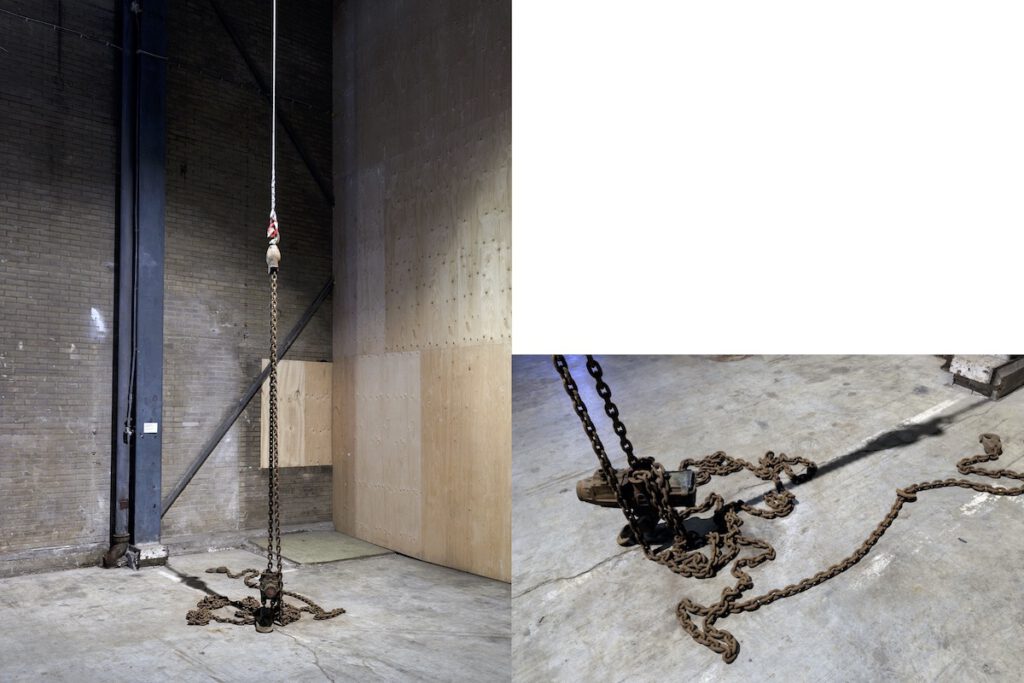
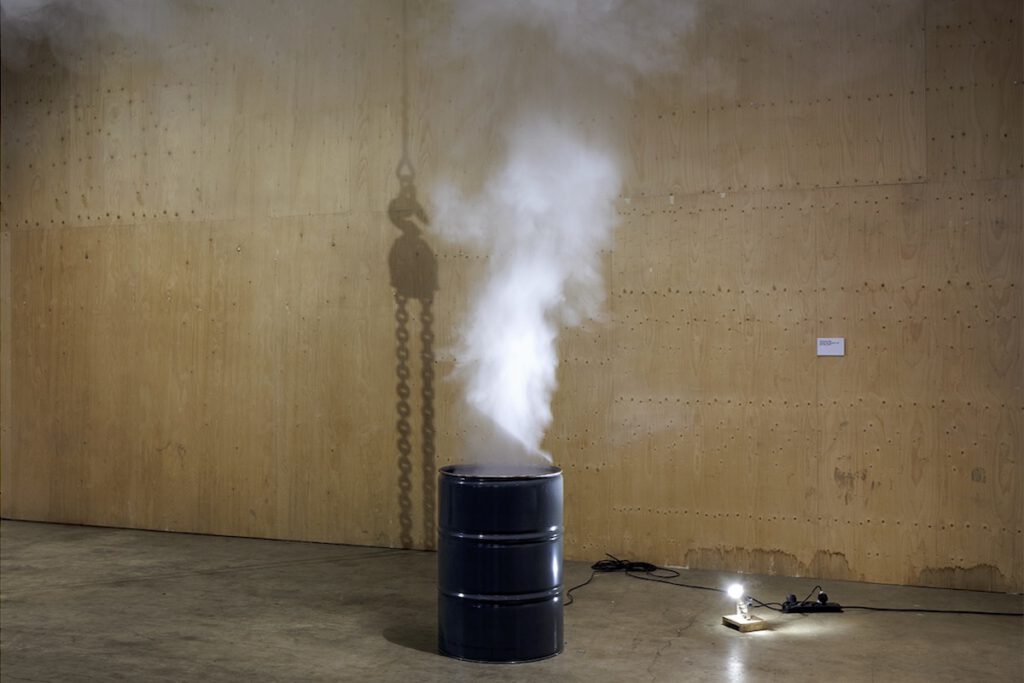
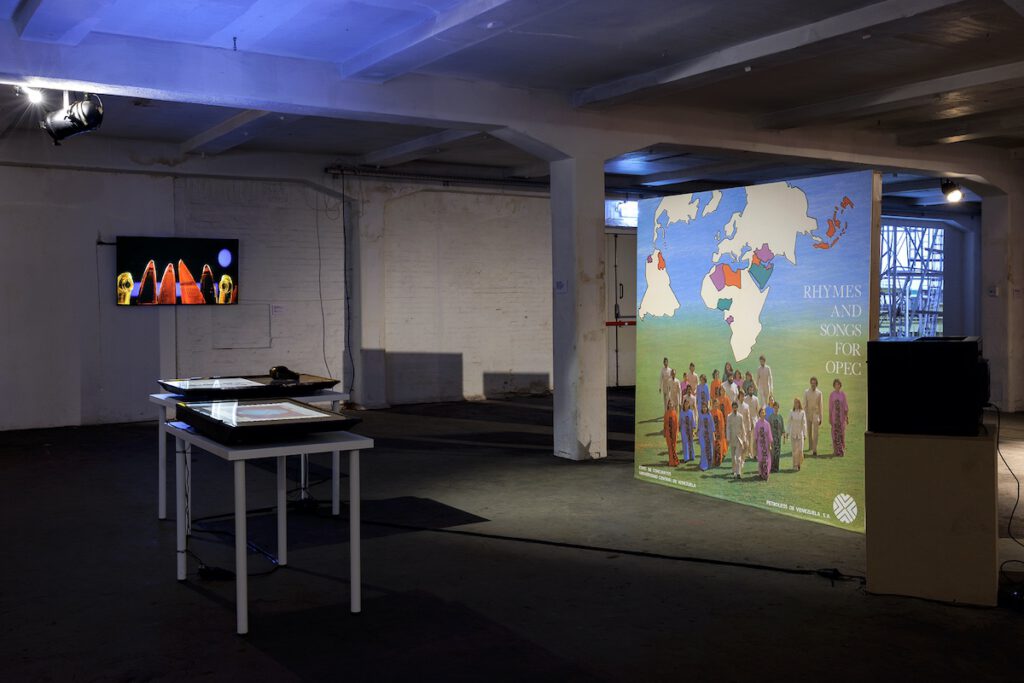
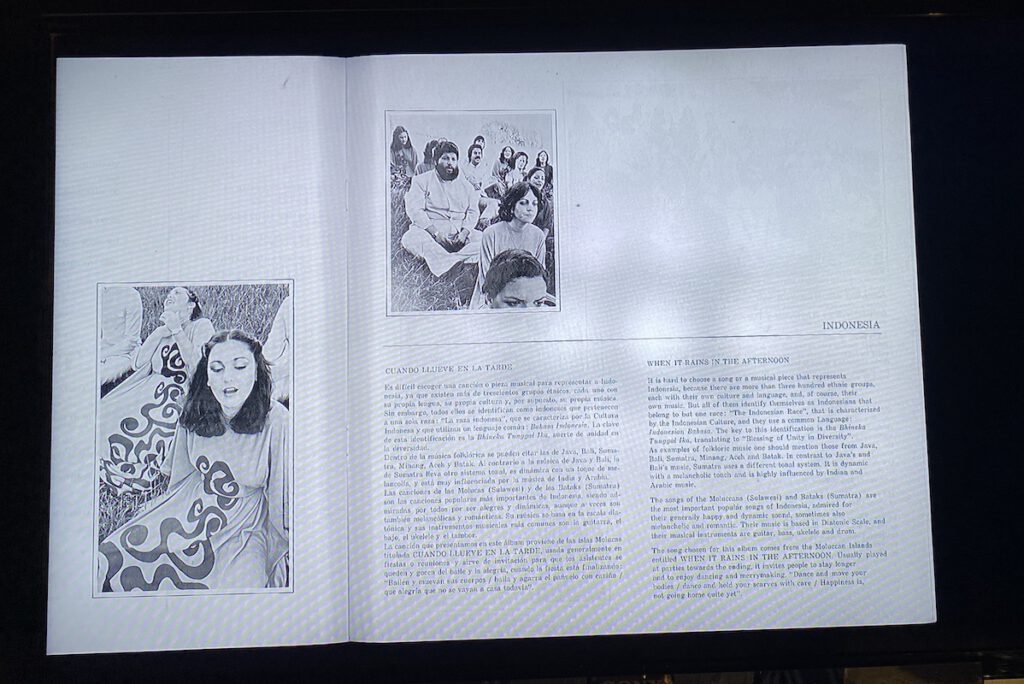
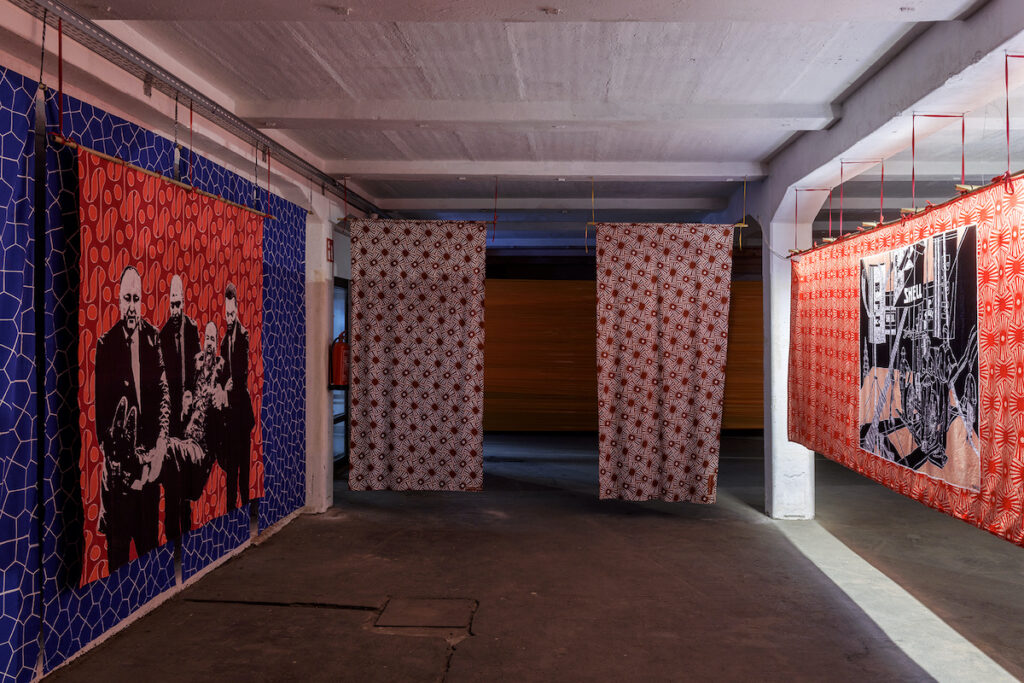
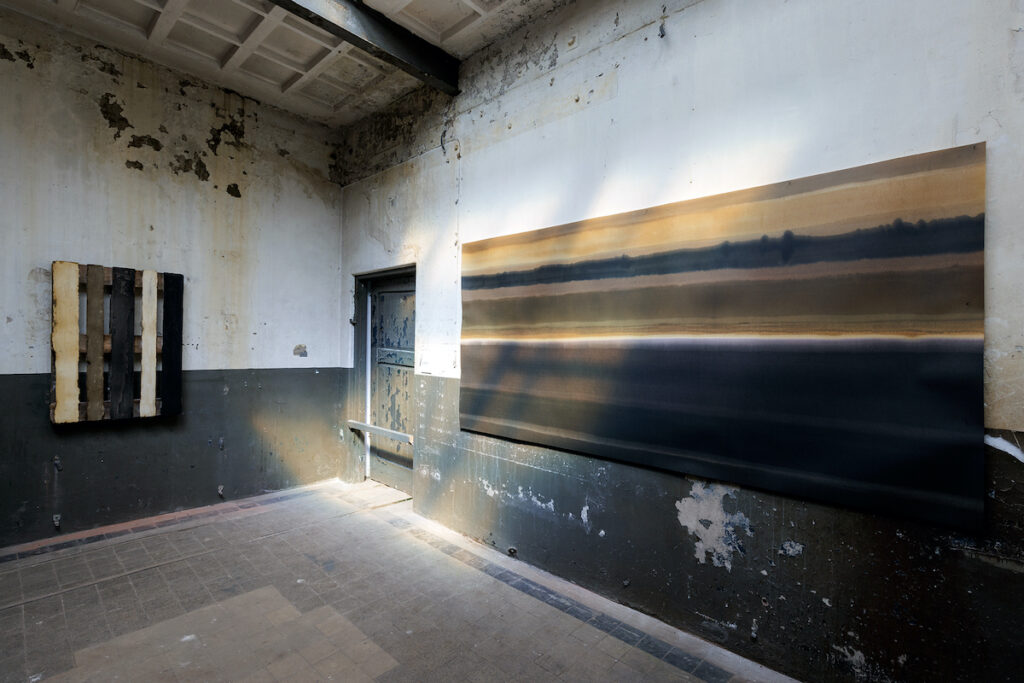
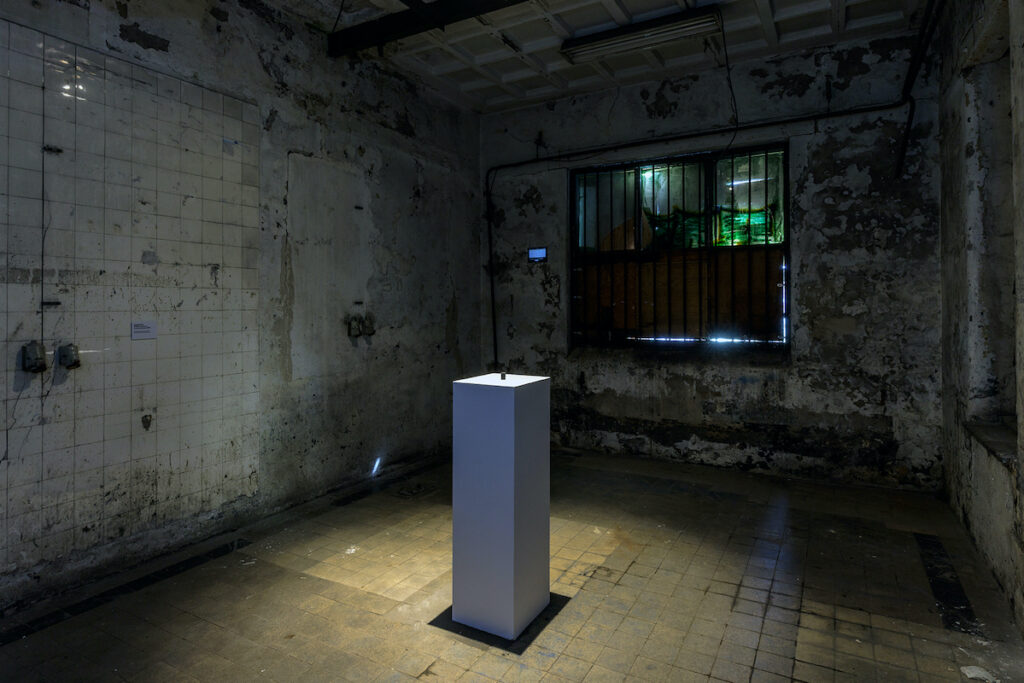
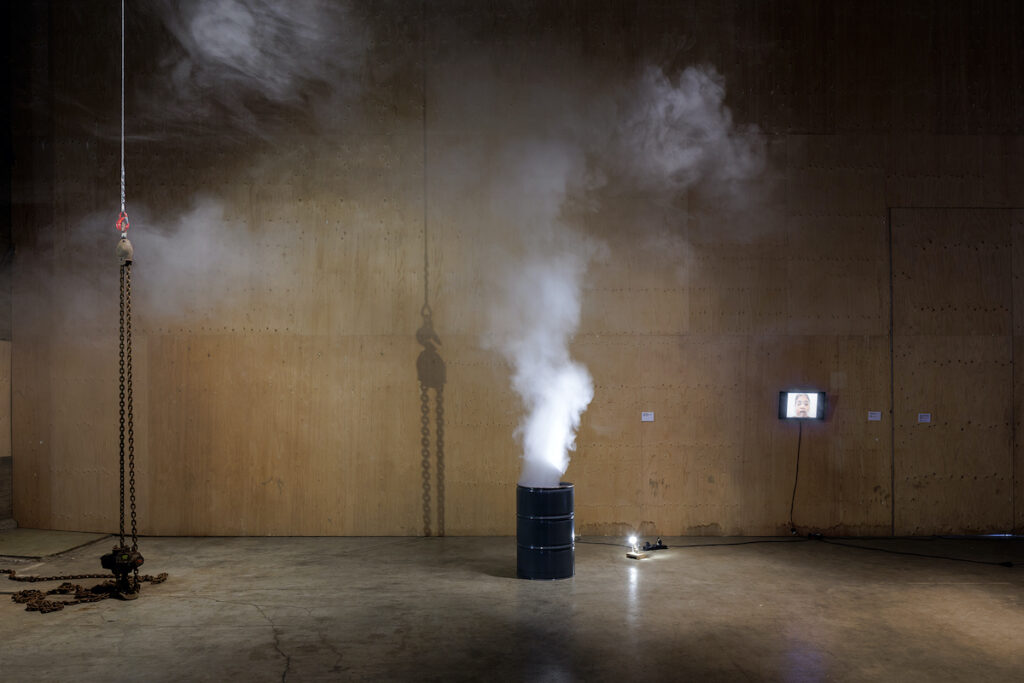
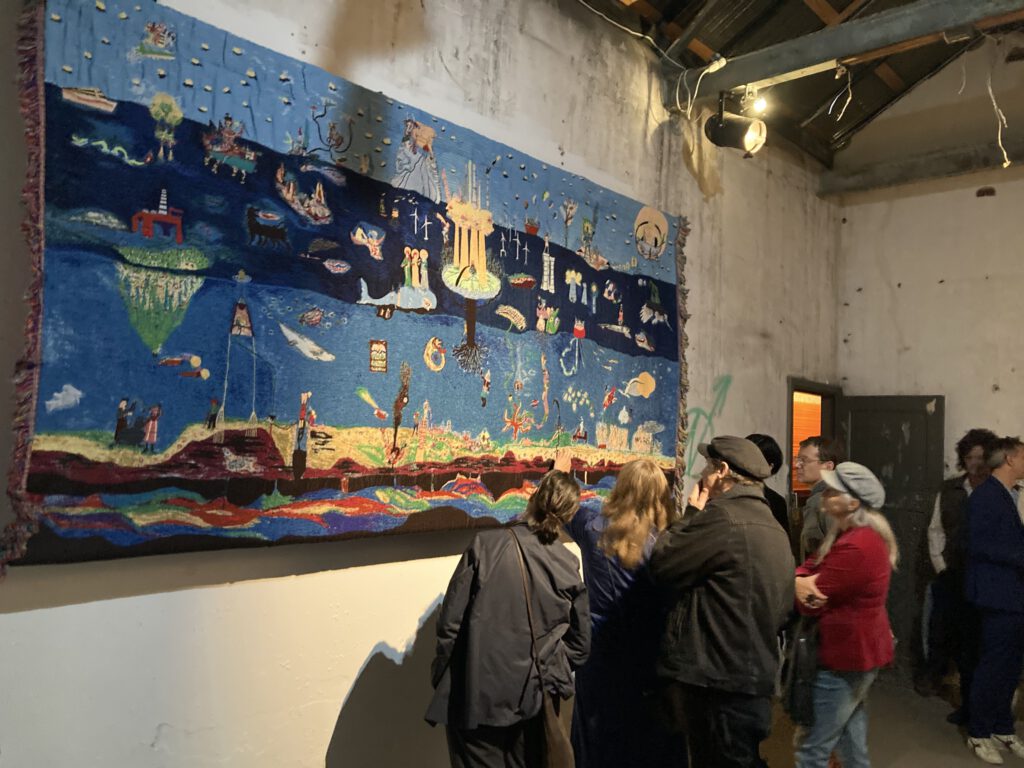
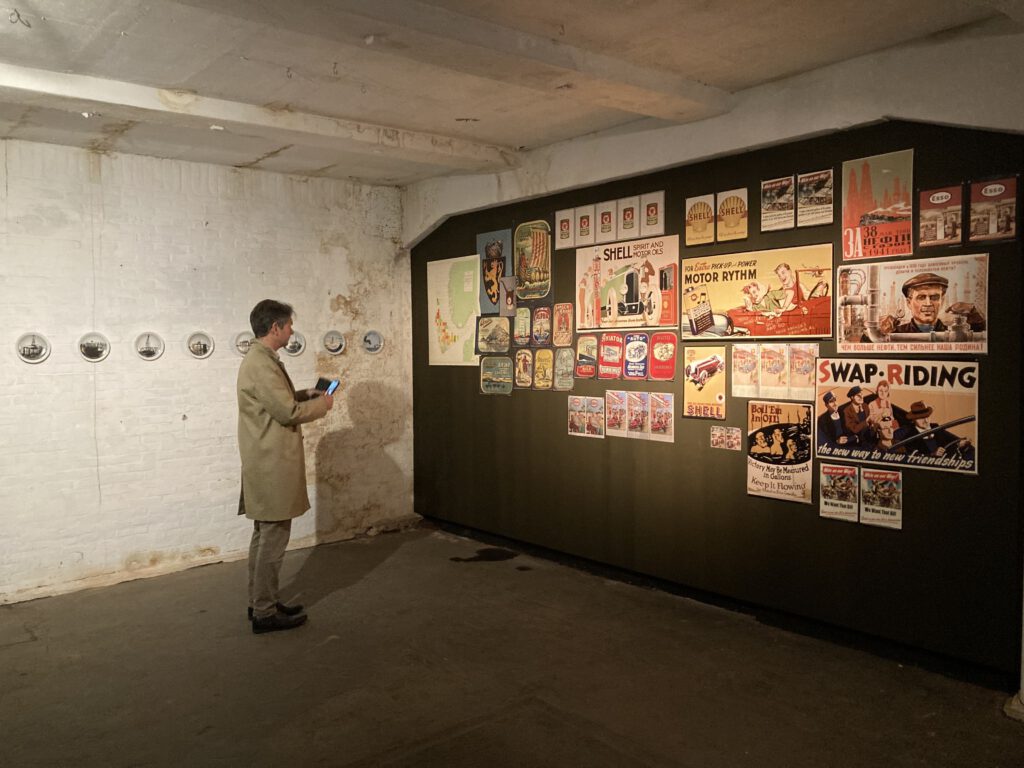
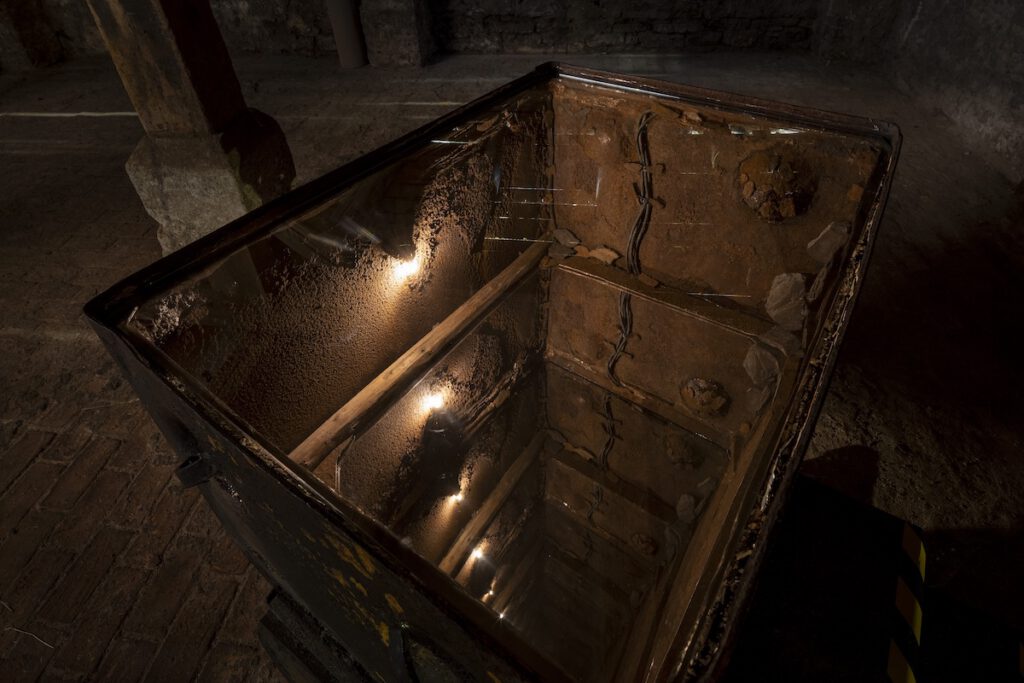
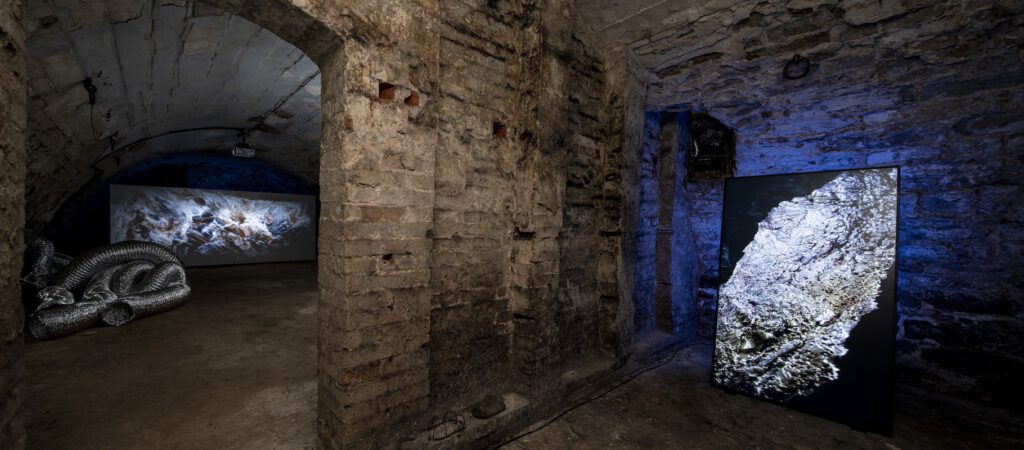
Alessandro Balteo-Yazbeck – Last oil barrel, date postponed
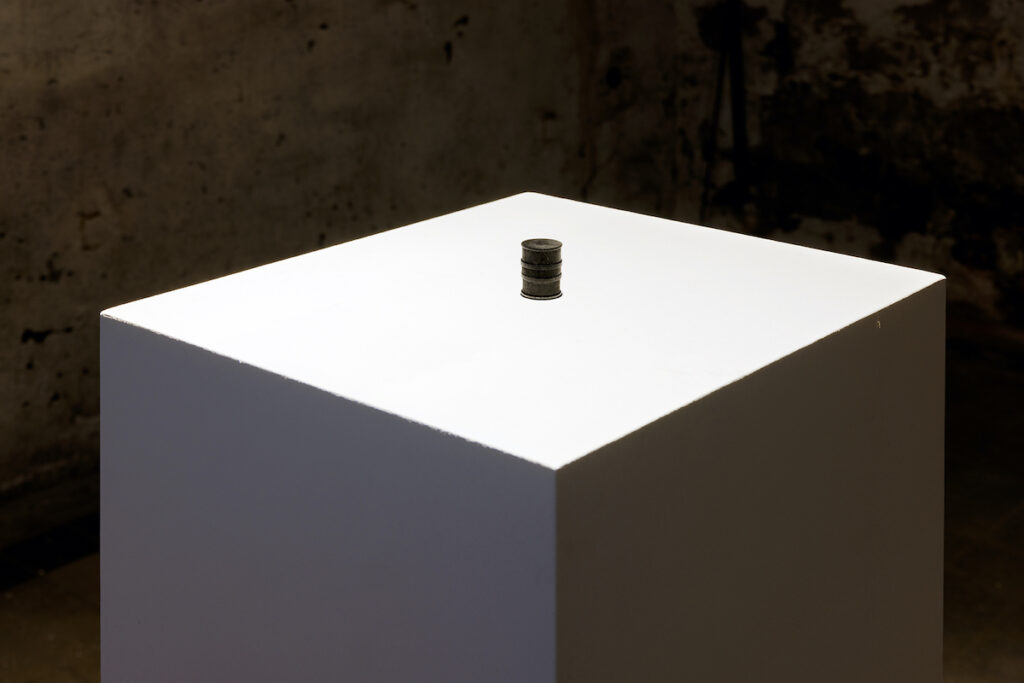
Alessandro Balteo-Yazbeck – Last oil barrel – detail
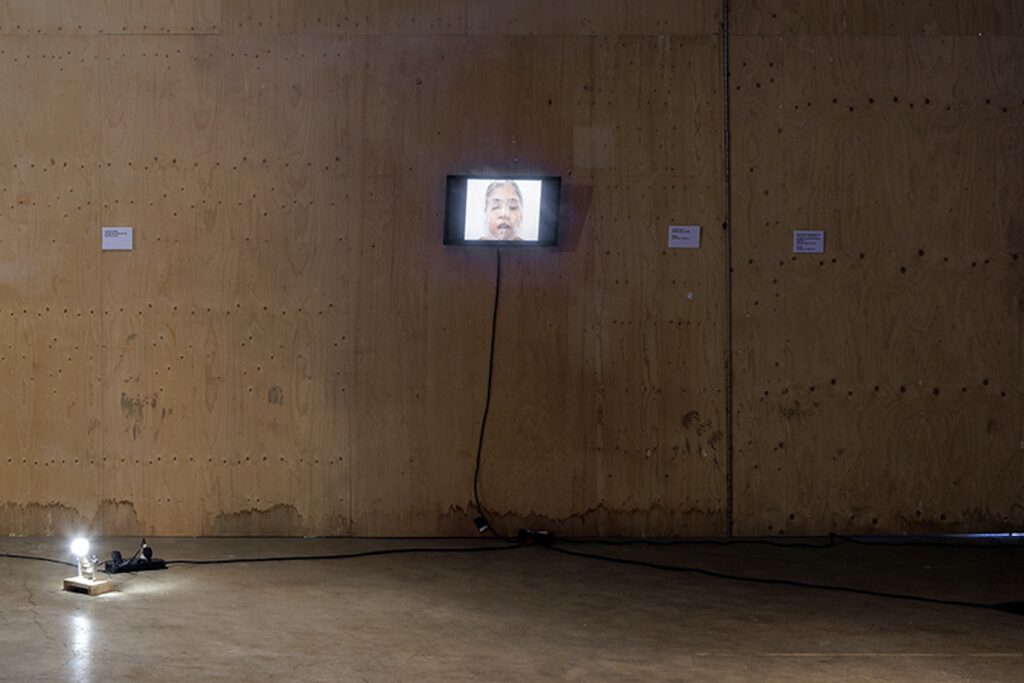
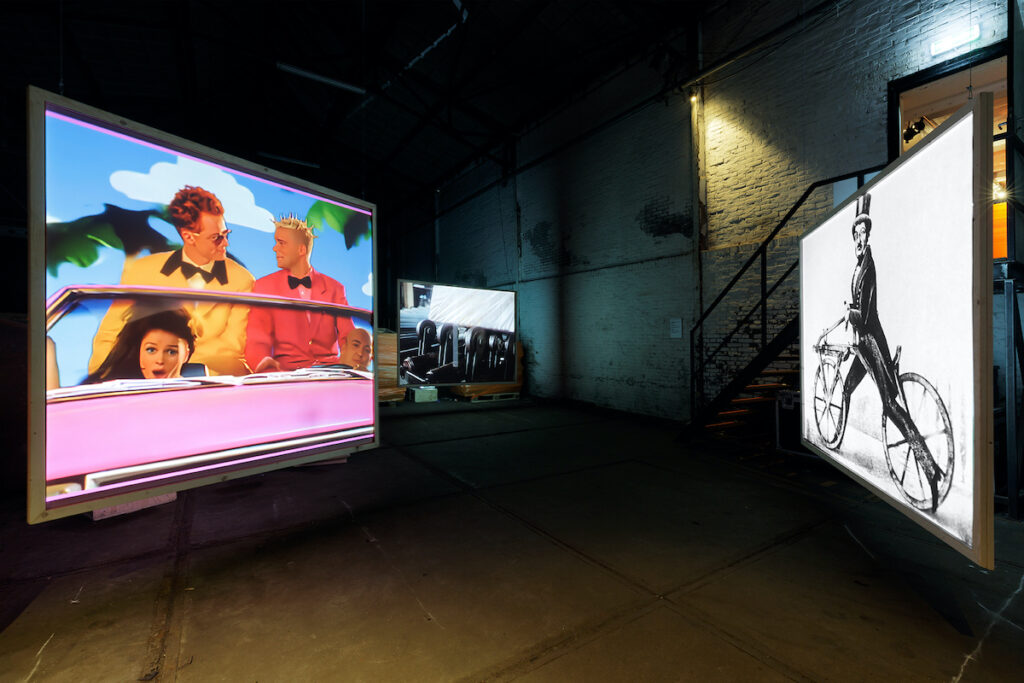
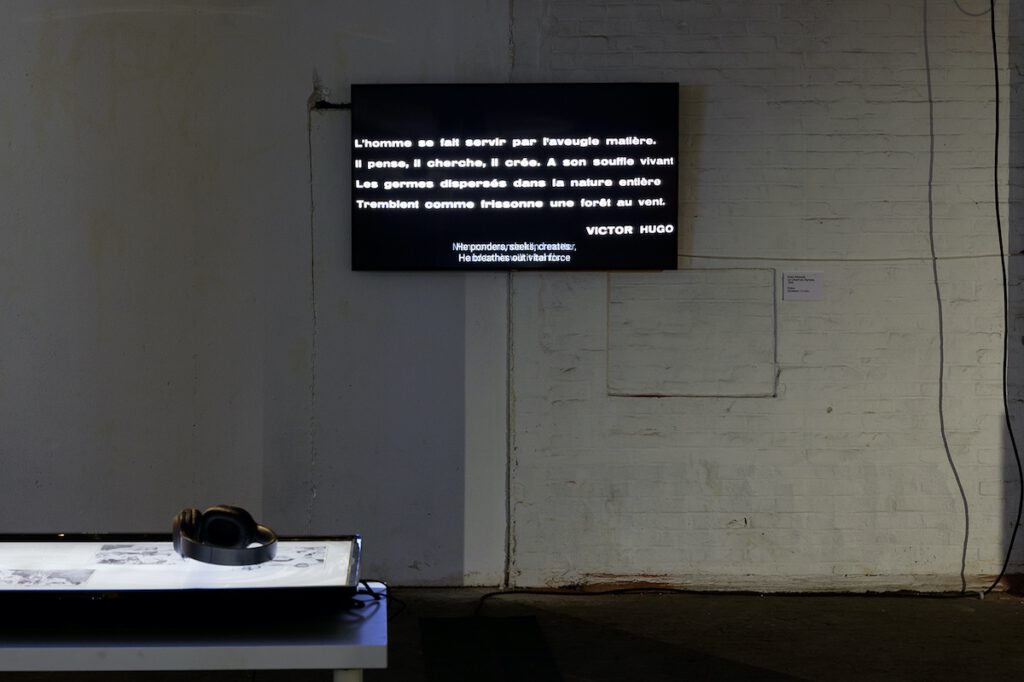
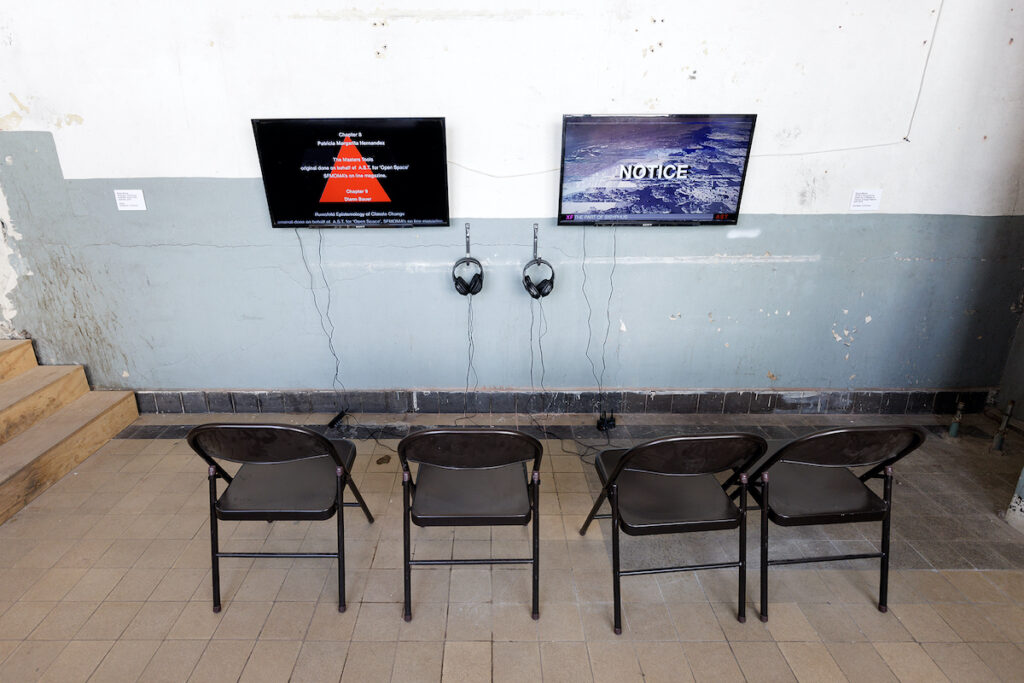
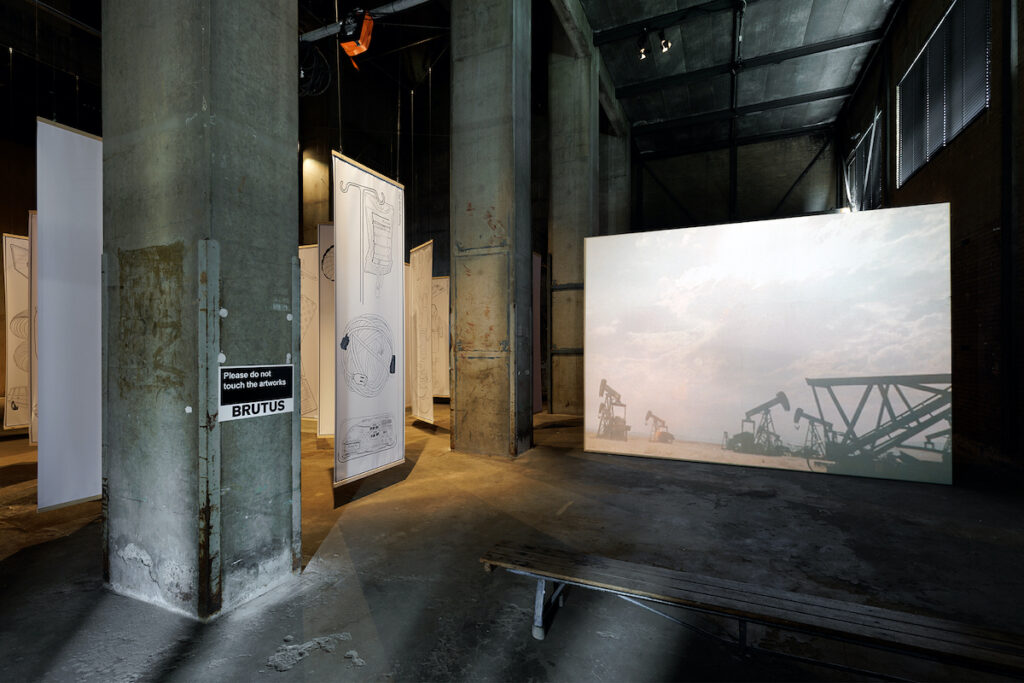
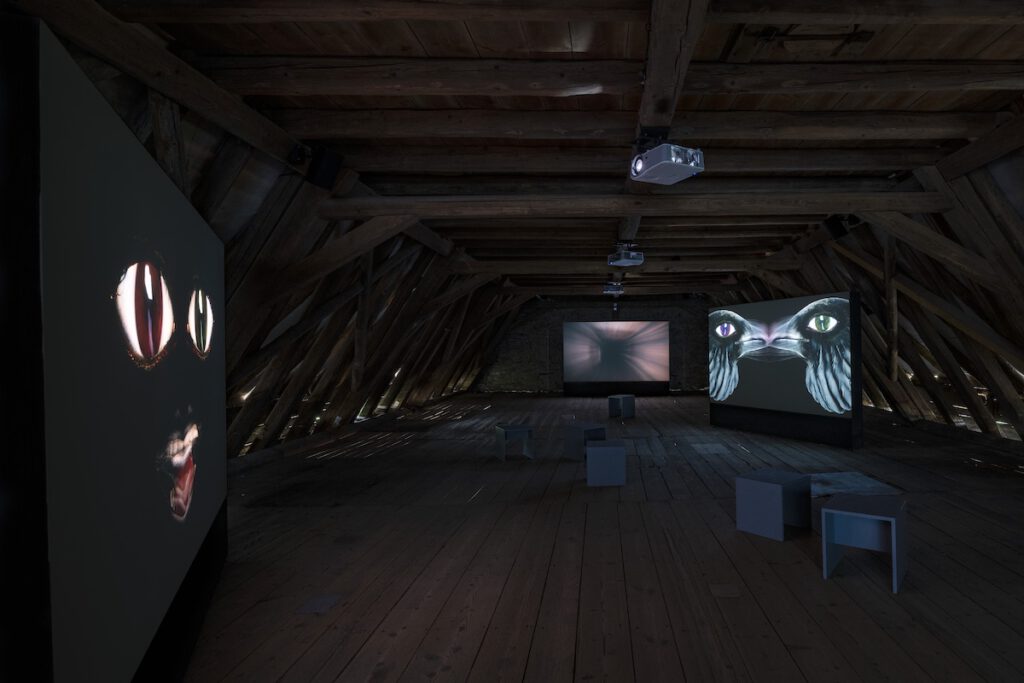
Diann Bauer – Prologue: Politics as Palliative Care of the Species, 2019 – Video 11:20 min. + XFAST, 2019 – Introductory video for ‘If Nature is Unjust, Change Nature’ talk, 5:20 min
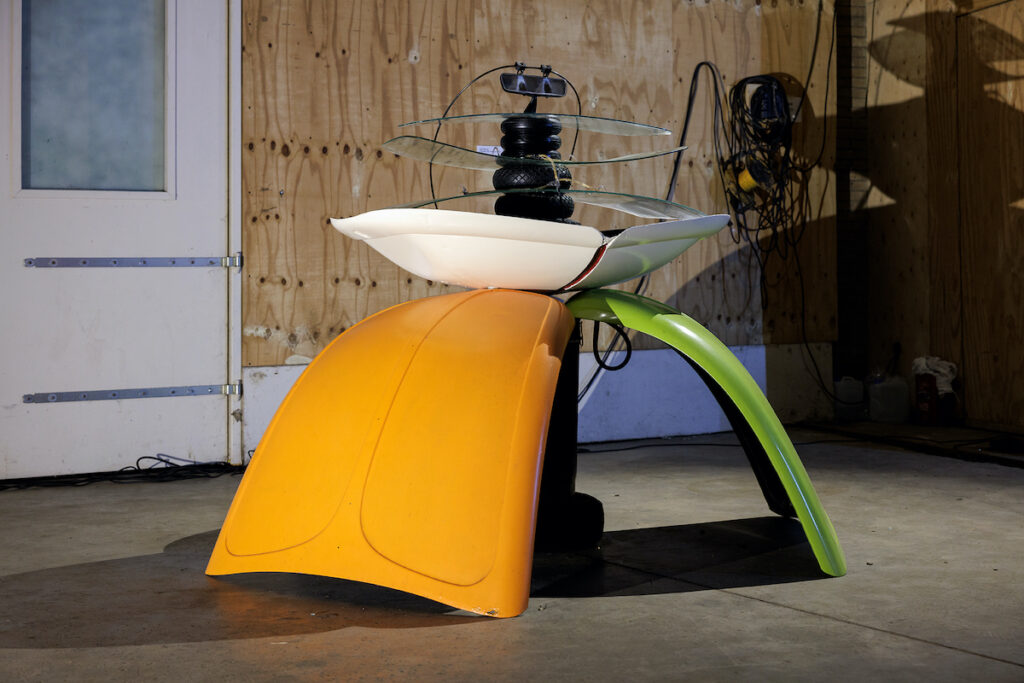
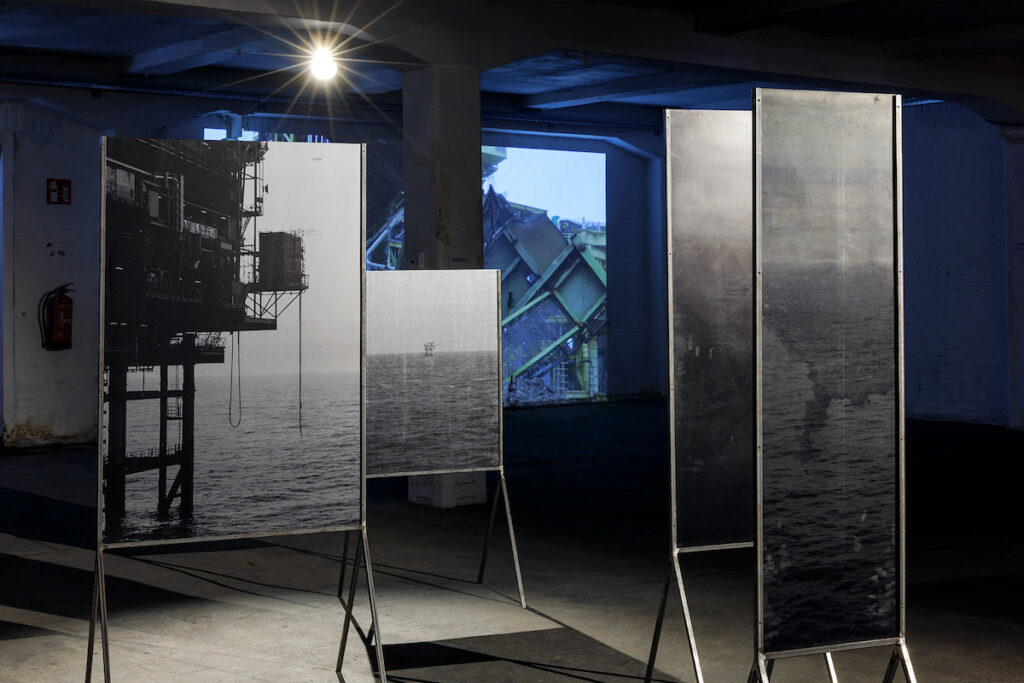
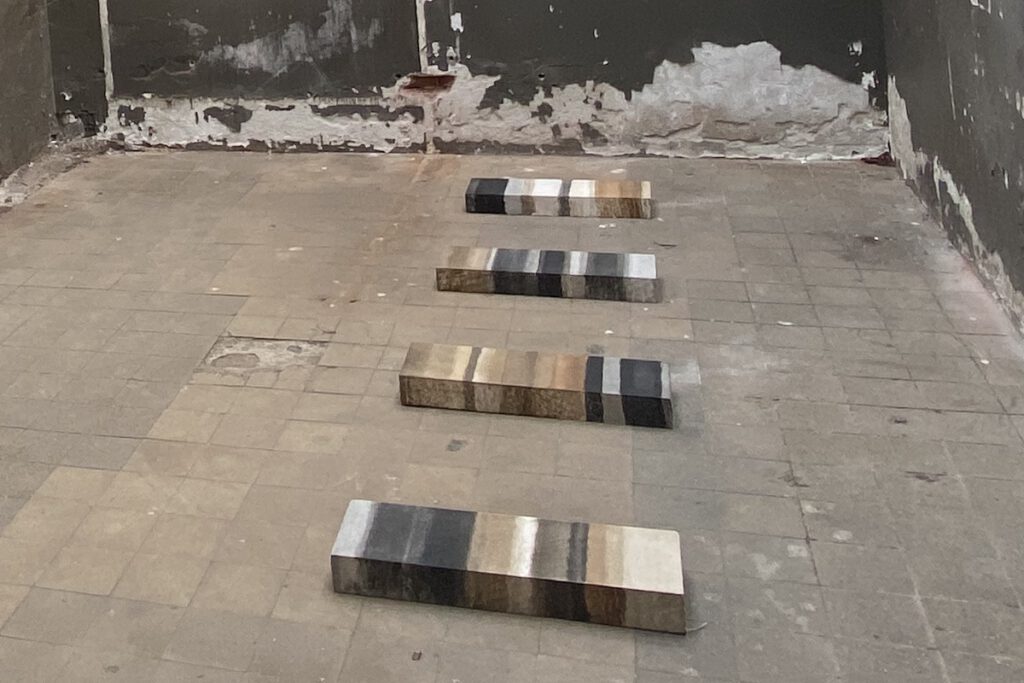
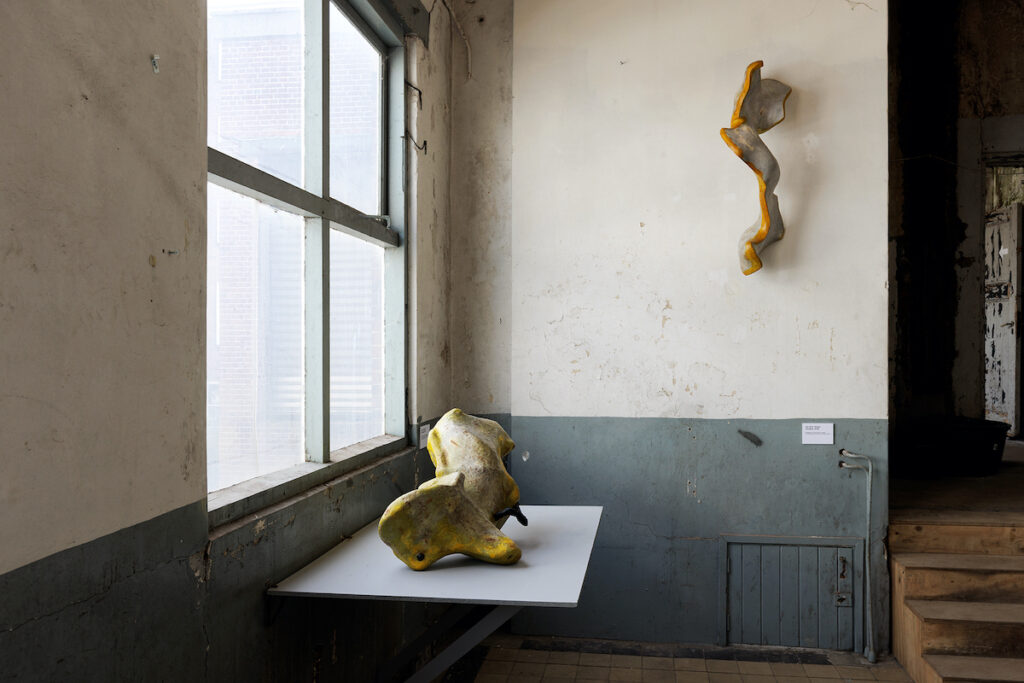
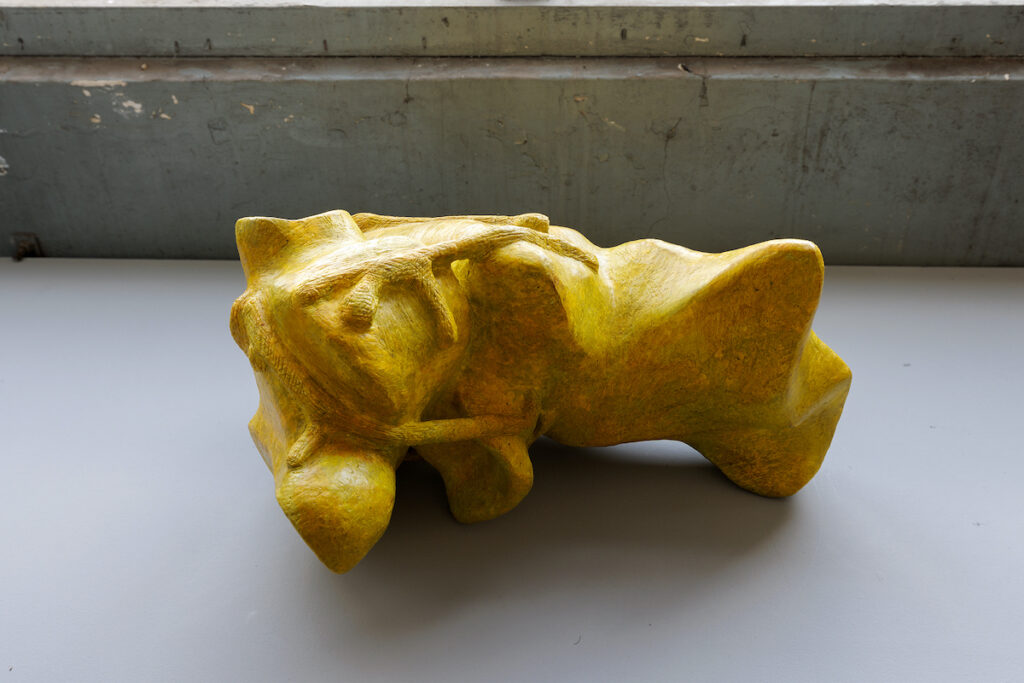
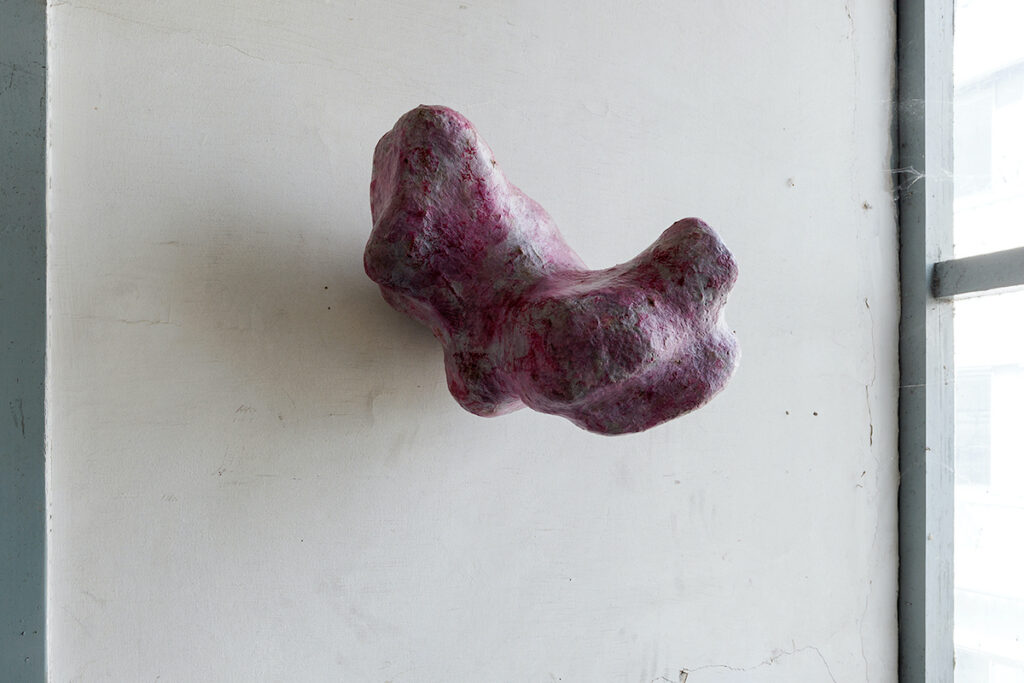
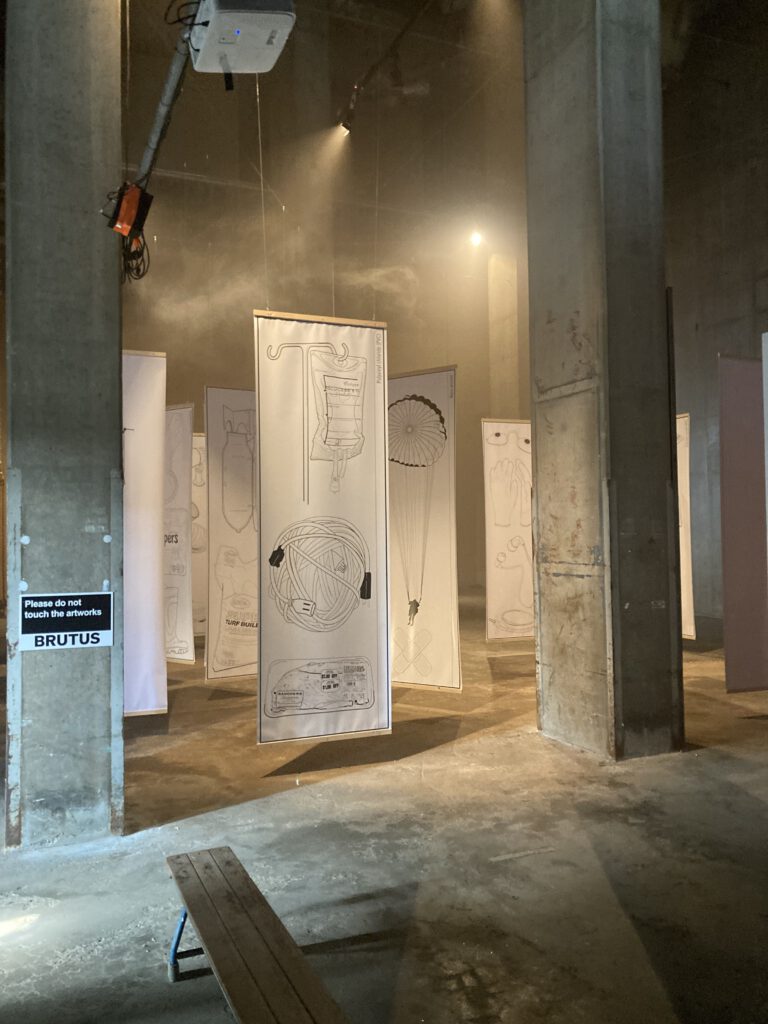
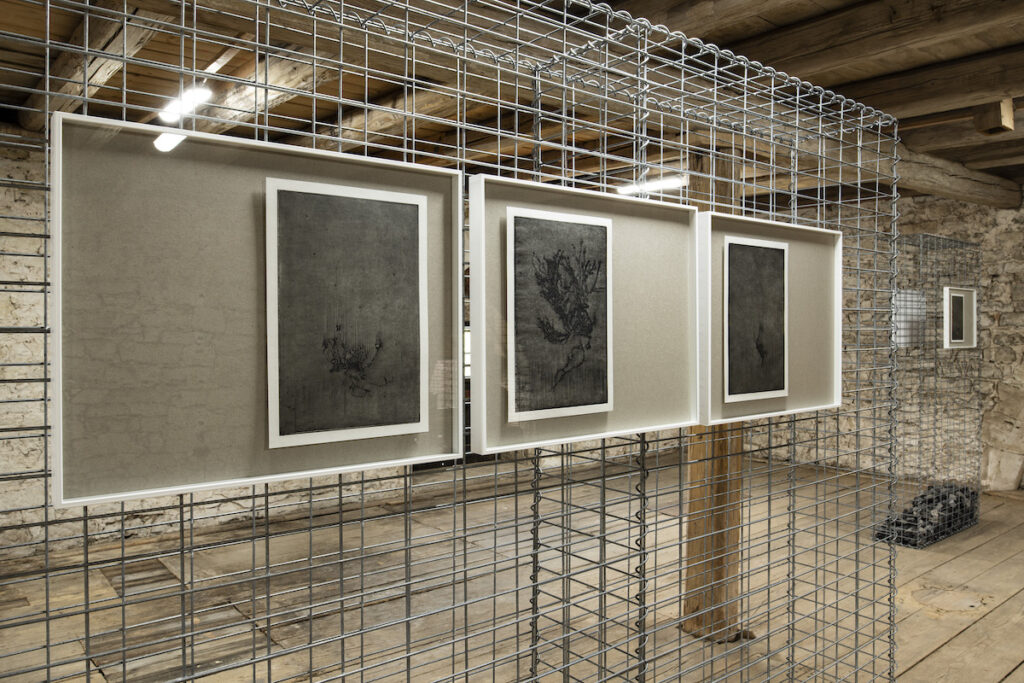
Jan Eric Visser – Untitled, 2023, #1+2
Jan Eric Visser – Untitled, 2023, #3
Jan Eric Visser – Untitled, 2023, #4
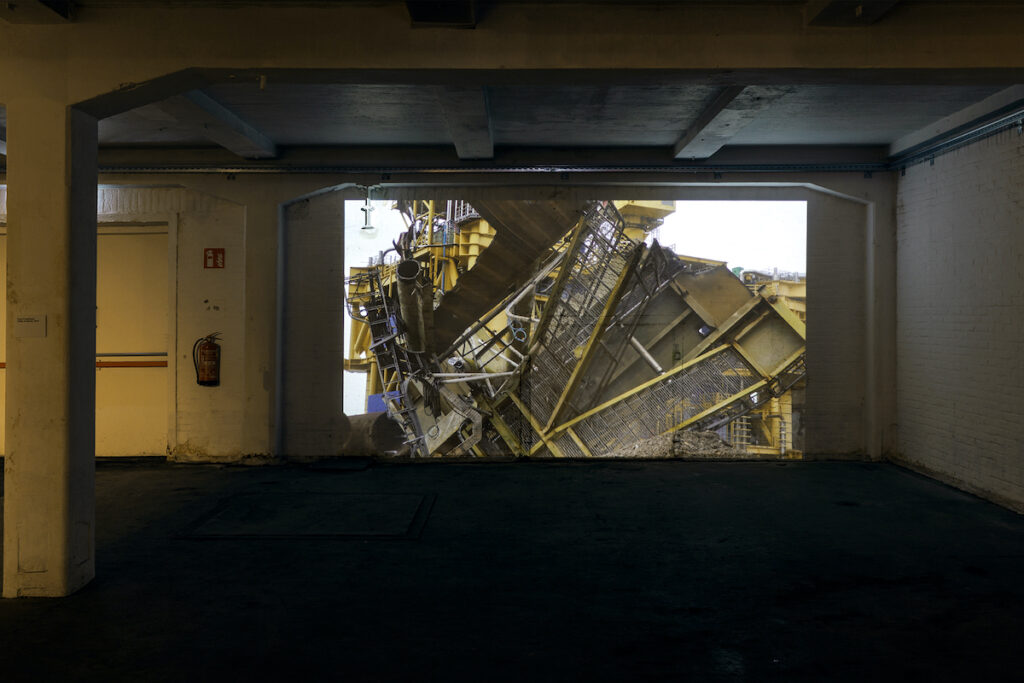
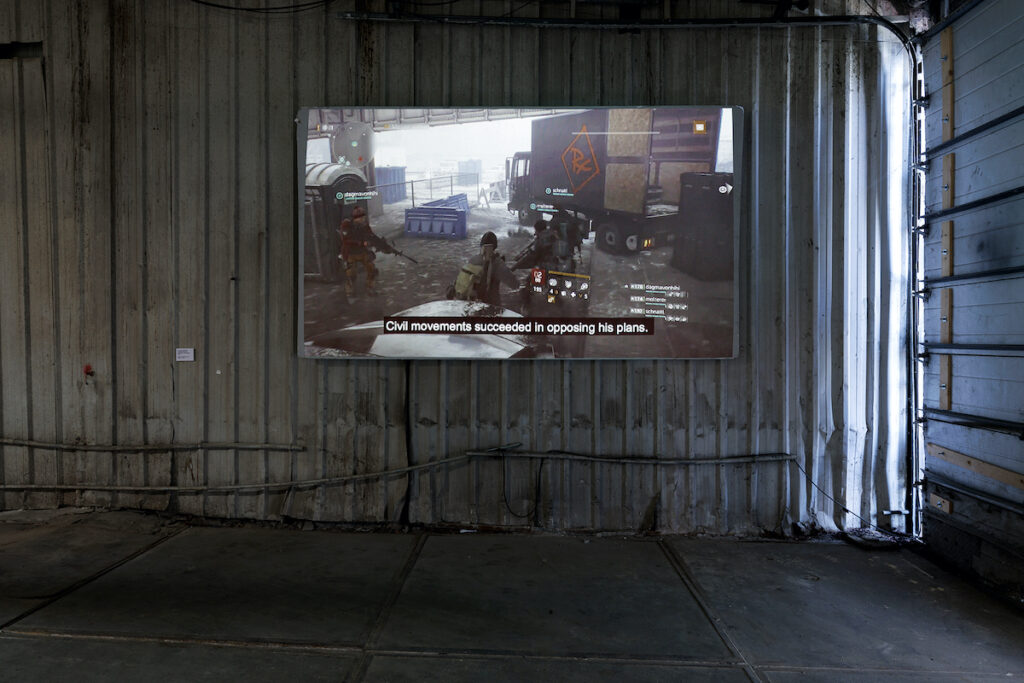
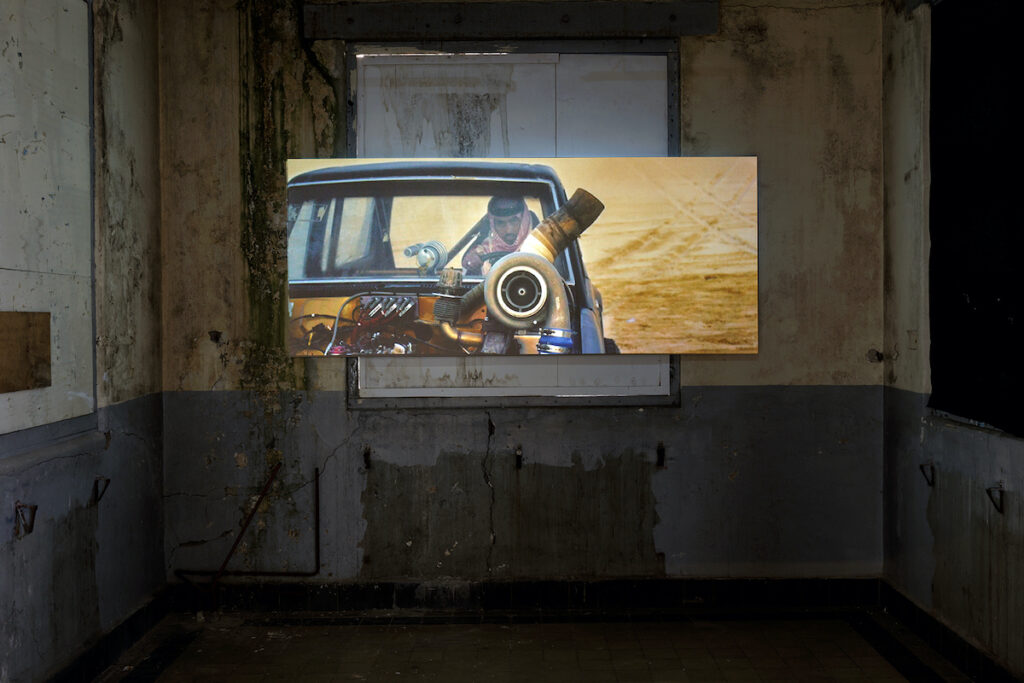
Yuri Ancarani – The Challenge, 2016 – Video 70 min
All photos by Aad Hoogendorn, if not mentioned otherwise
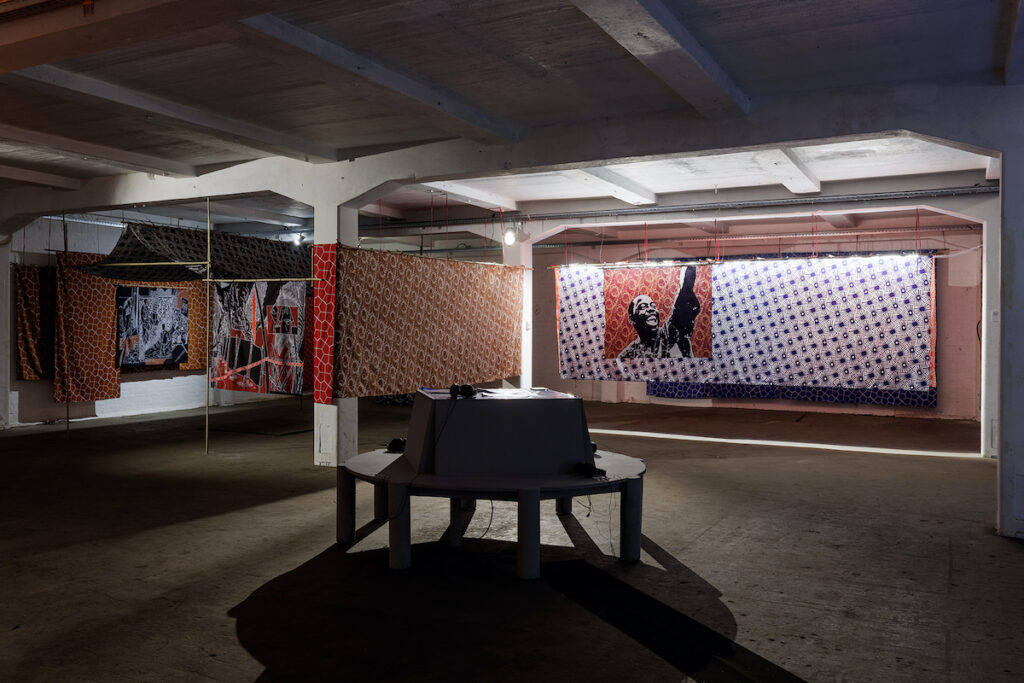
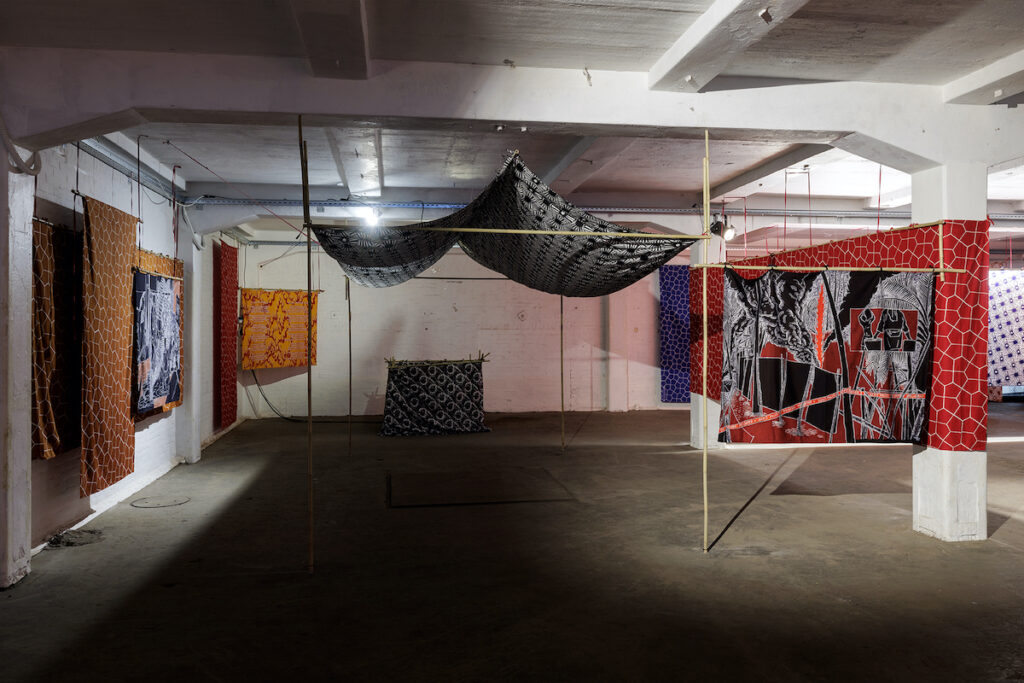
All the artworks in the show – Chapter 4: Arts of Living on a Damaged Planet (8 slides)
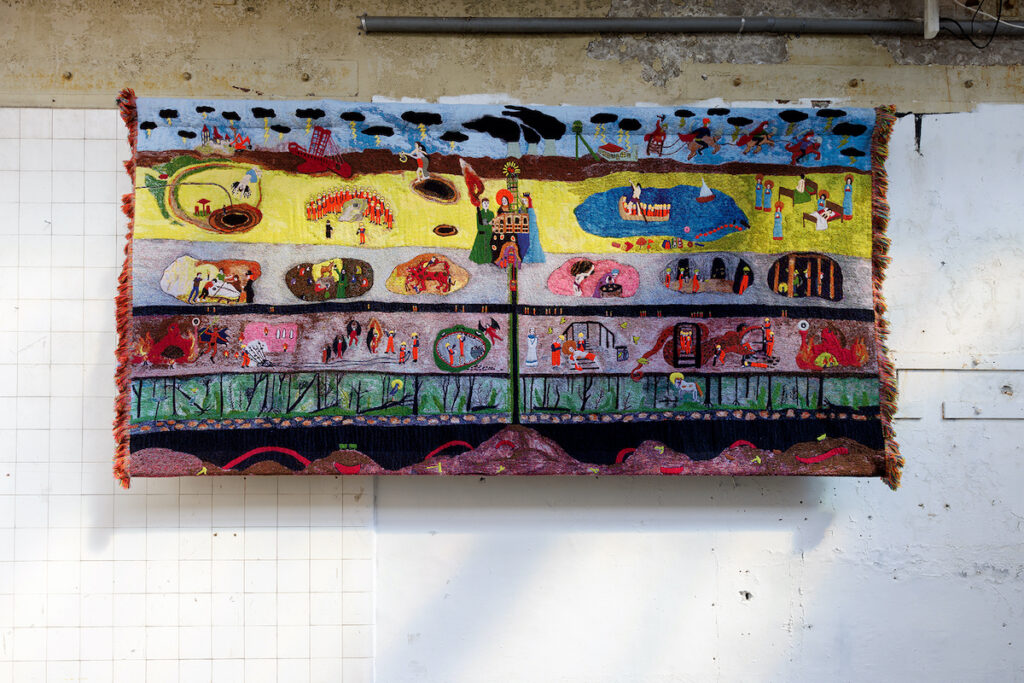
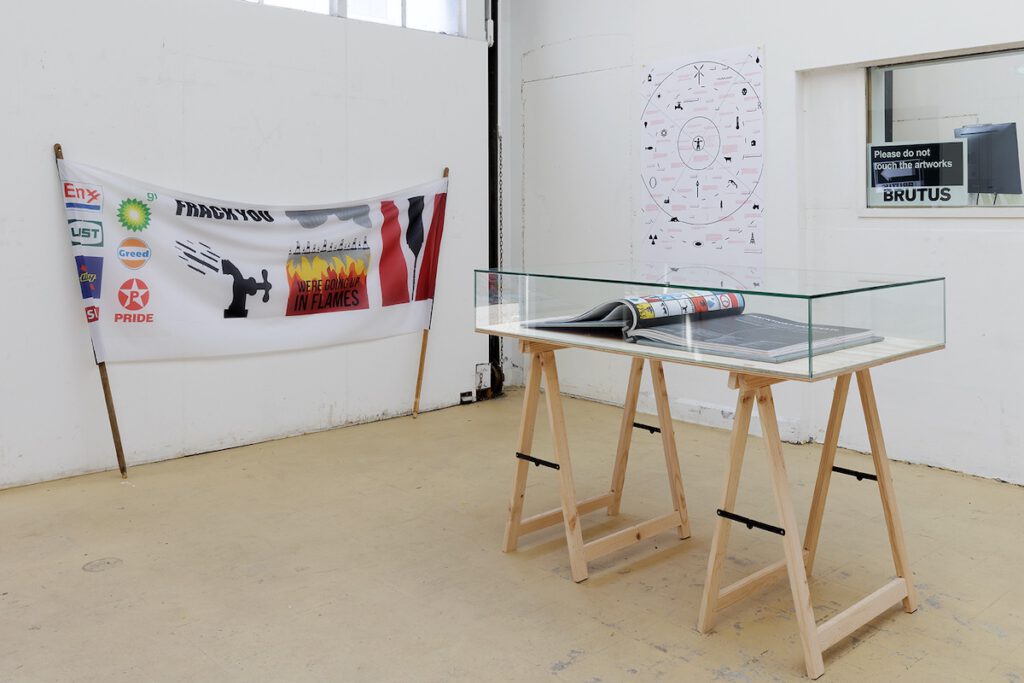
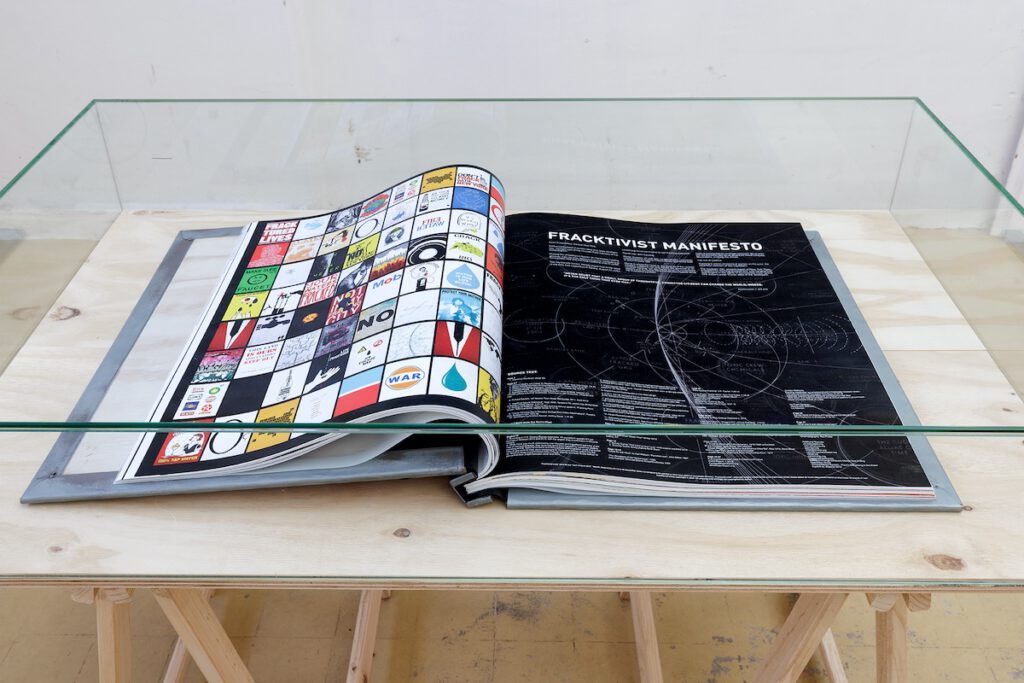
Andrew Castrucci – Fracktured lives, 2021
Andrew Castrucci – Fracktured lives, 2021 – artist book
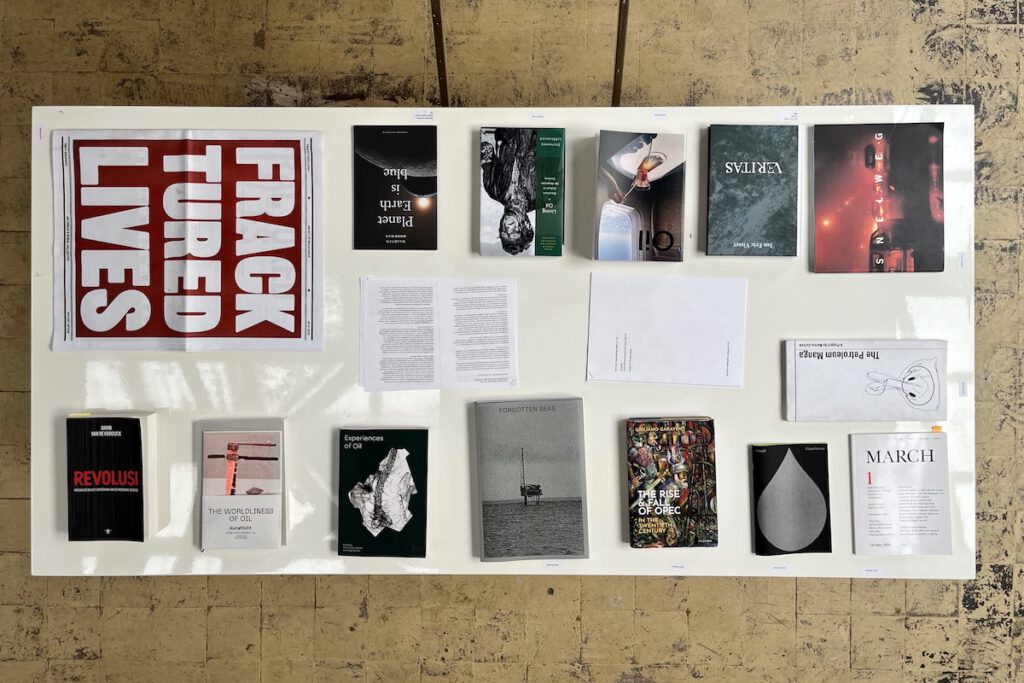
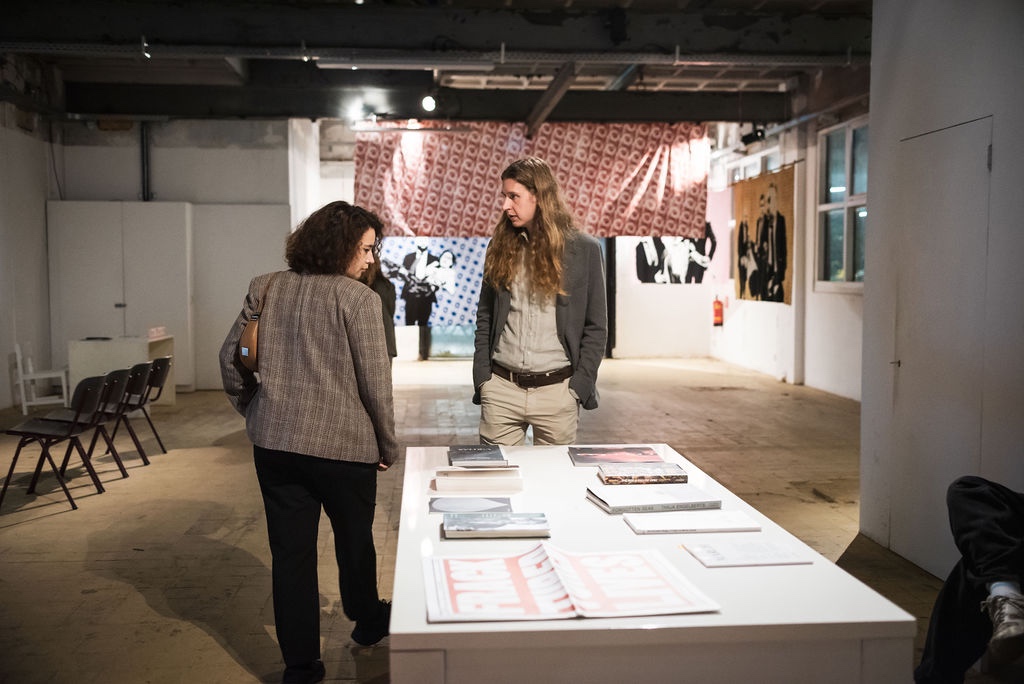
Booktable (photo by Alessia Taló)
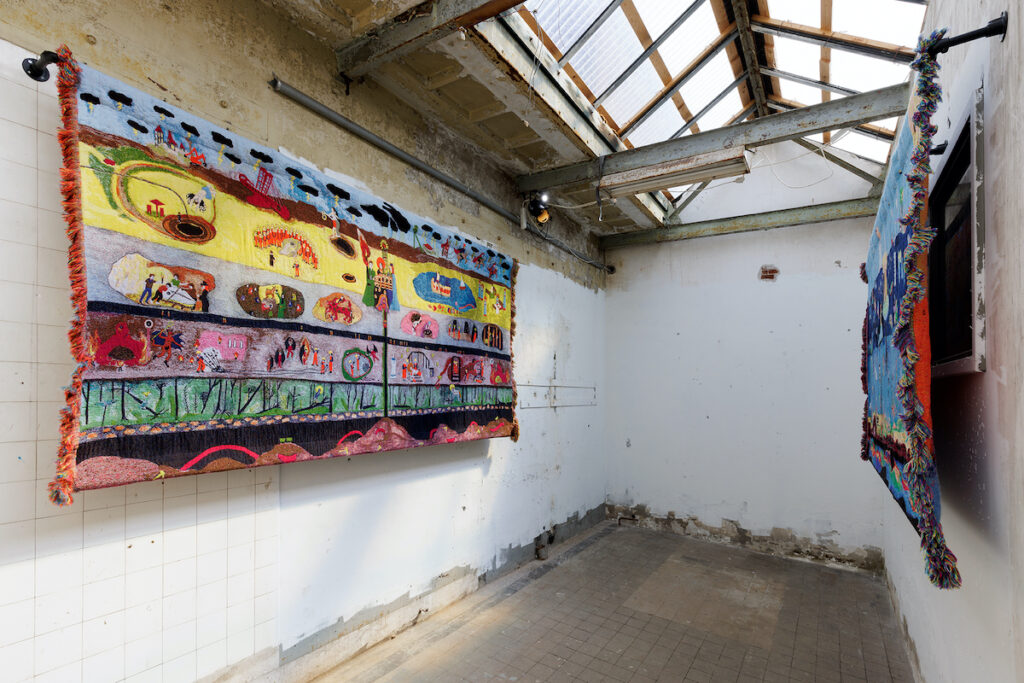
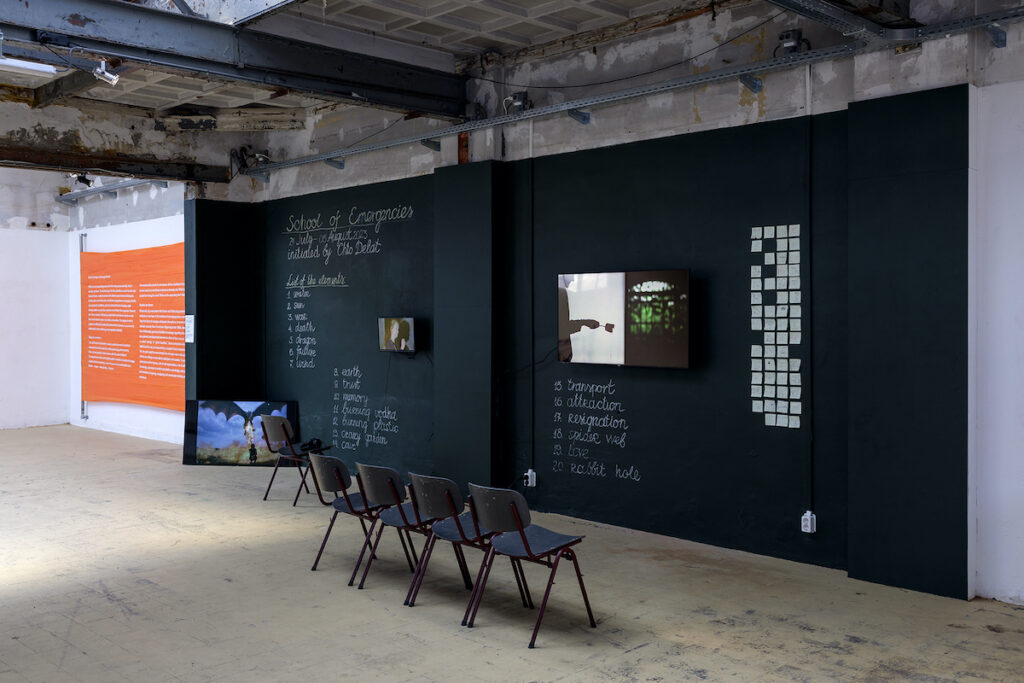
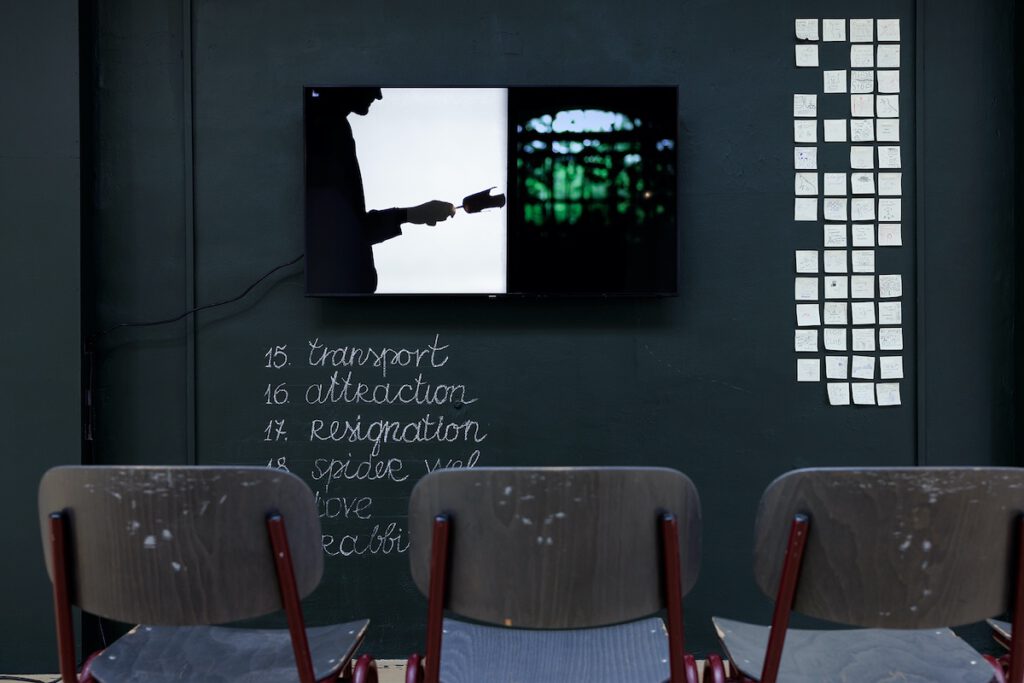
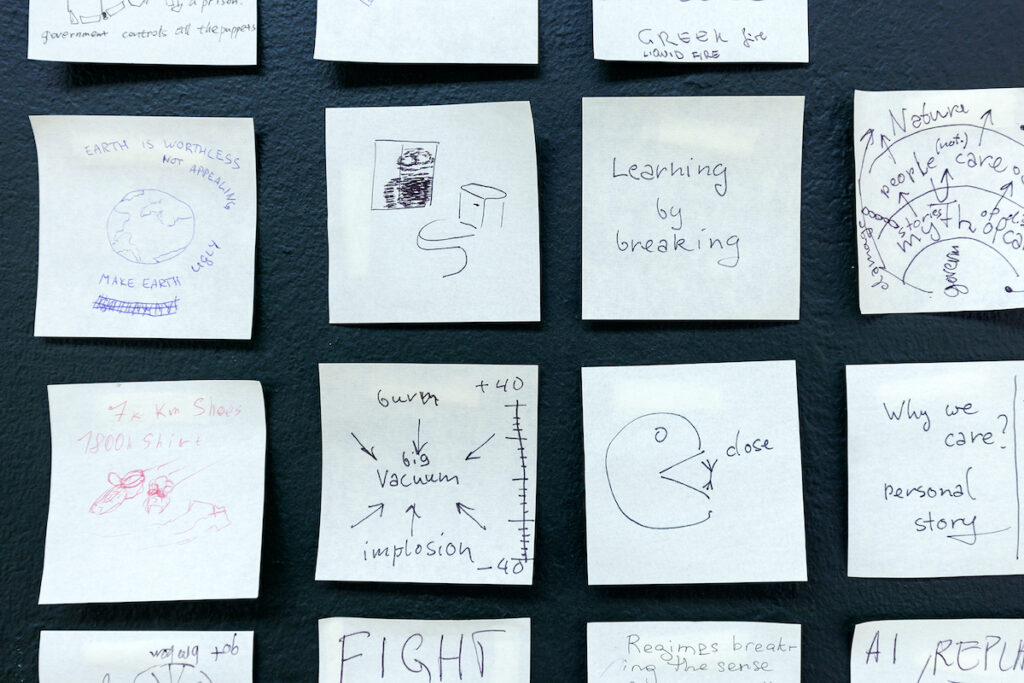
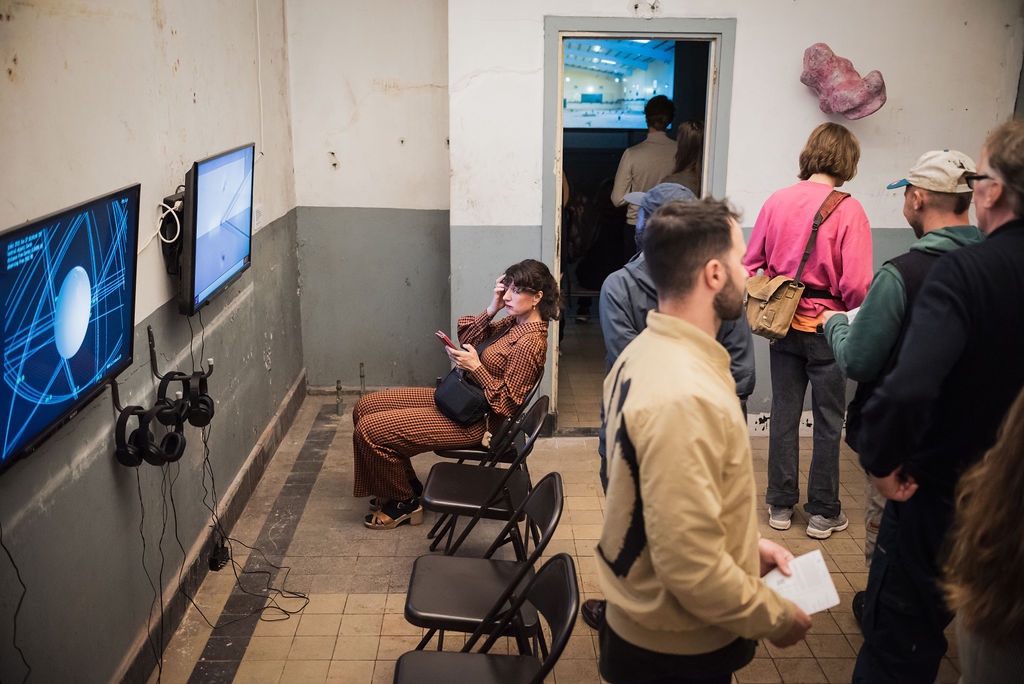
Chto Delat collective – School of Emergencies, 2023: Lecture performance by Oxana Timofeeva – Video 44 min + Between Shadow and Light, 2023 – Video 70 min + Inside the Diagram – Video 11 min
Chto Delat collective – School of Emergencies, 2023 – detail
Chto Delat collective – School of Emergencies, 2023 – detail
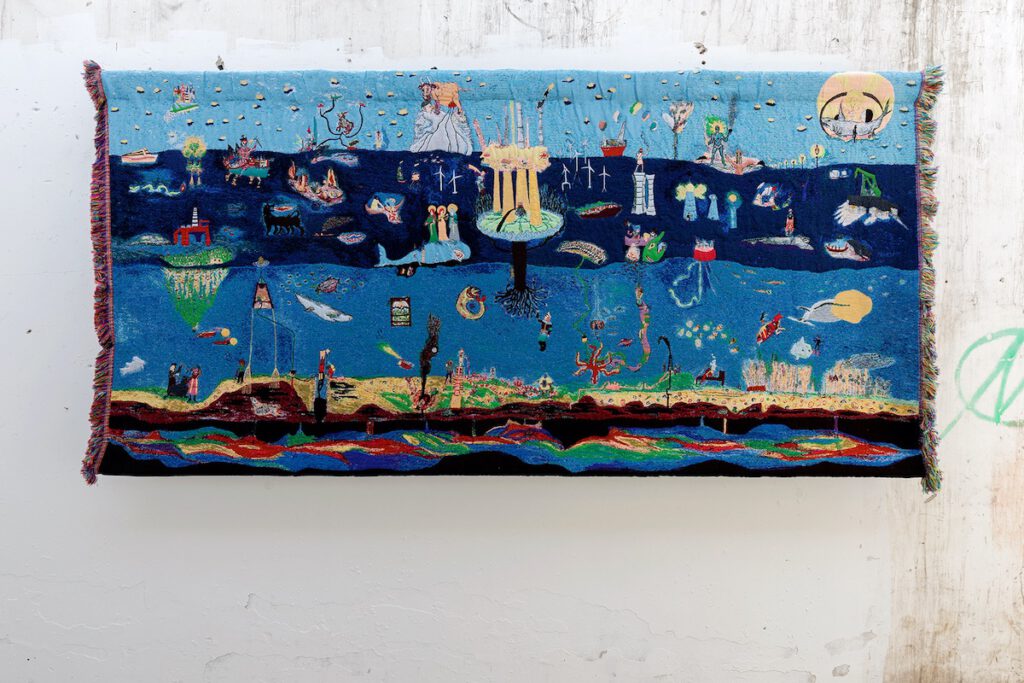
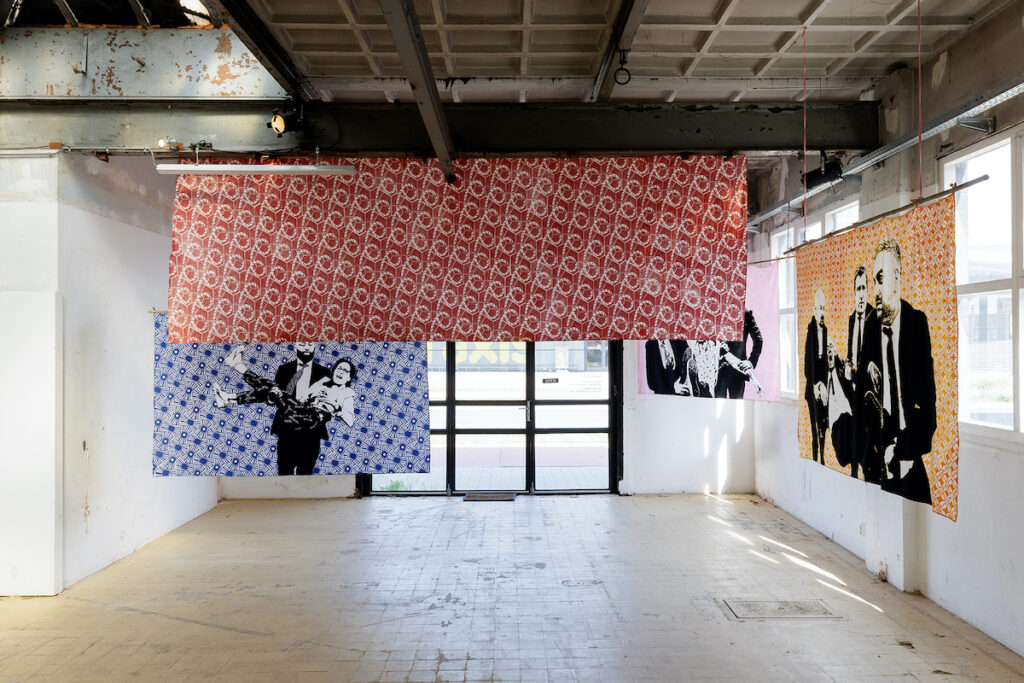
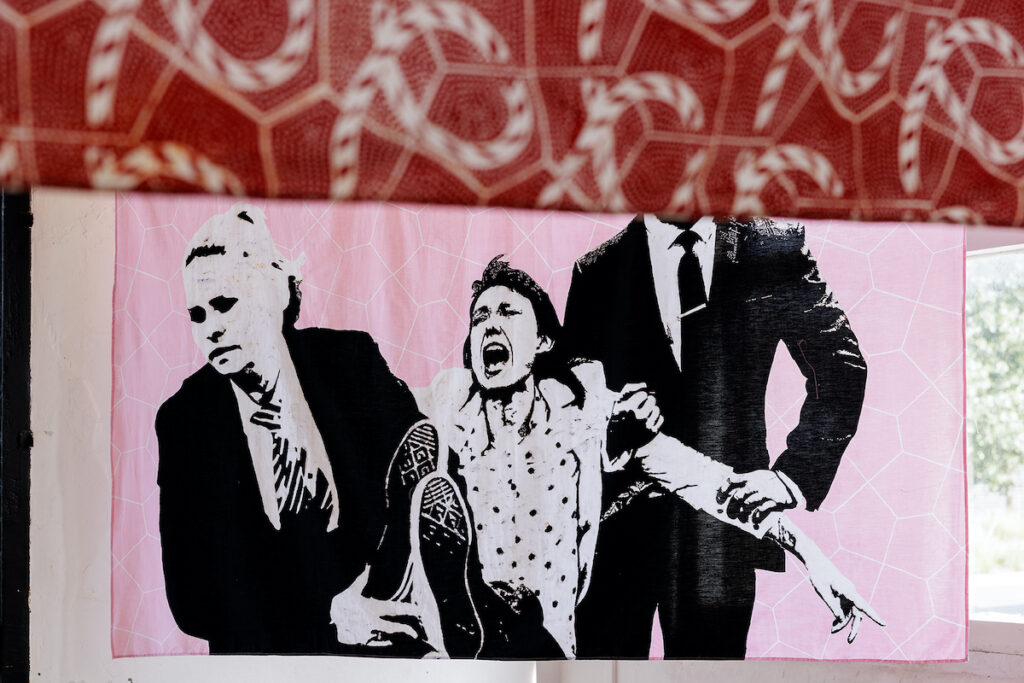
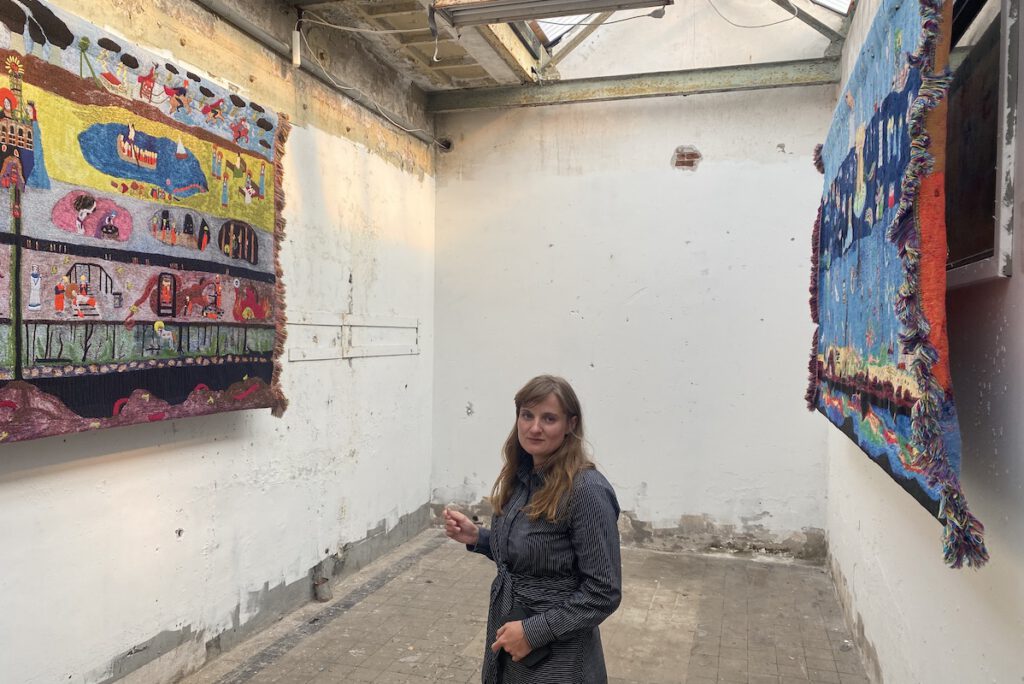
Kevin van Braak & Ipeh Nur – Silence would be treason, 2023
Kevin van Braak & Ipeh Nur – Silence would be treason, 2023 – detail
All photos by Aad Hoogendorn, if not mentioned otherwise.
Exhibition spaces and scenography (slide show).
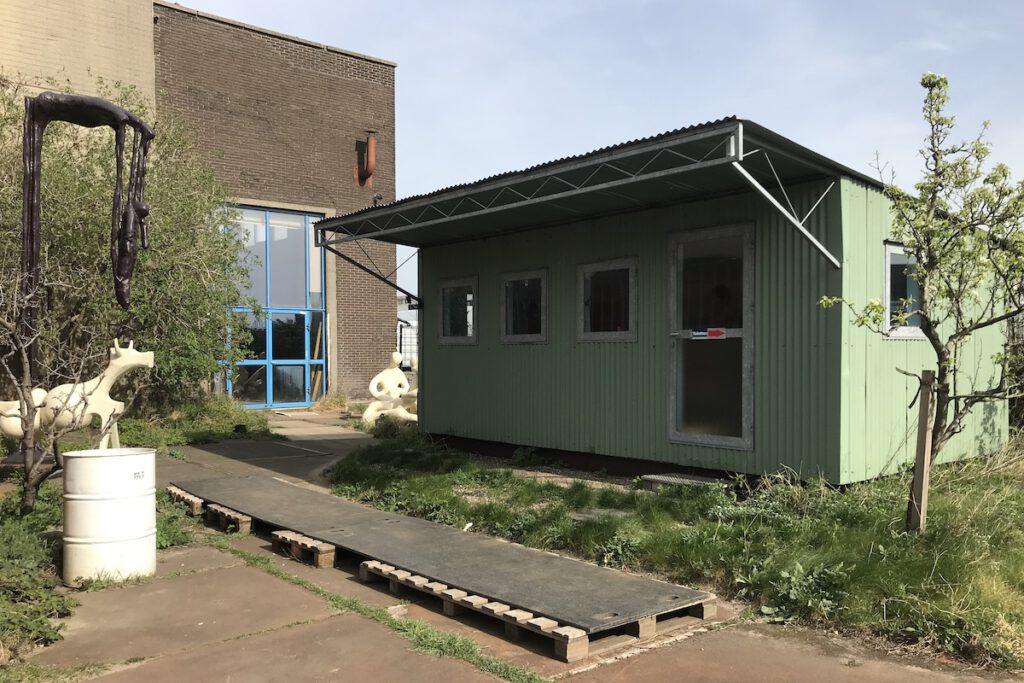
Atelier van Lieshout Sculpture Garden Entrance. Photo: Alex Close
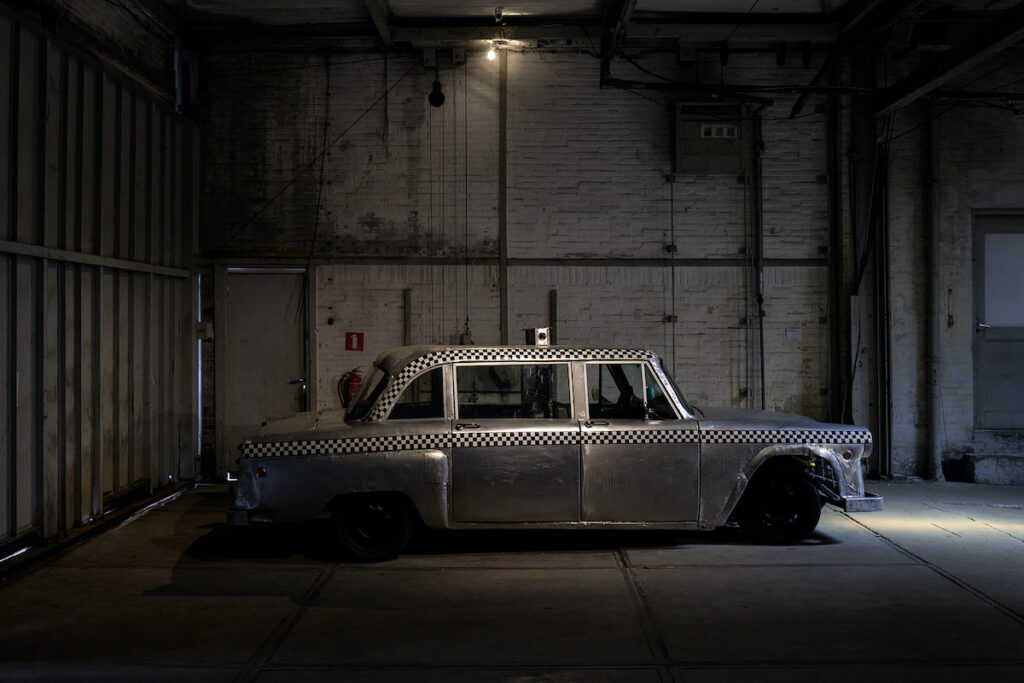
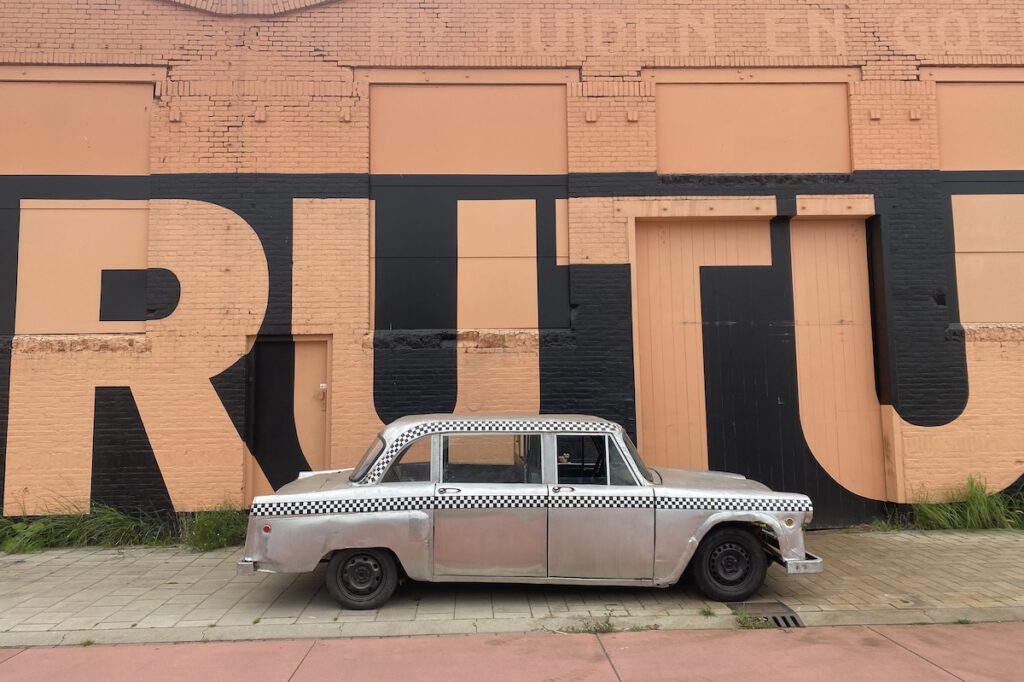
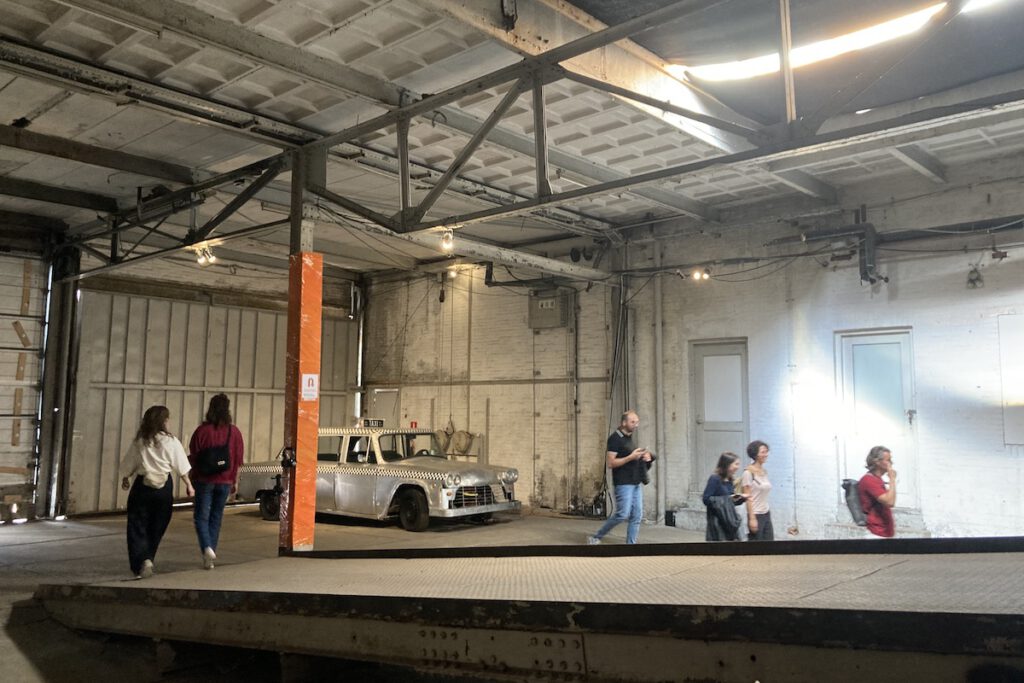
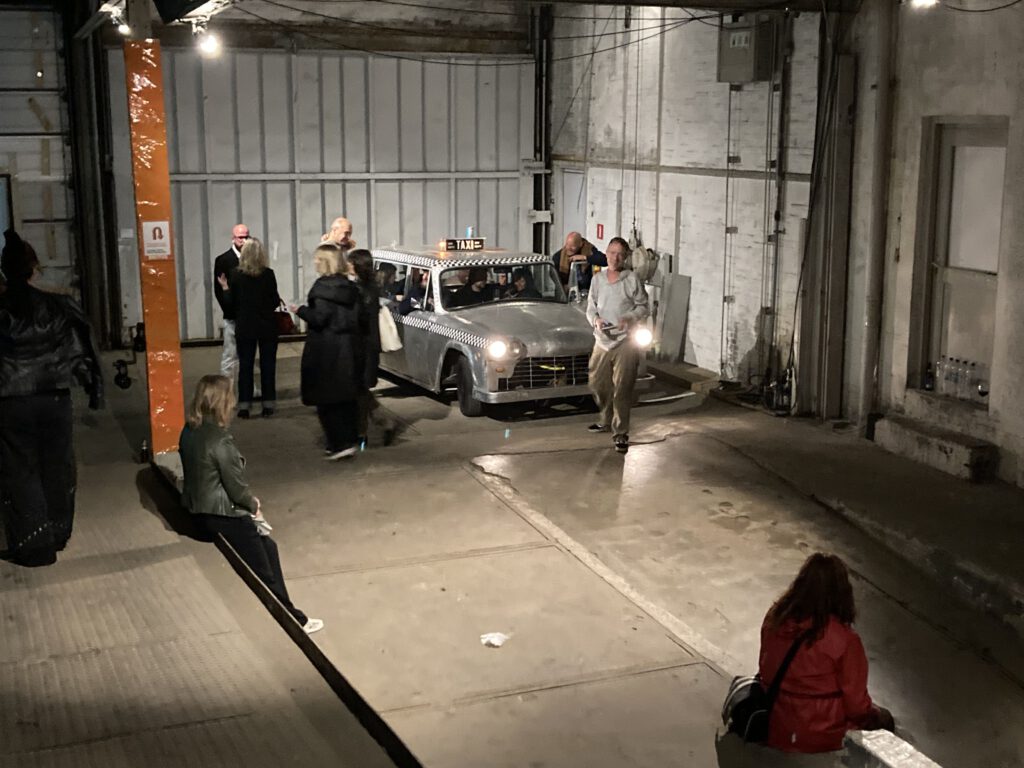
Rowan van As’ Taxi on the sidewalk in front of Brutus. Photo: Alex Close
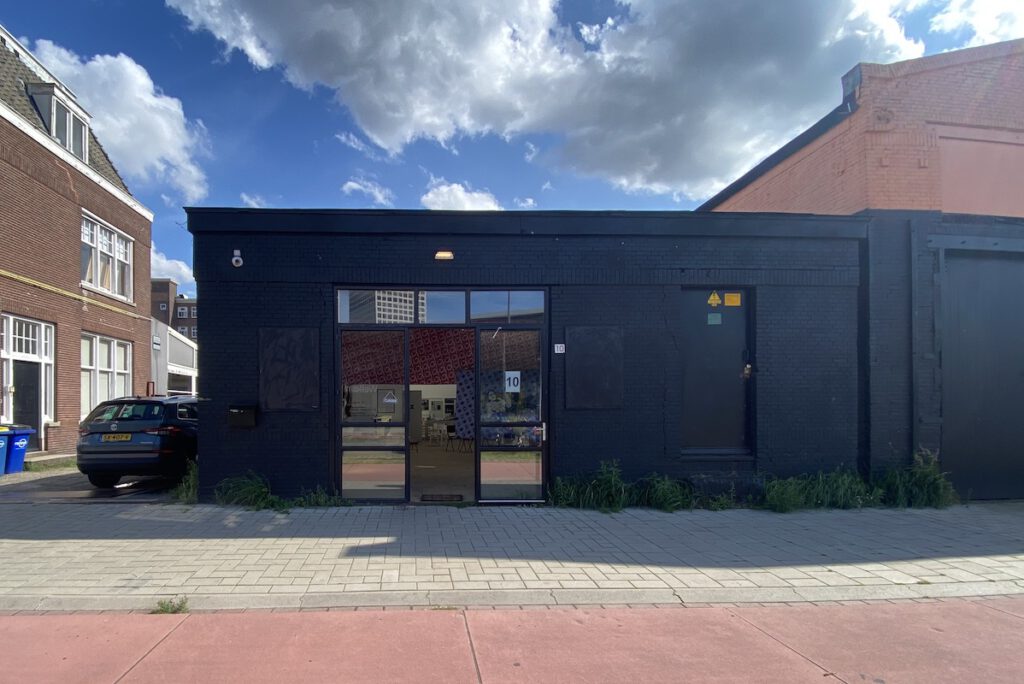
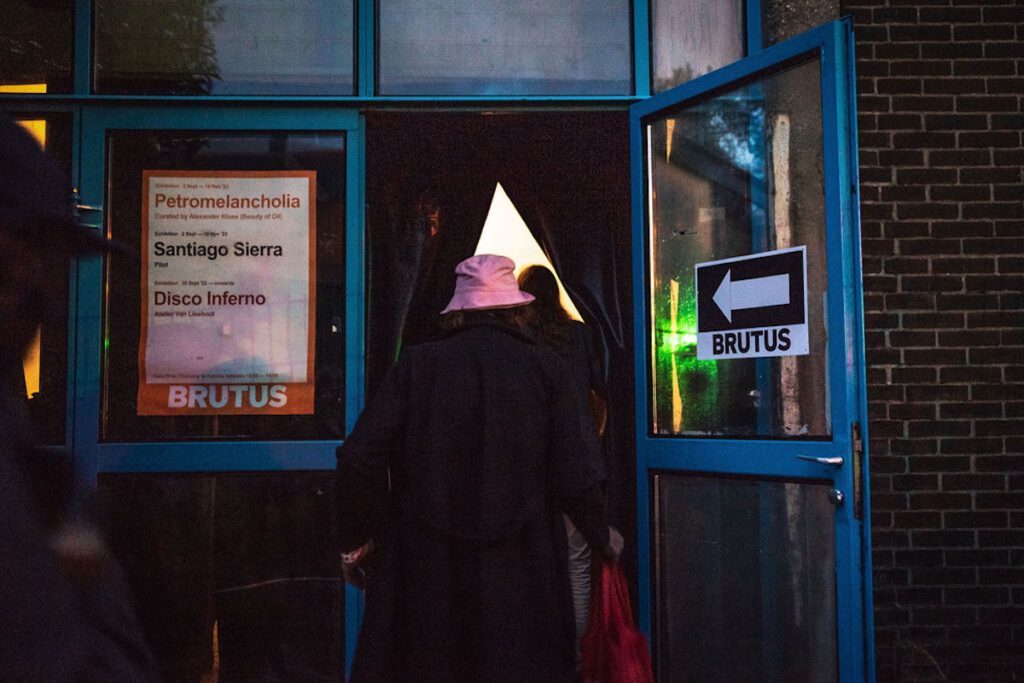
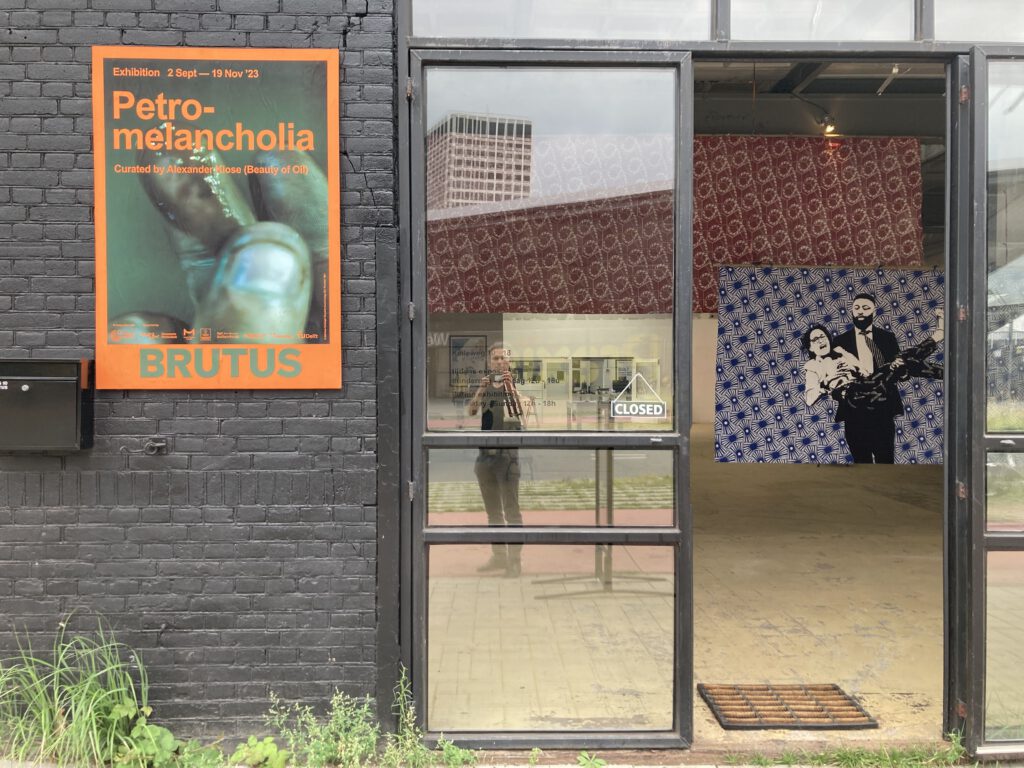
Brutus street entrance, Keileweg 18. Photo: Alex Close
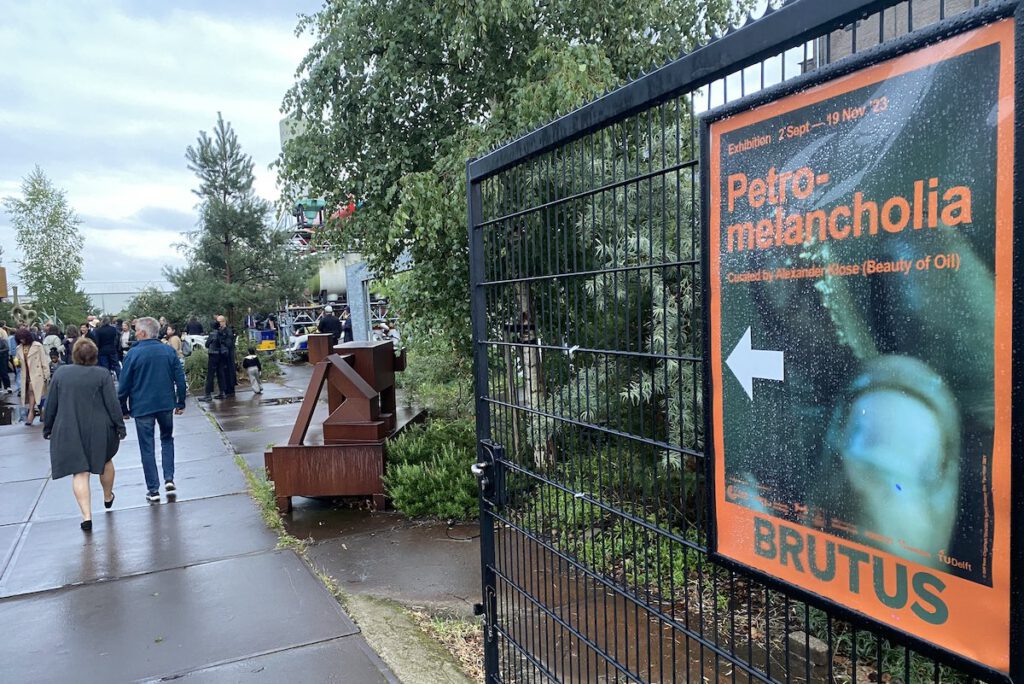
Entrance to Petromelancholia through AVL sculpture garden. Photo: Alex Close
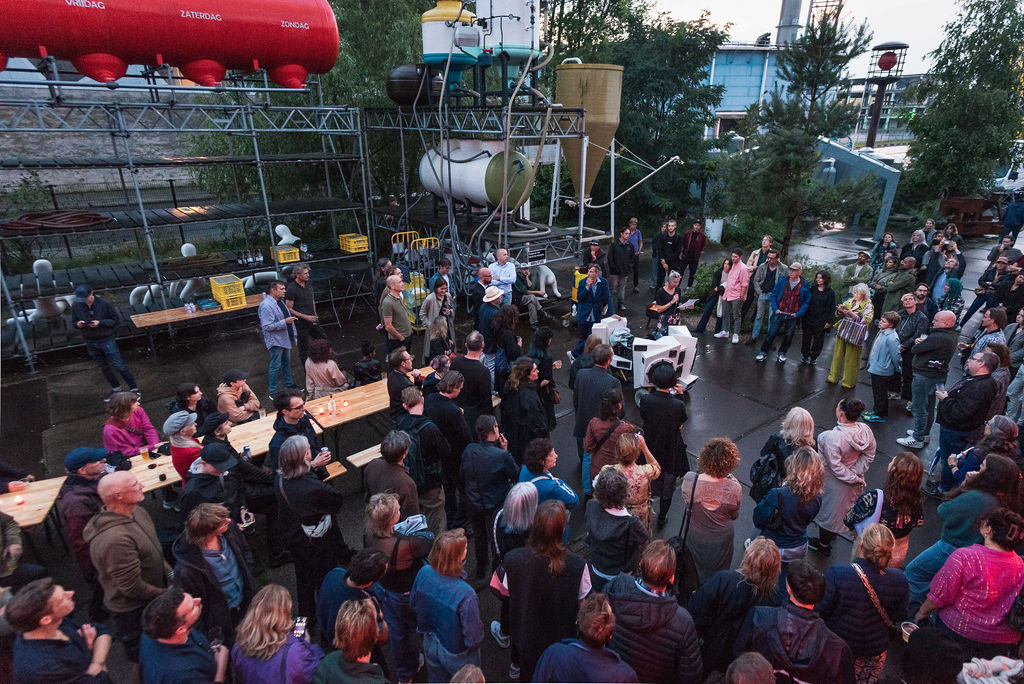
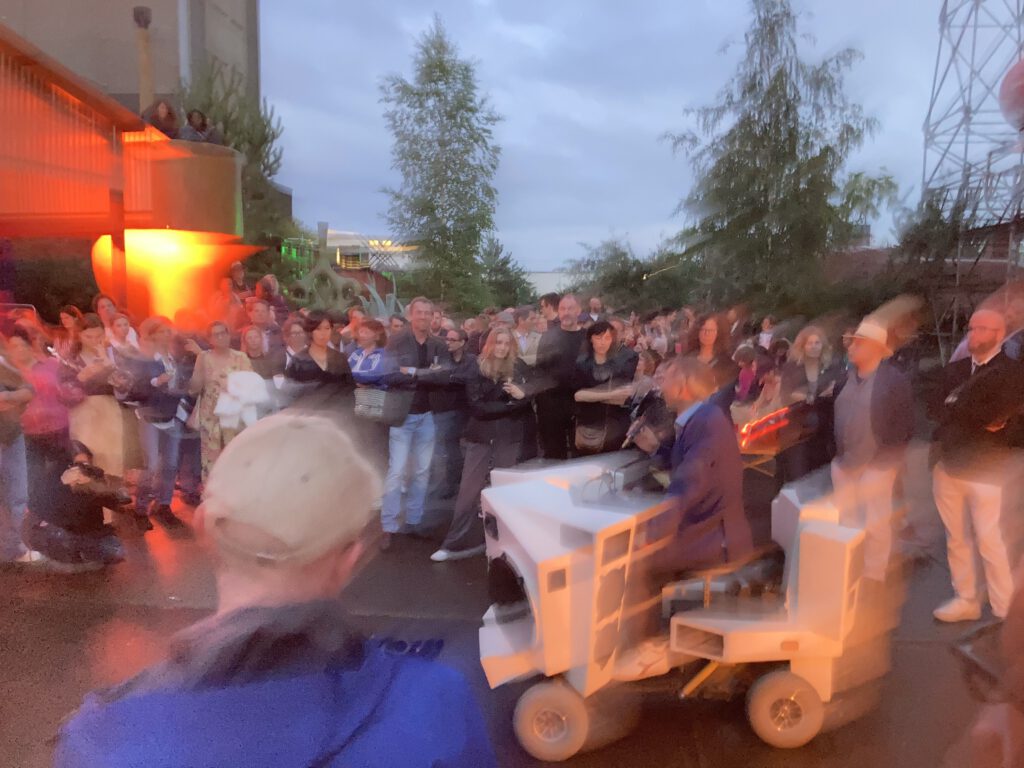
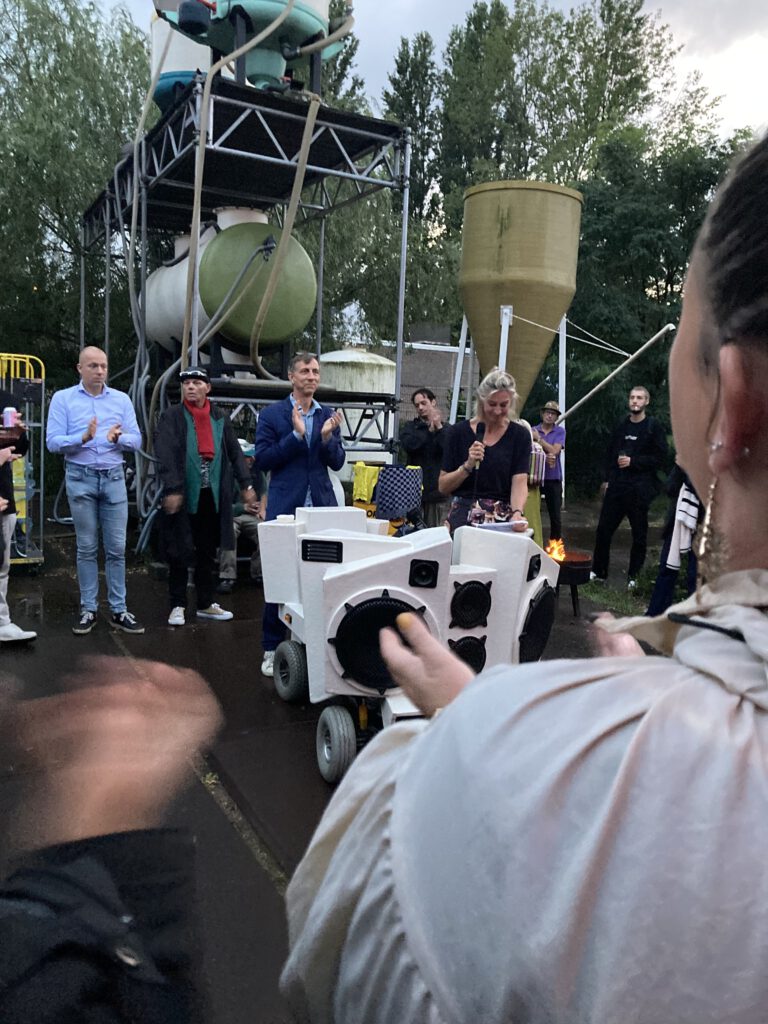
Opening speeches in AVL sculpture garden. Photo: Caro Linares
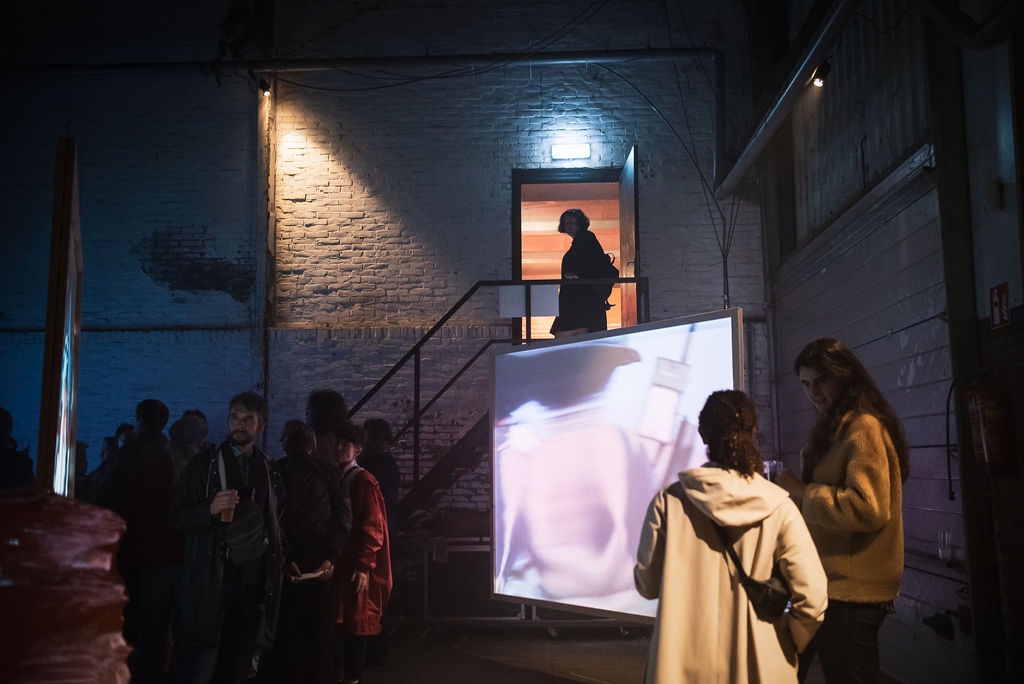
Entrance Petromelancholia on opening night. Photo Caro Linares
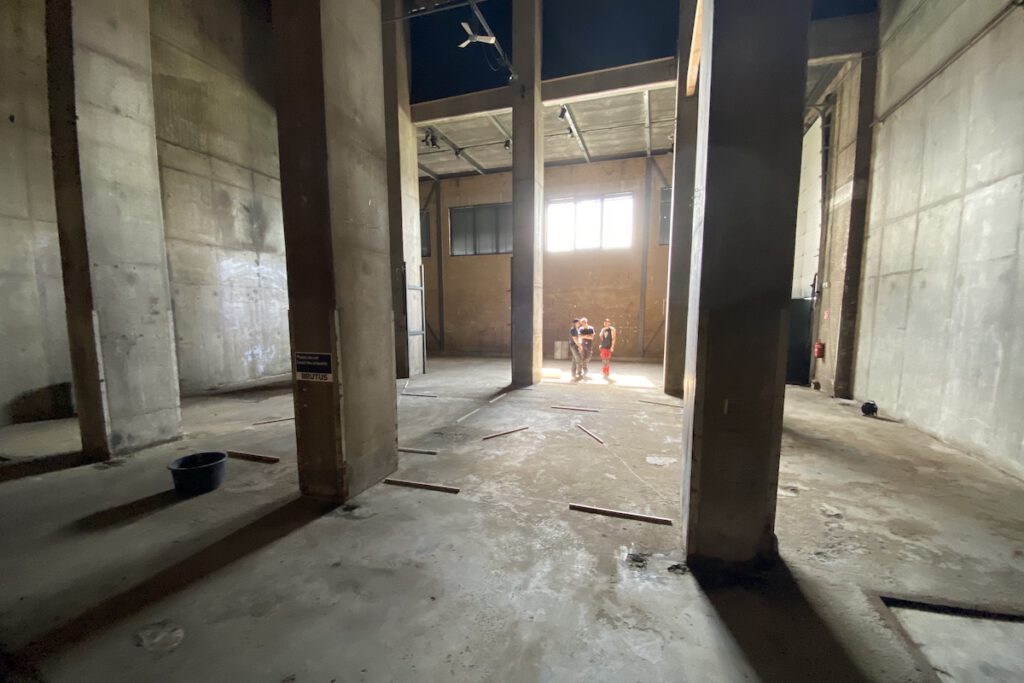
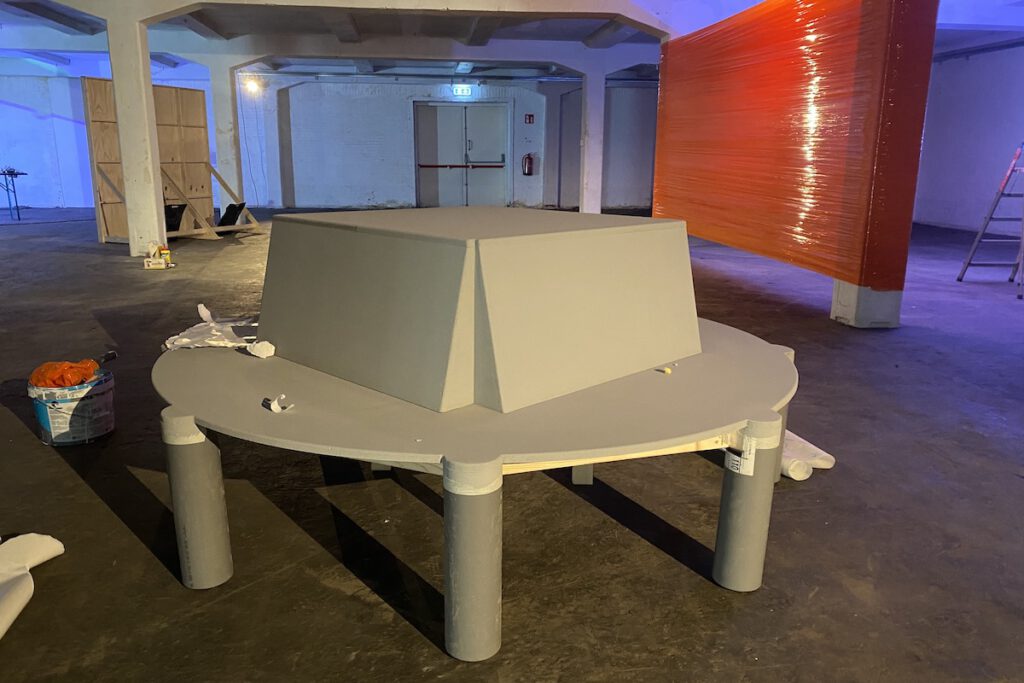
Exhibition space “Kathedraal” during build-up. Photo: Alex Close
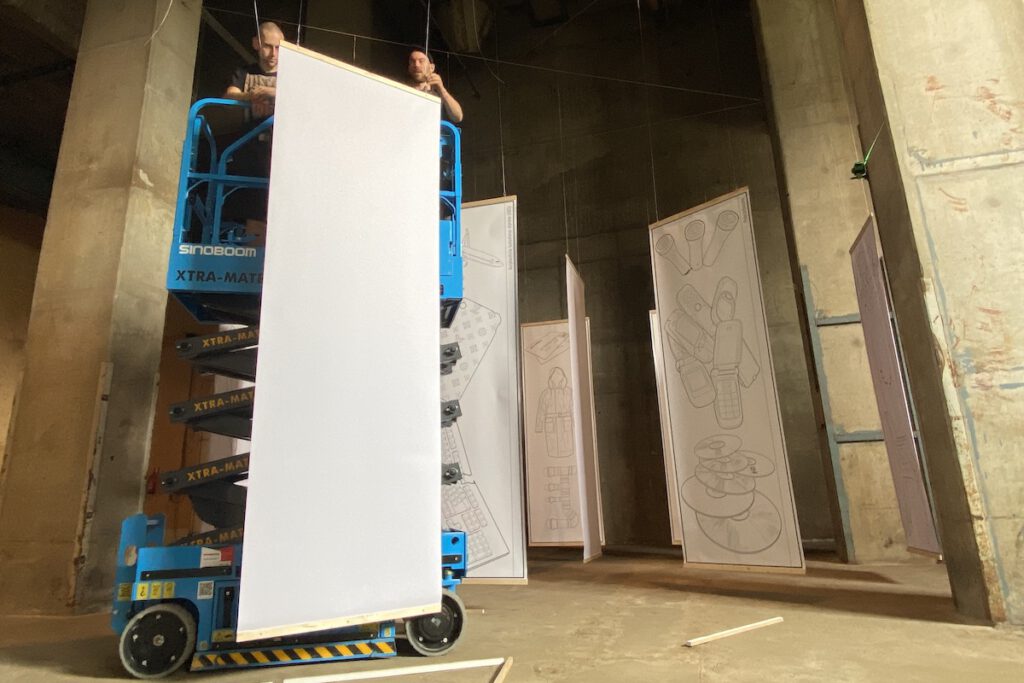
Installing Marina Zurkow’s Petroleum Manga in “Kathedraal”. Photo: Alex Close
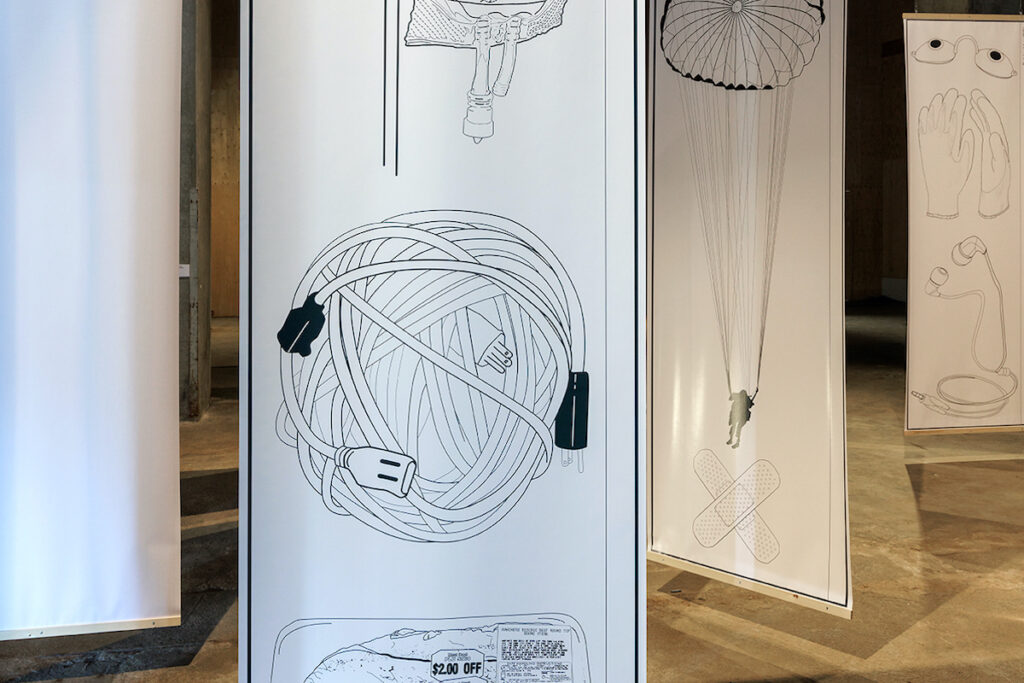
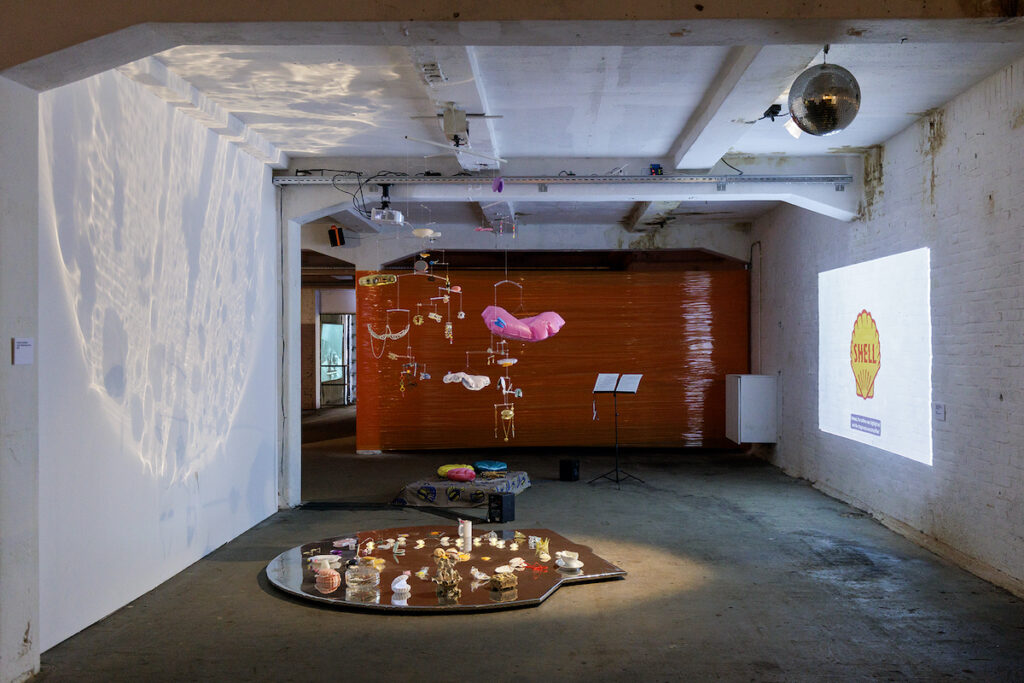
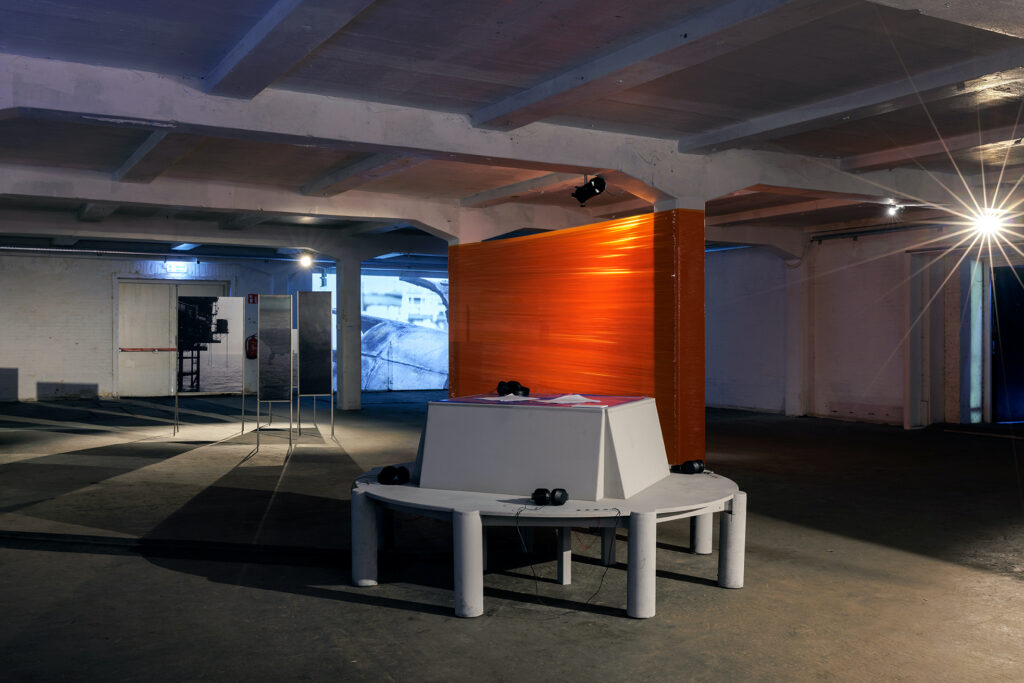
Exhibition at Brutus, in the port of Rotterdam, NL, Sept 1 to Nov 19
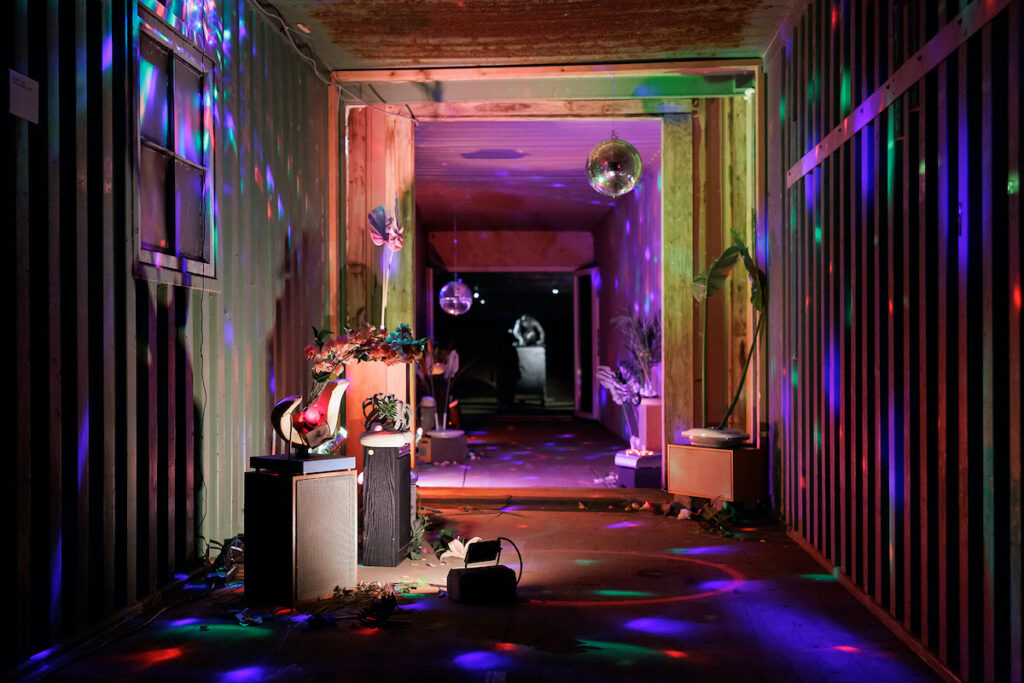
In bed with petroleum. In the air. On the road. On the plate. All over and inside bodies. It’s a love affair that modern industrial civilization has been having with oil (and gas), its fuels and the materials created from it. More than that: it’s a love of life, profoundly influencing how people live, move, eat, dress, love, experience, aspire, and believe. A love, though, that has increasingly expressed destructive aspects, excess, exhaustion, abuse, addiction, and contamination.
“Petromelancholia” is the condition that the US energy humanities scholar Stephanie LeMenager diagnosed as being at the core of her home country’s cultural and political struggle to hang on to “oil culture“. The more people realize that the age of oil is eventually going to end—and has to in regard to the state of the planet—the harder they cling on to it. Following this diagnosis, the world has lately been swept by waves of petromelancholia. Acknowledging the long-lasting success of these dynamics of denial, which started 50 years ago, a mere “energy transition” might turn out to be not enough to get over modernity’s true love.
Wouldn’t we also need acceptance and grief, reconciliation and reparations—processes that eventually lead to profound cultural, political and economic transitions?
Upon opening of our OIL-exhibition in Wolfsburg two years ago, Joep van Lieshout, one of the participating artists, asked if we wanted to curate a follow-up show at his newly founded „artist-driven space“ Brutus in the port of Rotterdam.
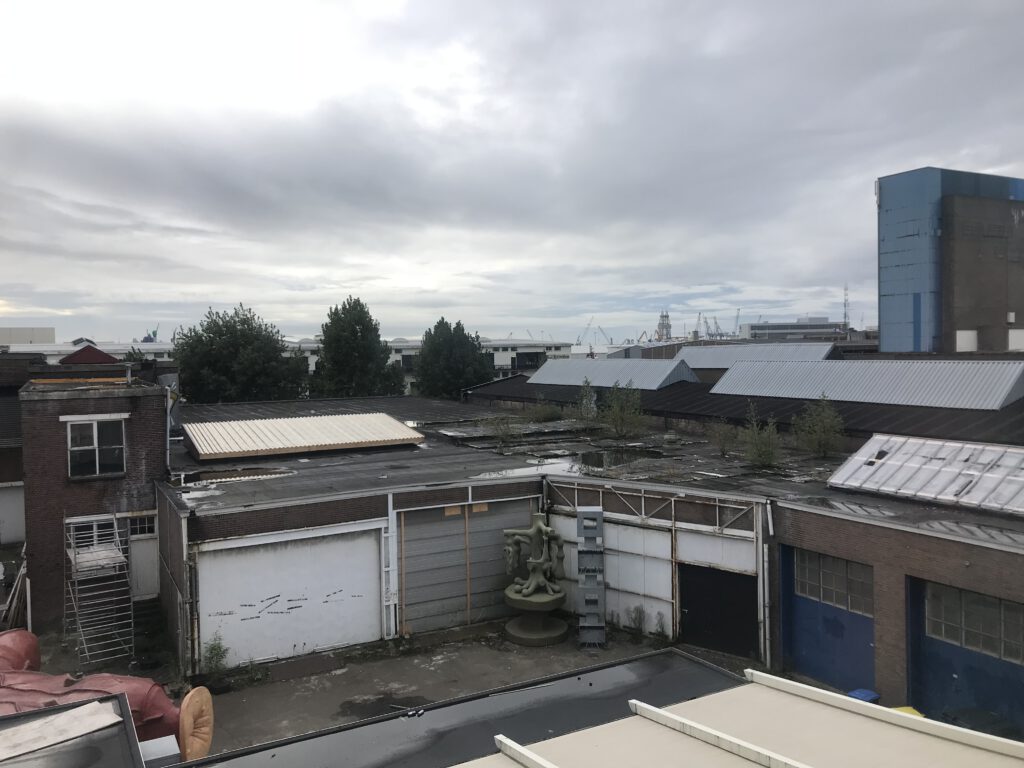
Rotterdam! One of the oil capitals of Europe, largest port, largest refinery, largest petroleum storage and processing capacities. Largely and radically rebuilt after WW2 in all kinds of modernist style — a through and through petromodern city.
And since our 2017 visit to a Delft ‘Petroleumscapes’ conference, the region had played a role in our own petroleumscapes research, resulting in ‘Greenhause’, a chapter of our Atlas and in some smaller essays and publications).
Though a comparably low-budget project, the possibility to bring our curatorial research there was tempting.
After one and a half years of preparation, with a short residency and a petrosalon at Goethe Institut Rotterdam in april last year as startig points and deciding additional help and motivation, the exhibition opened on Friday, Sept 1st! Other than our Wolfsburg exhibition, which claimed to show the first retrospective of 100 years of petromodern art, „Petromelancholia“ is largely dedicated to our contemporary petromodern states of heart and mind.
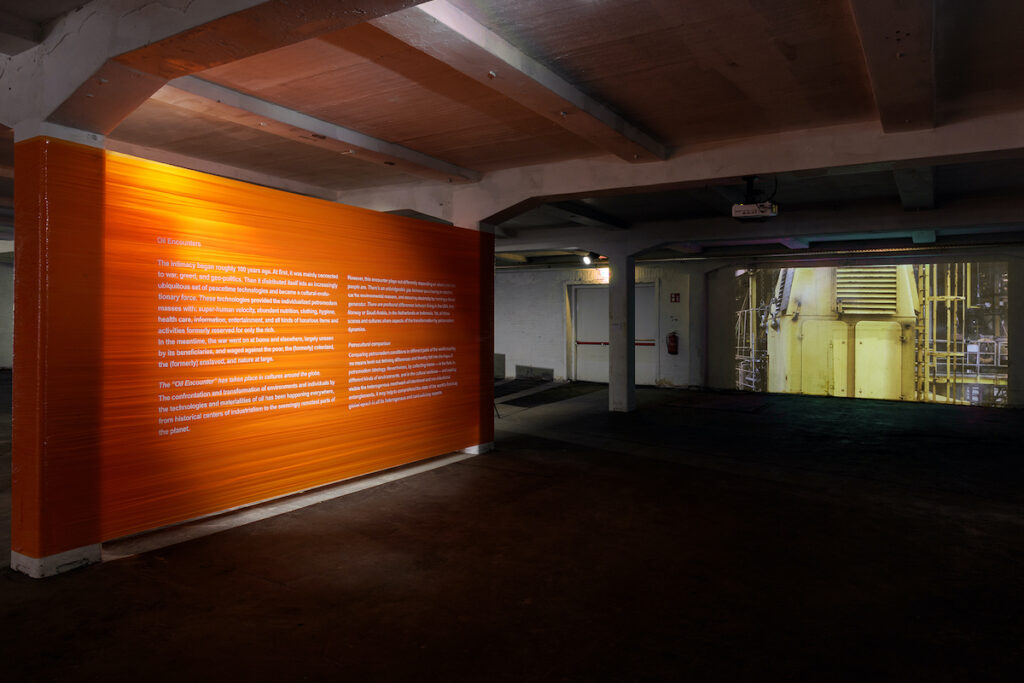
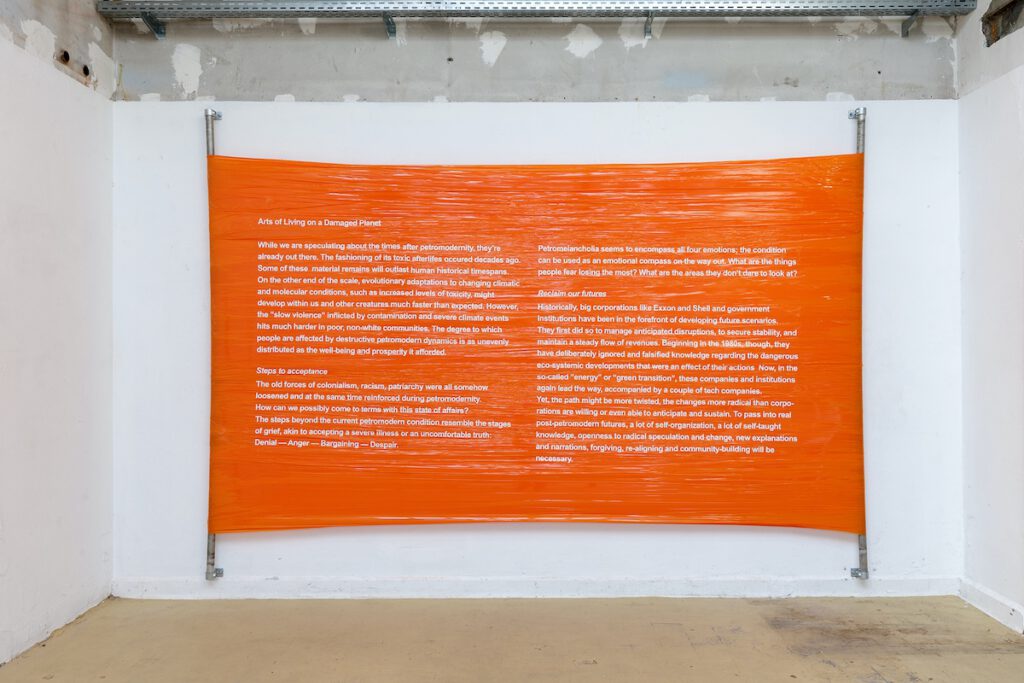
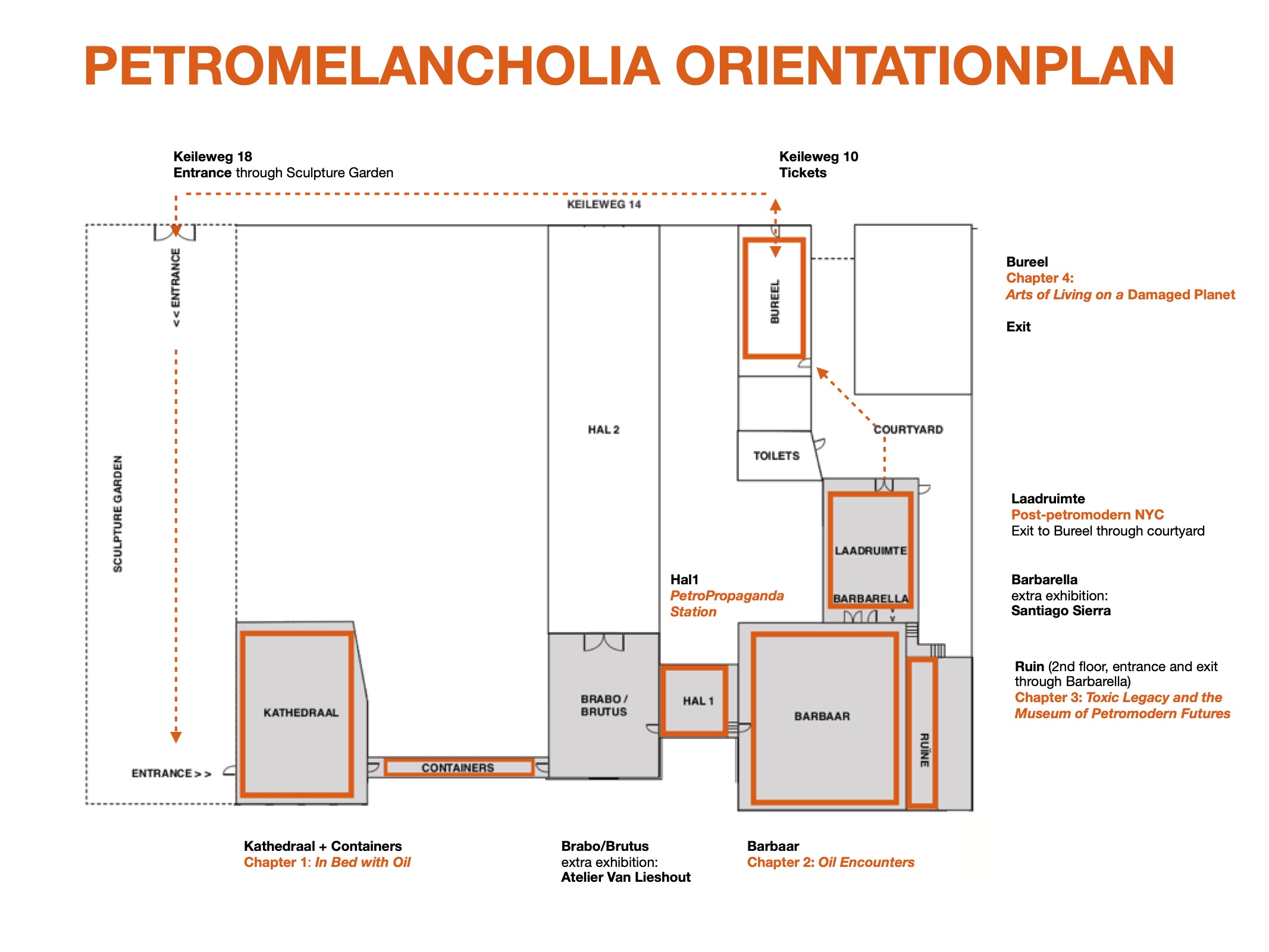
The exhibition consists of four chapters: 1 In Bed with Oil 2 Oil Encounters 3 Toxic Legacy and the Museum of Petromodern Futures 4 Arts of Living on a Damaged Planet.
The opening paragraphs of this entry are from the wall-text of the first chapter. All four wall-texts can be downloaded as a pdf here.
Click here to see a photo documentation of all the works in the exhibition.
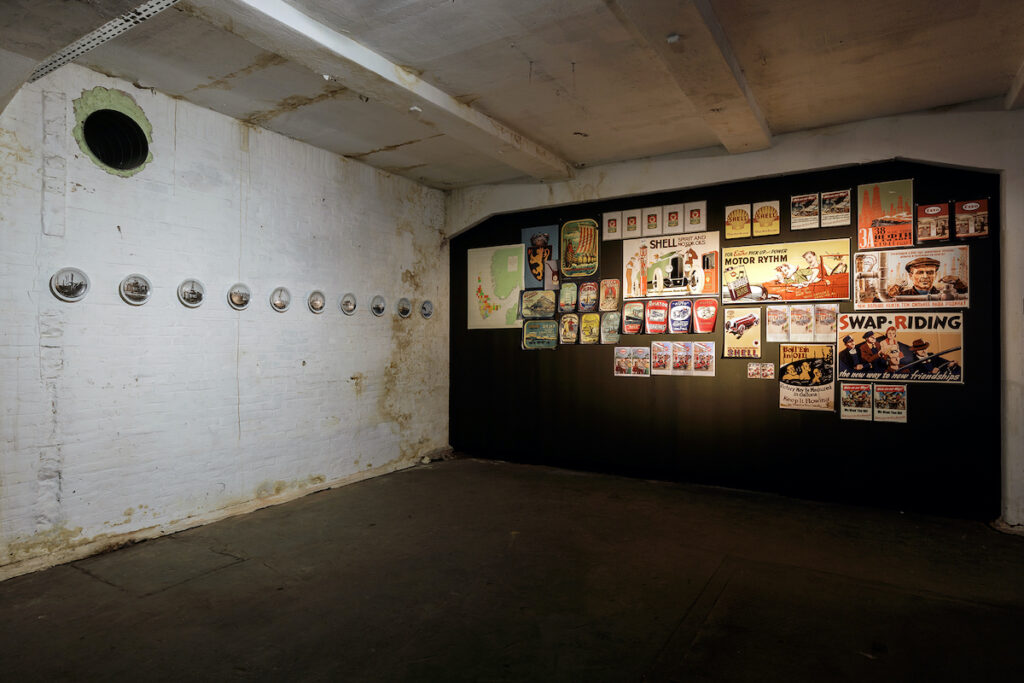
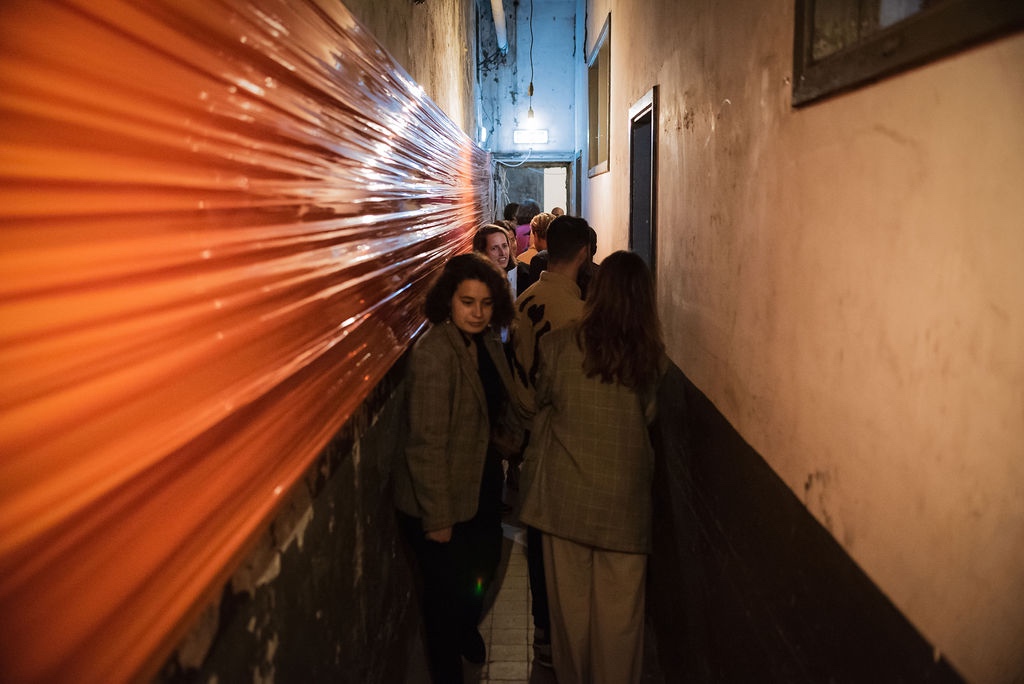
The exhibition is spread over the complete Brutus-compound and consists of four chapters. Here’s a floorplan (click on image to enlarge or download as pdf).
The very well written book takes on the form of the ironic encyclopedia that has been popular since the nineteenth century, as a parody of the great encyclopedias of the Enlightenment era. Impressive color illustrations complement the text and, according to the authors, justify the “Atlas” of the subtitle (p. 15). In their individual glosses, the authors almost always succeed in offering interesting and often novel discoveries. For example, the topic of drilling is presented in a well-founded and stimulating manner in a brief account. The catalytically controlled chemical transformation of petroleum constituents is also solidly presented under the heading “Molecular Mobilization” (pp. 49–57). Often, the reader’s expectations are deliberately played with—as, for example, when the essay entitled “Animals in the Oil Field” (pp. 199–203) deals not with seabirds that are glued together and dying but, rather, with animals that visit drilling grounds. This approach arouses interest and curiosity but also increases perplexity. The reader is left alone with the material and must tell his own story.
And this is precisely the goal; it also fits the form of the ironic encyclopedia, which from the outset does not lead one to expect that an overview will be presented. The history of oil is a history that crashes over us. “Erdöl: Ein Atlas der Petromoderne” aims to use brief spotlights, from very different perspectives, to draw attention to a substance that is part of the everyday life of modernity. It succeeds in doing so; at the same time, the well documented individual articles offer suggestions for further study and some connections that may be new even to researchers who have been in the field for some time. An English edition is in preparation.«
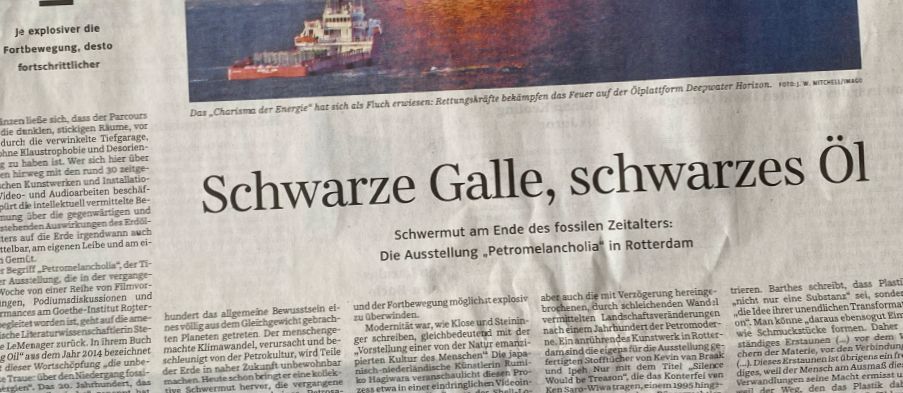
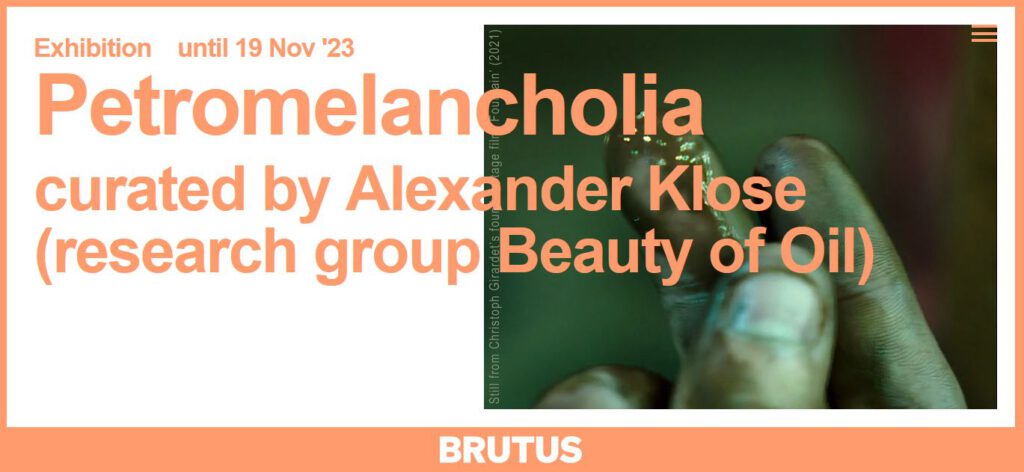
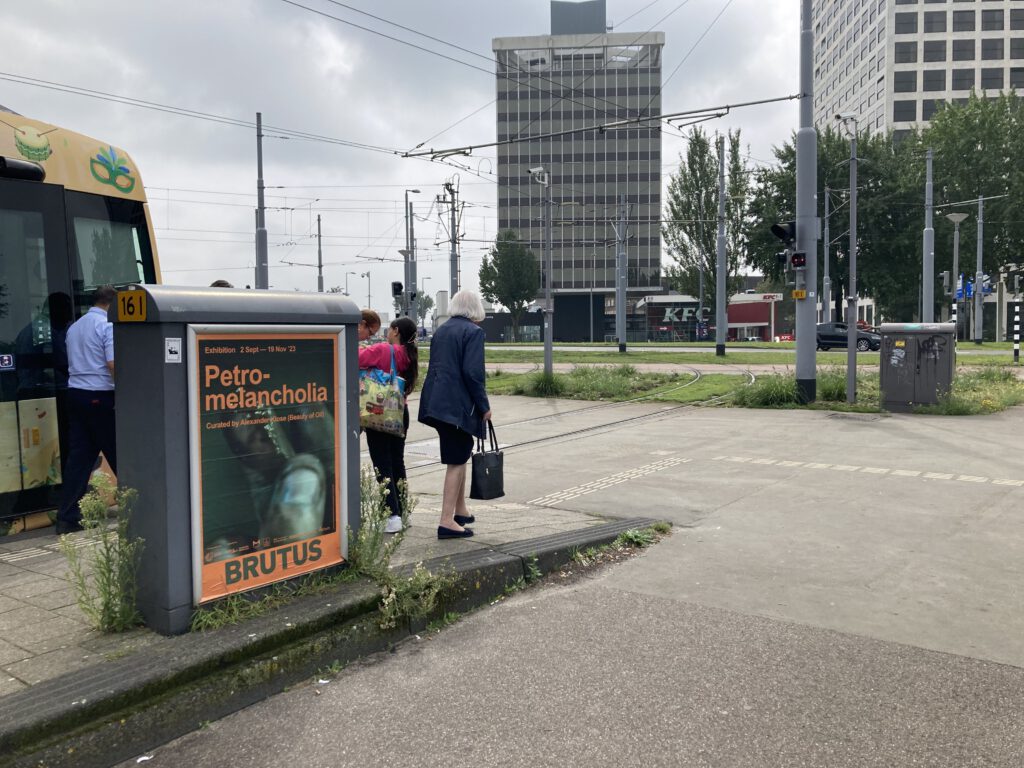
»Petromelancholia« examines the enormous consequences of a life beyond oil, the magnitude of which many do not yet realize. Unlike the many exhibitions that sing about doom scenarios or kick in the open doors of the climate crisis, Petromelancholia reflects on the legacy of the oil age and the new meaning that this past will irrevocably acquire. What has oil brought us, materially and especially culturally, and what might disappear or change?
A large croud is present at Alexander Klose’s opening speech at BRUTUS Rotterdam!
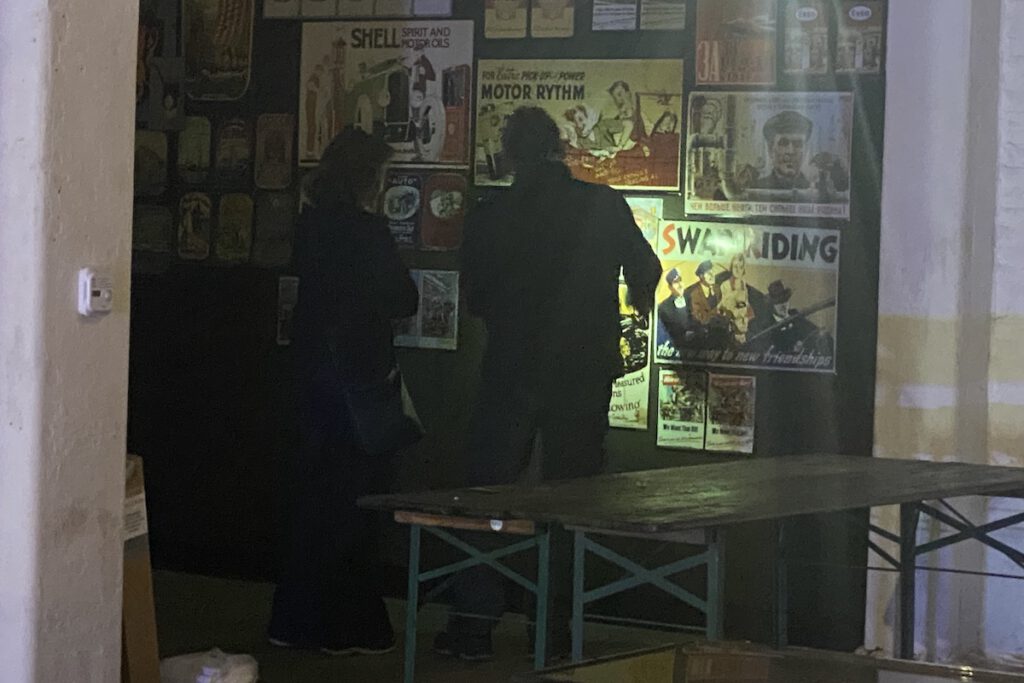
It’s hard to think of a better location for Petromelancholia than at BRUTUS – situated in the Rotterdam harbor. In few places will the impact of the energy transition be more visible than here. This is therefore the most appropriate place for critical self-reflection with a good dose of melancholy and nostalgia. The exhibition reflects an urgency that has never before been felt this strong.
With works by: Yuri Ancarani (ITA), Rowan van As (NLD), Alessandro Balteo-Yazbeck (VEN/GER), Diann Bauer (USA), Uwe Belz (GER), Vanessa Billy (CHE), Kevin van Braak & Ipeh Nur (NLD/IDN), Imani Jacqueline Brown (USA), Andrew Castrucci (USA), Chto Delat (RUS), Timo Demollin (NLD), Tanja Engelberts (NLD), Christoph Girardet (GER), Rumiko Hagiwara (JPN/NLD), heidundgriess (GER), Bernhard Hopfengärtner (GER), Aaditi Joshi (IND), Olaf Mooij (NLD), Leonhard Müllner & Robin Klengel (AUT), Hugo Niebeling (GER), Alain Resnais (FRA), Konstantin Schimanowski (RUS/GER), Miriam Sentler (NLD), Sanaz Sohrabi (IRN/CAN), Johannes Steendam (NLD), Gunhild Vatn (NOR), Jan Eric Visser (NLD), Rachel Youn (USA), Marina Zurkow (USA).
Visit Petromelancholia from 2nd of Sep until 19th of Nov.
During the official opening on Friday September 1st from 8 pm live performances Kems Kriol and DJ Sjoerd Oberman in collaboration with MOMO Fabrique Festival.
From Oct 25 to 29 several special events related to Petromelancholia at Goethe Institut Rotterdam and at Brutus. Program will be published here.
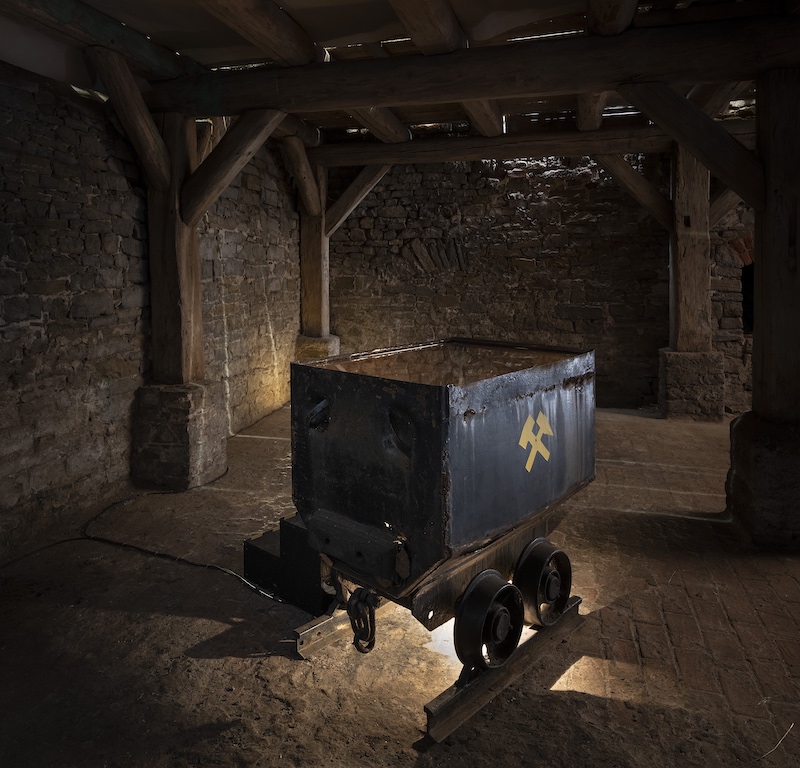
Exhibition on post-mining landscapes and mentalities, on mining that takes place elsewhere, and on the relation between precious metals and digital culture.
Co-curated by Beauty of Oil’s Alexander Klose together with Daniel Herrmann, artistic director of Werkleitz.
From June 2nd to 18th on the compound of Wiederstedt Castle, where the early romantic poet Novalis spent his childhood, in Mansfeld county, a former mining region 40 km west of Halle (Saale).
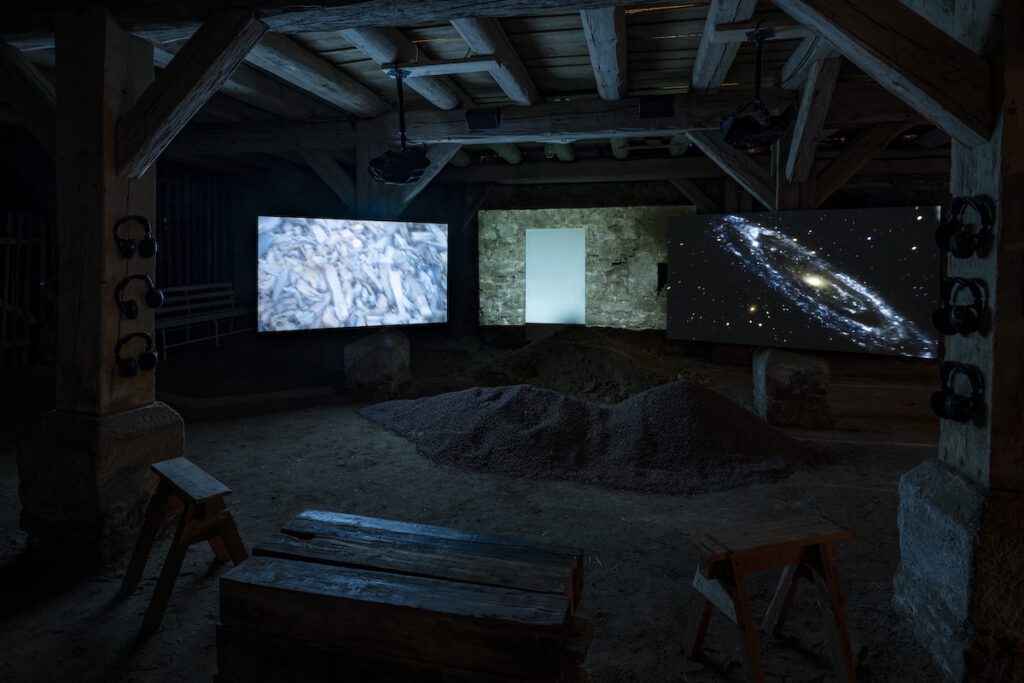
Egill Sæbjörnsson, Troll Coins, 2023. Installation video @Alexclose
Nature does not want to be the exclusive possession of a single individual. (Novalis, Heinrich von Ofterdingen)
What is My Precious today? And what does that still have to do with exquisite materials from underground? An exhibition project about local and global mining, its consequences as well as its people and natural conditions.
Mansfeld region 2023. The mining district in the triangle between Eisleben, Sandersleben was up until recently a place of hard work down in the mines and in the foundries. Now the region is seeking new added values and virtues. It is said that mining shapes people in a special way. Today, 30 years after the abrupt end, what about the afterlife and survival of the old values? What new values have been created?
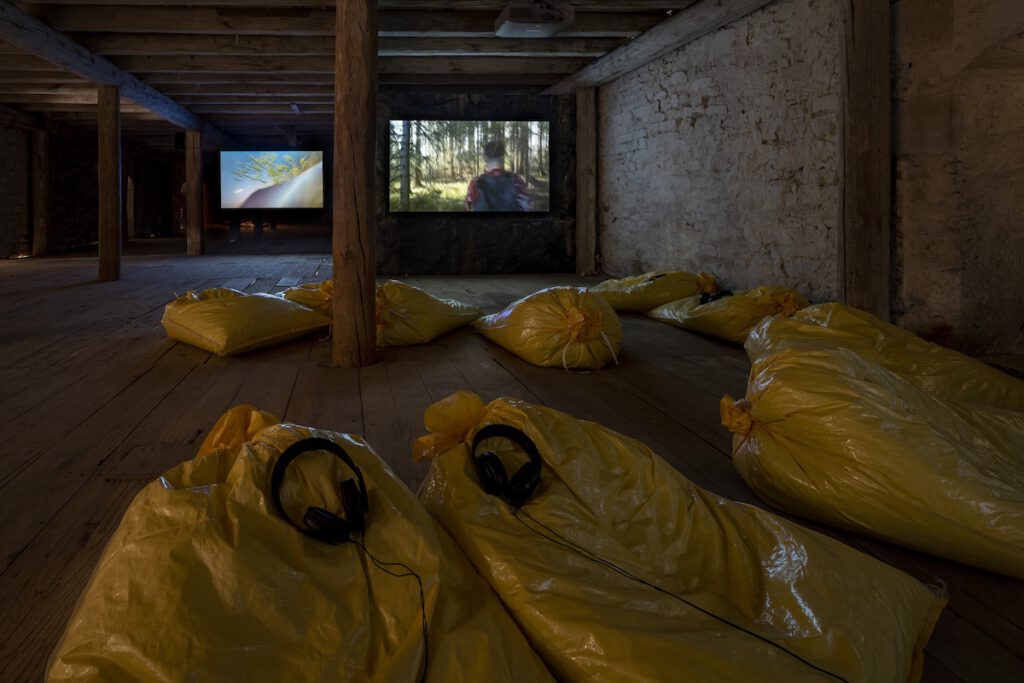
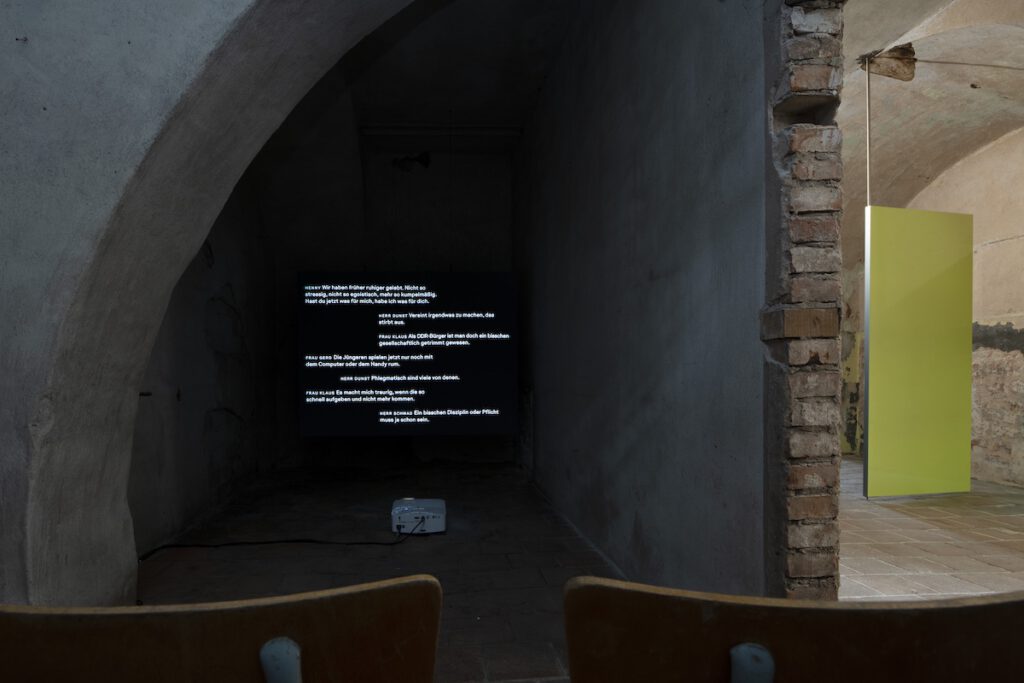
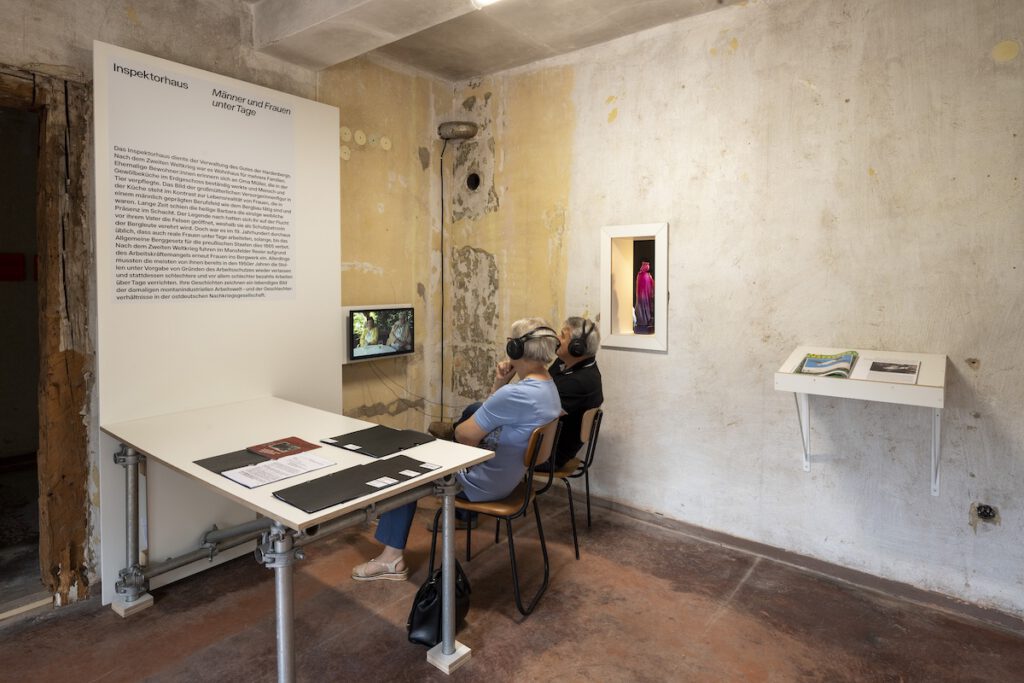
Werkleitz has invited ten internationally working artists for the 2023 My Precious festival. With eight new works created specifically for the festival and two works adapted to the local conditions, they respond to the complex mélange of questions that arise when looking at the Mansfeld region today. A film room curated by Florian Wüst in the Inspektorhaus, as well as a dense program of artist talks, guided thematic walks, workshops for children, concerts, readings, and much more complete the festival offerings. Lena Reisner, whose exhibition Fossil experience could be seen in Berlin in 2022, was invited as a free curatorial researcher and came back with stories about women in the mines from Saint Barbara to actual workers.
The participating artists were, in alphabetical order: Ana Alenso, Mabe Bethônico, Karsten Bott, Viktor Brim, Felicitas Fäßler, Juliane Henrich, Stephanie Kiwitt, Barbara Marcel, Agnieszka Polska, and Egill Sæbjörnsson.
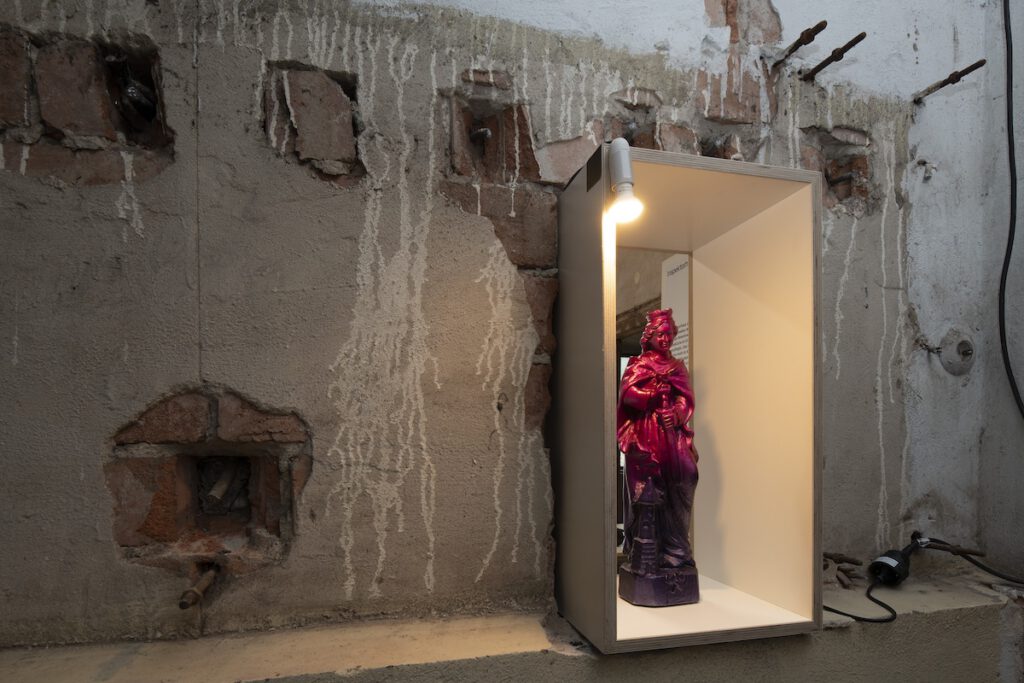
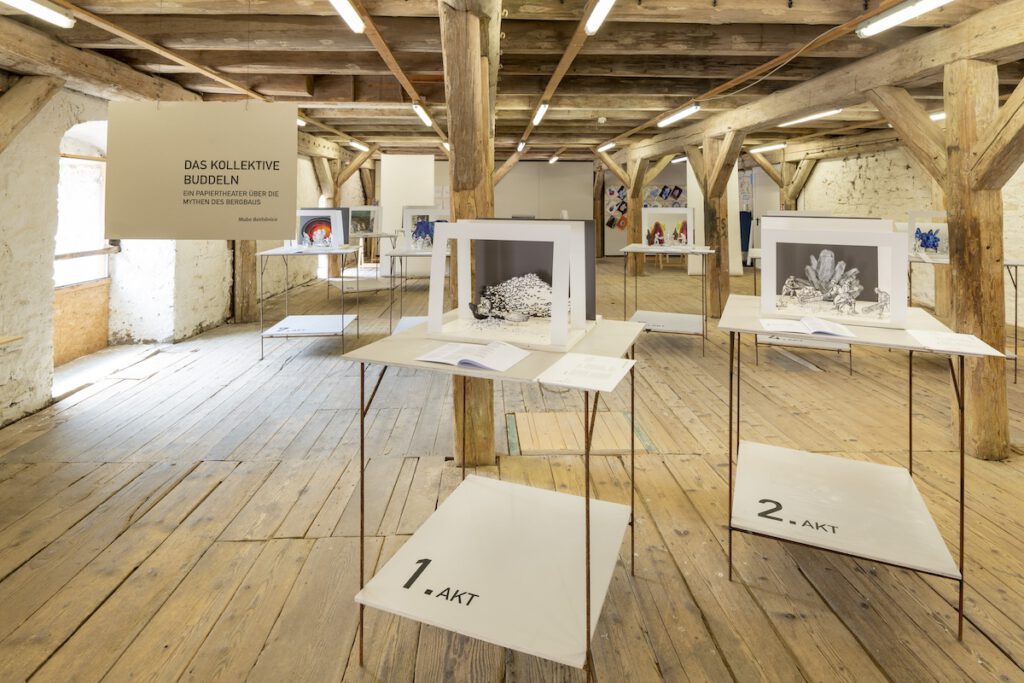
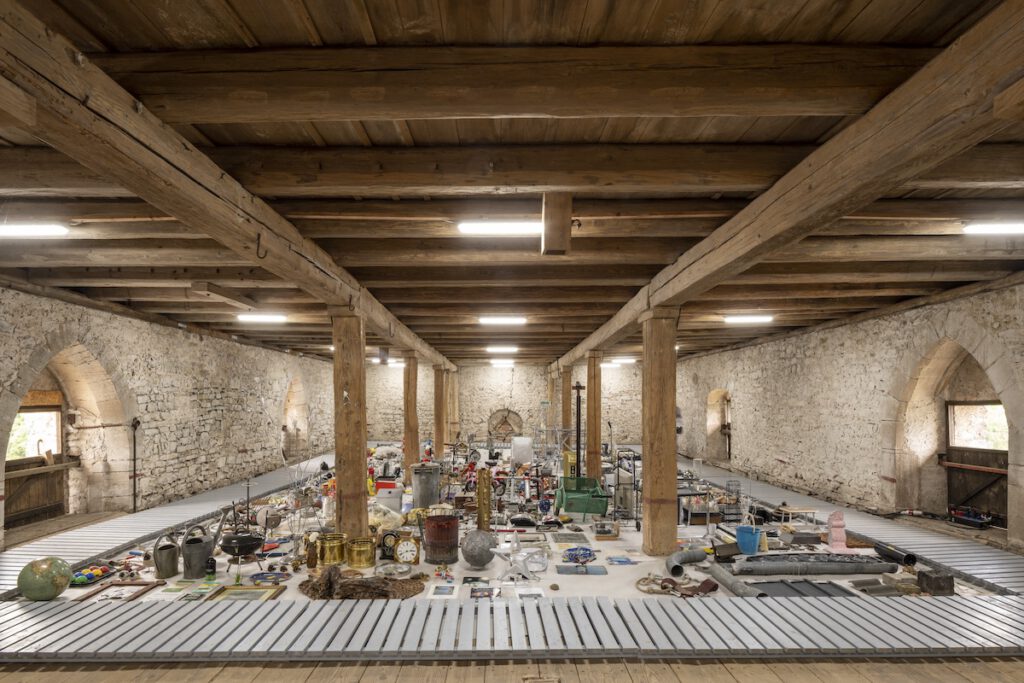
Mabe Bethonico, The Collective Dig. A Papertheatre on the Myths of Extraction, 2023Barbara Marcel, Golden Tone, 2018-21Felicitas Fässler, Outcrop, 2023Karsten Bott, One Of Each – Kahlenberg/Bott, 2023Agnieska Polska, The Demon’s Brain, 2018
Ana Alenso, Glück auf!, 2023Juliane Henrich, Dendrites, 2023Stephanie Kiwitt, S. Anders leben, 2023“Mein Schatz Kiste”/mediation station about women in the mines, realized in cooperation with Lena ReisnerVictor Brim, the cavity inside, 2023
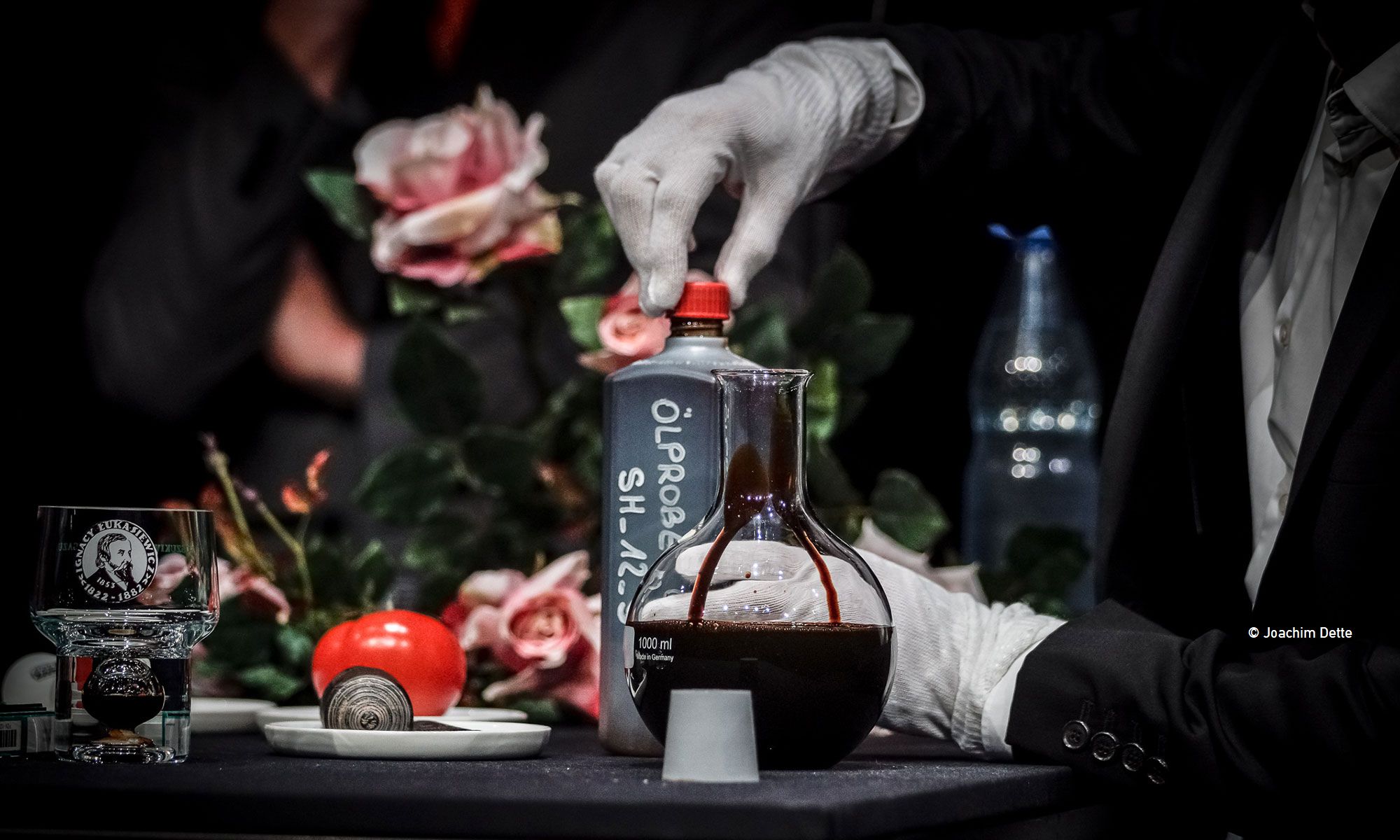
Das Schwerpunktwochenende zum Erdöl als einer Substanz, die wie keine andere die Wirklichkeiten dieses Planeten durchdringt und beeinflusst, begleitet die Produktionen BLACK FLAME und ÖL! Es fand statt vom 23. bis 26. Februar 2023 am Volkstheater Wien.
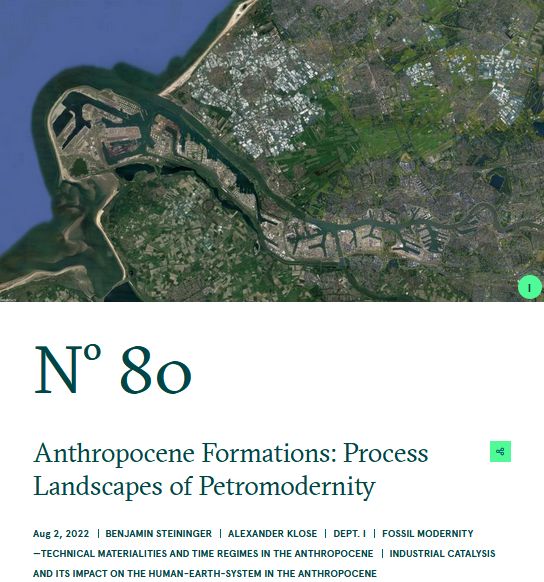
»The satellite image above shows the Port of Rotterdam, the biggest harbor in Europe. At Maasvlakte 2, an artificial island just off the coastline, the world’s largest tankers are able to dock. Around 100 million tons of crude oil reach Rotterdam each year, half of which are processed on-site in five petrochemical refineries, including Europe’s largest, the Shell refinery at Pernis«. (link to the English essay here)(link zum deutschen Text hier)
Wie sicher ist unsere Energieversorgung – aktuell, vor allem aber nach der Energiewende, deren Dringlichkeit ein weiterer Hitzesommer eindrucksvoll unterstrichen hat? Energie ist nicht abstrakt, das ist mehr denn je klar. Sie ist in stoffliche und geografische Netzwerke eingebunden. Welche Stoffe brauchen wir für unseren Alltag, die Industrie, unseren Wohlstand? Wie sind diese Ressourcen in der Welt verteilt? Zu welchen geopolitischen und ökologischen Kosten leben wir aktuell? Und wie wollen wir in Zukunft leben?
Chemie steht dabei doppelt im Fokus. Als großer Verbraucher zahlreicher und oft problematischer Ressourcen, aber auch als erprobtes Mittel, sich über Innovation aus Abhängigkeiten zu lösen.
Der Forschung zur Katalyse kommt eine Schlüsselrolle zu; sowohl für postfossile Energiesysteme wie für alle anderen, globalen Stoffkreisläufe. Welche Ansätze verfolgt UniSysCat hier?